
氧化石墨烯纳米系统将模拟微小RNA-7递送至胶质母细胞瘤细胞和肿瘤组织
The Delivery of Mimic miRNA-7 into Glioblastoma Cells and Tumour Tissue by Graphene Oxide Nanosystems.
作者信息
Kutwin Marta, Sosnowska-Ławnicka Malwina, Nasiłowska Barbara, Lange Agata, Wierzbicki Mateusz, Jaworski Sławomir
机构信息
Department of Nanobiotechnology, Institute of Biology, Warsaw University of Life Sciences, Warsaw, Poland.
Institute of Optoelectronics, Military University of Technology, Warsaw, Poland.
出版信息
Nanotechnol Sci Appl. 2024 Sep 11;17:167-188. doi: 10.2147/NSA.S469193. eCollection 2024.
PURPOSE
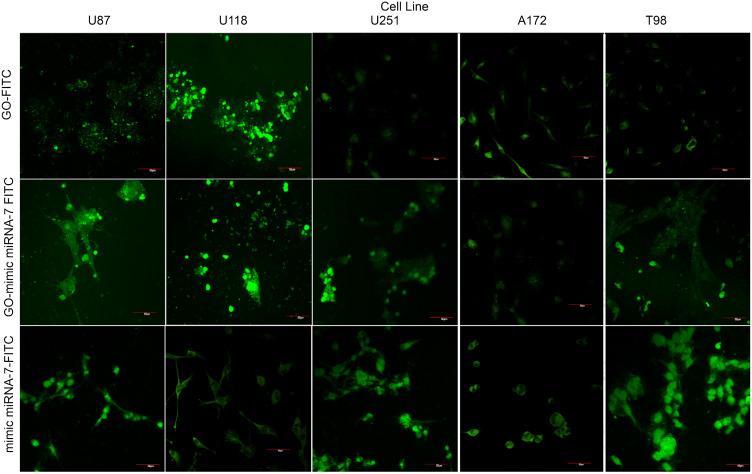
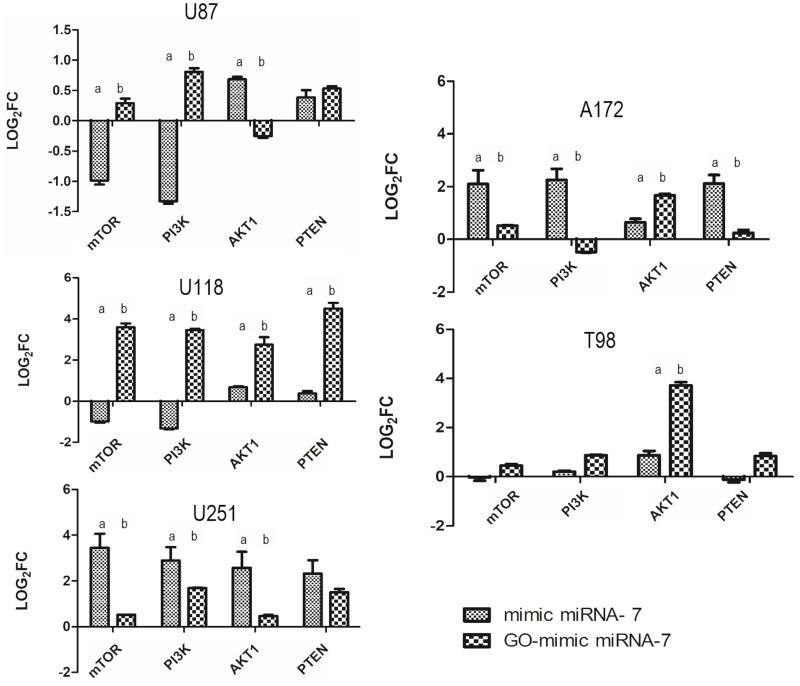
The use of nanotechnology in medicine has gained attention in developing drug delivery systems. GO has the potential to deliver microRNA (miRNA) mimics or antisense structures. MiRNAs regulate gene expression and their dysregulation is implicated in diseases, including cancer. This study aims to observe changes in morphology, viability, mRNA expression of mTOR/PI3K/Akt and PTEN genes in U87, U118, U251, A172 and T98 glioblastoma cells and xenograft models after GO self-assembly with mimic miRNA-7.
METHODS
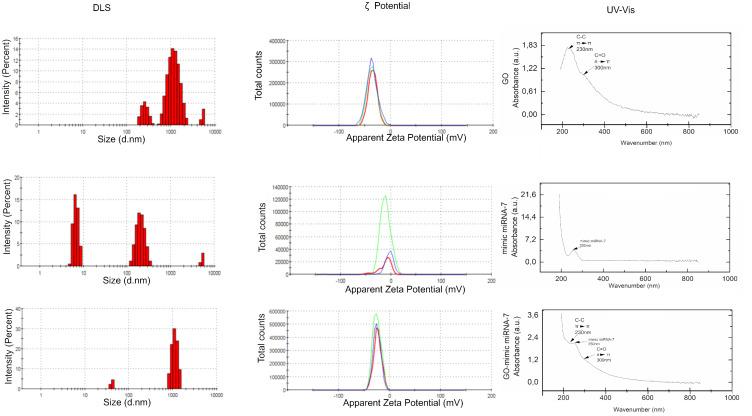
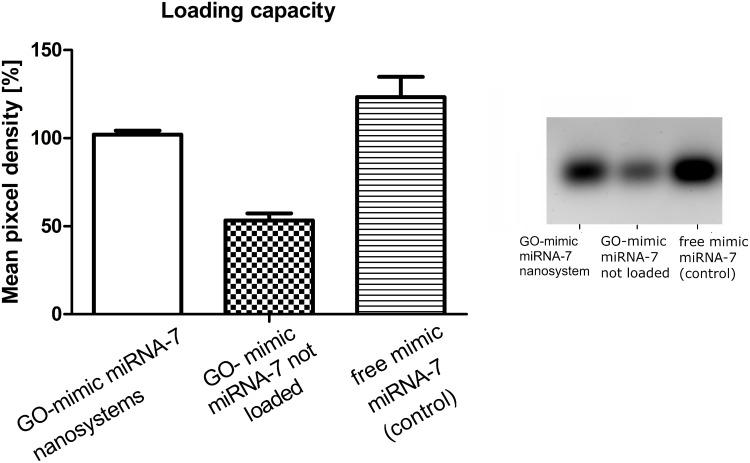
Colloidal suspension of graphene oxide (GO) was used for obtaining the GO-mimic miRNA-7 nanosystems by self-assembly method. The ultrastructure, size distribution and ATR-FTIR and UV-Vis spectrum were analyzed. The Zeta potential was measured to verify the stability of obtained nanosystem. The entrapment efficiency, loading capacity and released kinetics of mimic miRNA-7 form GO-mimic miRNA-7 nanosystems were analyzed. The transfection efficiency into the glioblastoma cell lines U87, U118, U251, A172 and T98 of mimic miRNA-7 delivered by GO nanosystems was measure by confocal microscopy and flow cytometry. The changes at mRNA expression level of and genes was measured by qPCR analysis. The xenograft model of U87 and A172 tumour tissue was performed to analyze the effect at tumor size and volume after GO- mimic miRNA-7 nanosystem administration.
RESULTS
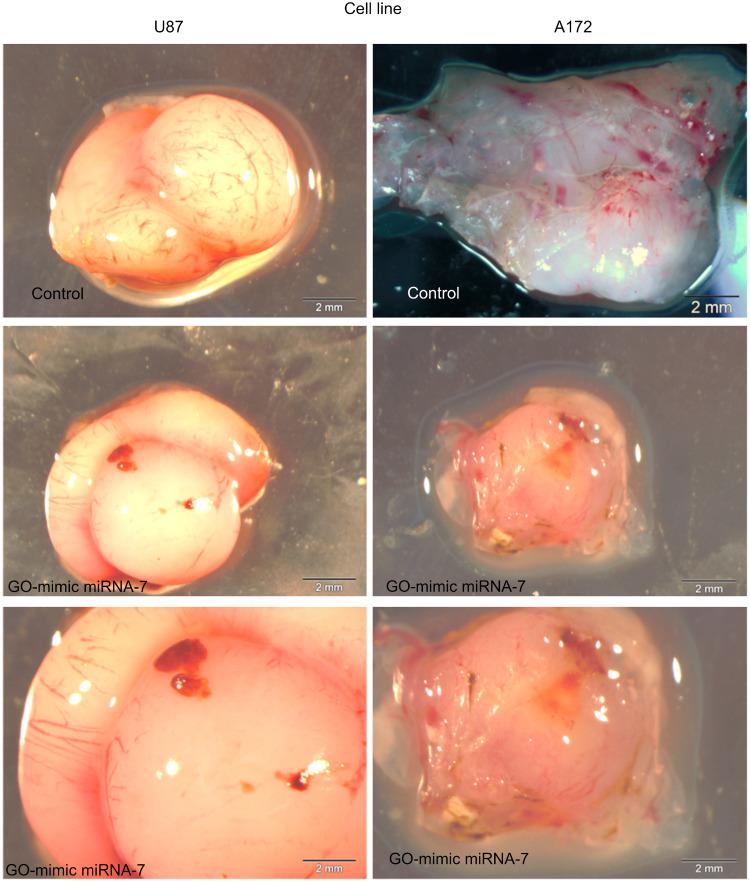
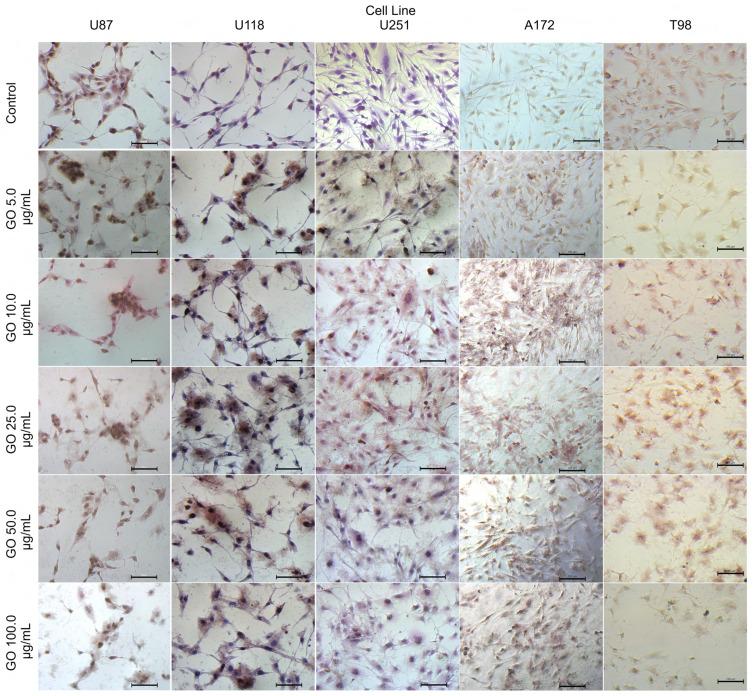
The ultrastructure of GO-mimic miRNA-7 nanosystems showed high affinity of mimic miRNA into the GO. The results of transfection efficiency, cell morphology and viability showed that GO -miRNA-7 effectively deliver mimics miRNA-7 into U87, U118, U251, A172 and T98 glioblastoma cells. This approach can reverse miRNA-7 expression's downstream effects and target the mTOR PI3K/Akt pathway observed at gene expression level, reducing xenograft tumour size and volume.
CONCLUSION
The findings of the study could have significant implications for the development of advanced and precise GO based nanosystems specifically designed for miRNA therapy in cancer treatment.
目的
纳米技术在医学领域的应用已在开发药物递送系统方面受到关注。氧化石墨烯(GO)有递送微小RNA(miRNA)模拟物或反义结构的潜力。miRNA调节基因表达,其失调与包括癌症在内的多种疾病有关。本研究旨在观察氧化石墨烯与模拟miRNA - 7自组装后,U87、U118、U251、A172和T98胶质母细胞瘤细胞以及异种移植模型中细胞形态、活力、mTOR/PI3K/Akt和PTEN基因的mRNA表达变化。
方法
使用氧化石墨烯(GO)胶体悬浮液通过自组装方法获得GO - 模拟miRNA - 7纳米系统。分析其超微结构、尺寸分布、衰减全反射傅里叶变换红外光谱(ATR - FTIR)和紫外可见光谱(UV - Vis)。测量zeta电位以验证所得纳米系统的稳定性。分析模拟miRNA - 7从GO - 模拟miRNA - 7纳米系统中的包封率、载药量和释放动力学。通过共聚焦显微镜和流式细胞术测量GO纳米系统递送的模拟miRNA - 7对胶质母细胞瘤细胞系U87、U118、U251、A172和T98的转染效率。通过定量聚合酶链反应(qPCR)分析测量 和 基因在mRNA表达水平的变化。建立U87和A172肿瘤组织的异种移植模型,以分析给予GO - 模拟miRNA - 7纳米系统后对肿瘤大小和体积的影响。
结果
GO - 模拟miRNA - 7纳米系统的超微结构显示模拟miRNA与GO具有高亲和力。转染效率、细胞形态和活力结果表明,GO - miRNA - 7能有效地将模拟miRNA - 7递送至U87、U118、U251、A172和T98胶质母细胞瘤细胞。该方法可逆转miRNA - 7表达的下游效应,并在基因表达水平靶向观察到的mTOR PI3K/Akt途径,减小异种移植肿瘤的大小和体积。
结论
该研究结果可能对专门为癌症治疗中的miRNA疗法设计的先进且精确的基于GO的纳米系统的开发具有重要意义。






 Zotero 插件