
铁在缺血性中风再灌注早期促进铁死亡和坏死性凋亡。
Iron promotes both ferroptosis and necroptosis in the early stage of reperfusion in ischemic stroke.
作者信息
Du Bin, Deng Zijie, Chen Kang, Yang Zhangzhong, Wei Junfen, Zhou Liuyao, Meng Jie, Cheng Ying, Tian Xin, Tuo Qing-Zhang, Lei Peng
机构信息
Department of Neurology and State Key Laboratory of Biotherapy, National Clinical Research Center for Geriatrics, West China Hospital, Sichuan University, Chengdu, Sichuan 610041, China.
Department of Neurology, First Affiliated Hospital of Chongqing Medical University, Chongqing Key Laboratory of Neurology, Chongqing 400016, China.
出版信息
Genes Dis. 2024 Mar 8;11(6):101262. doi: 10.1016/j.gendis.2024.101262. eCollection 2024 Nov.
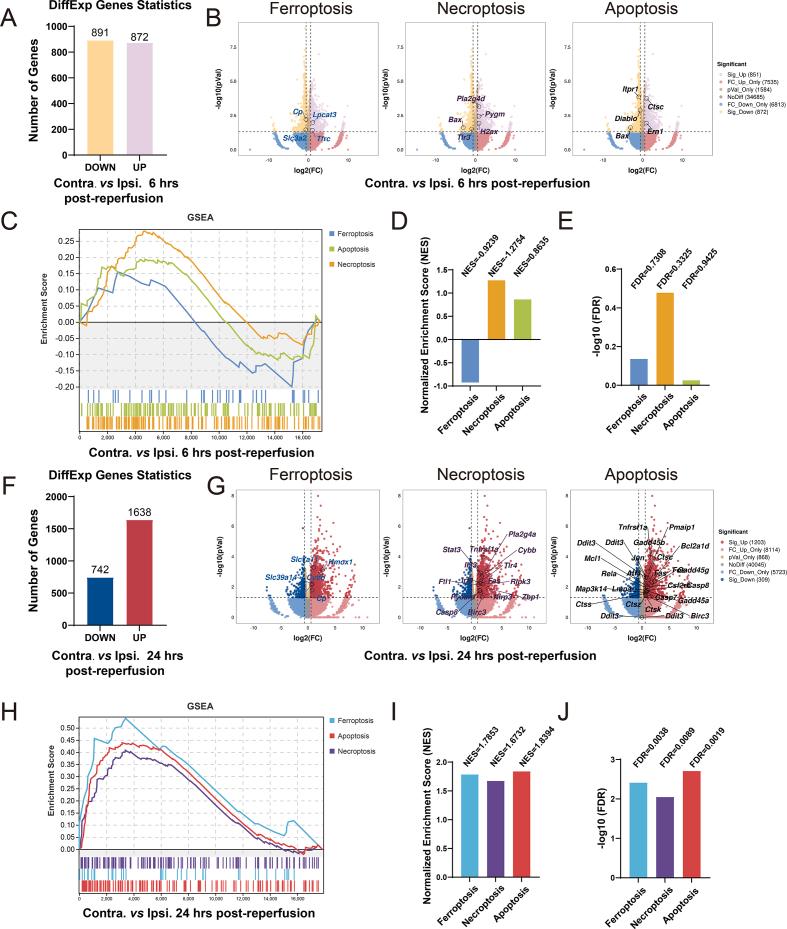
Programmed cell death contributes to neurological damage in ischemic stroke, especially during the reperfusion stage. Several cell death pathways have been tested preclinically and clinically, including ferroptosis, necroptosis, and apoptosis. However, the sequence and complex interplay between cell death pathways during ischemia/reperfusion remains under investigation. Here, we unbiasedly investigated cell death pathways during ischemia/reperfusion by utilizing RNA sequencing analysis and immunoblot assays and revealed that ferroptosis and necroptosis occurred early post-reperfusion, followed by apoptosis. Ferroptosis inhibitor Liproxstatin-1 effectively inhibited necroptosis during reperfusion, while the necroptosis inhibitor Necrostatin-1 suppressed protein expression consistent with ferroptosis activation. Protein-protein interaction analysis and iron chelation therapy by deferoxamine mesylate indicate that iron is capable of promoting both ferroptosis and necroptosis in middle cerebral artery occlusion/repression modeled mice. Treatment of cells with iron led to a disruption in redox balance with activated necroptosis and increased susceptibility to ferroptosis. Collectively, these data uncovered a complex interplay between ferroptosis and necroptosis during ischemic stroke and indicated that multiple programmed cell death pathways may be targeted co-currently.
程序性细胞死亡会导致缺血性中风中的神经损伤,尤其是在再灌注阶段。几种细胞死亡途径已在临床前和临床中进行了测试,包括铁死亡、坏死性凋亡和凋亡。然而,缺血/再灌注期间细胞死亡途径之间的顺序和复杂相互作用仍在研究中。在此,我们通过利用RNA测序分析和免疫印迹测定法对缺血/再灌注期间的细胞死亡途径进行了无偏倚研究,结果显示铁死亡和坏死性凋亡在再灌注后早期发生,随后是凋亡。铁死亡抑制剂Liproxstatin-1在再灌注期间有效抑制坏死性凋亡,而坏死性凋亡抑制剂Necrostatin-1抑制与铁死亡激活一致的蛋白表达。蛋白质-蛋白质相互作用分析以及去铁胺甲磺酸盐的铁螯合疗法表明,铁能够在大脑中动脉闭塞/再灌注模型小鼠中促进铁死亡和坏死性凋亡。用铁处理细胞会导致氧化还原平衡破坏,激活坏死性凋亡并增加对铁死亡的易感性。总体而言,这些数据揭示了缺血性中风期间铁死亡和坏死性凋亡之间的复杂相互作用,并表明多个程序性细胞死亡途径可能同时成为靶点。



 Zotero 插件