
用于磷酸盐修复的机械耐用三复合聚酰胺6/赤铁矿纳米颗粒/四丁基溴化铵(PA6/α-FeO/TBAB)纳米纤维基膜。
Mechanically durable tri-composite polyamide 6/hematite nanoparticle/tetra-n-butylammonium bromide (PA6/α-FeO/TBAB) nanofiber based membranes for phosphate remediation.
作者信息
Choi Yun Young, Hanh To Dung Thi, Kim Sewoon, Cwiertny David M, Myung Nosang V
机构信息
Department of Chemical and Biomolecular Engineering, University of Notre Dame, Notre Dame, IN, United States.
Department of Civil and Environmental Engineering, University of Iowa, Iowa City, IA, United States.
出版信息
Front Chem. 2024 Sep 9;12:1472640. doi: 10.3389/fchem.2024.1472640. eCollection 2024.
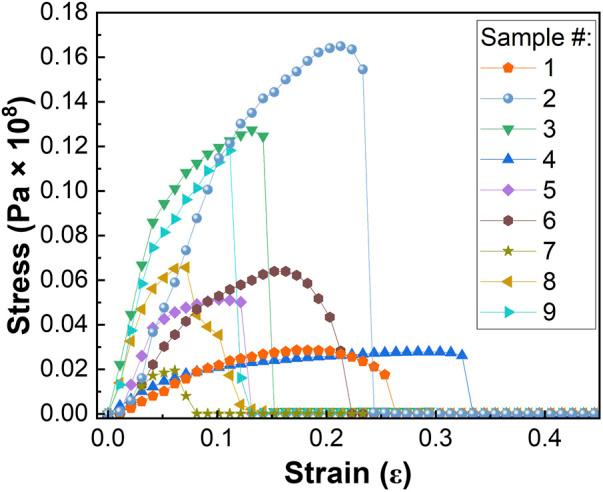
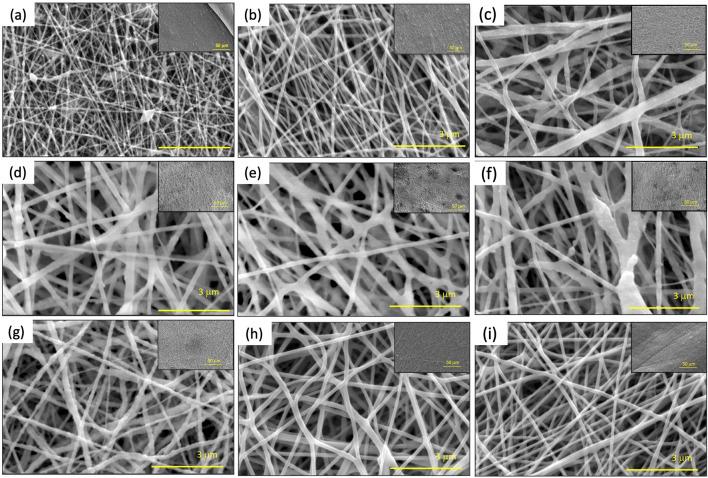
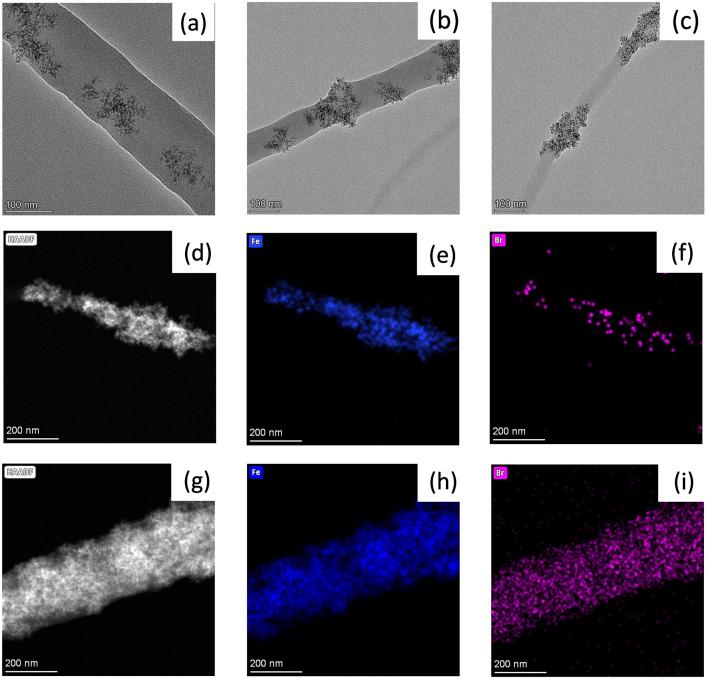
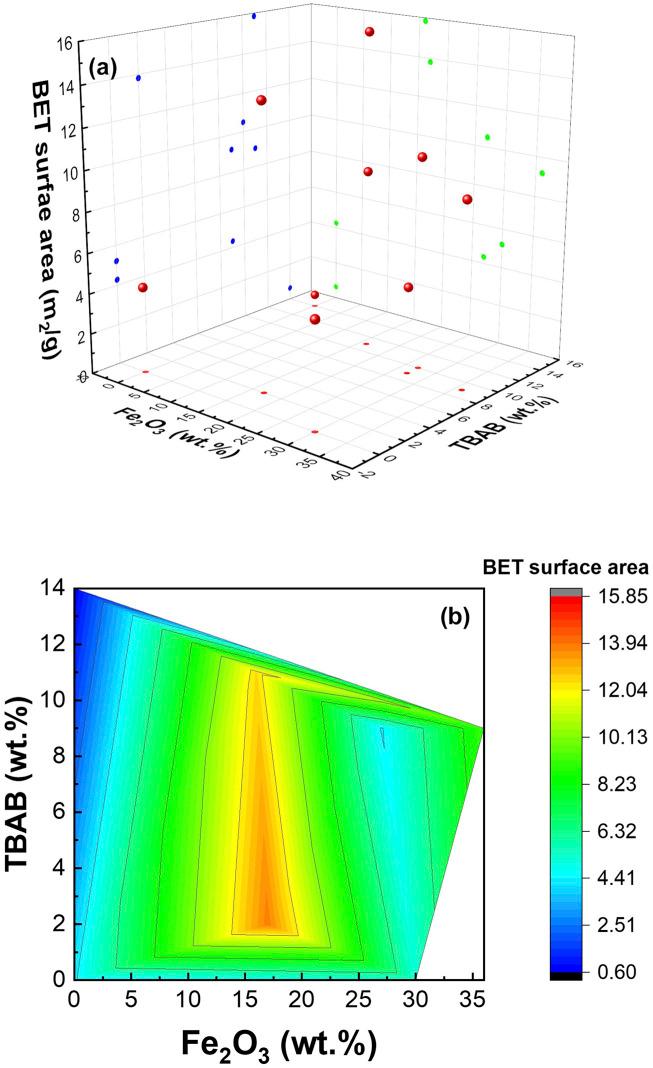
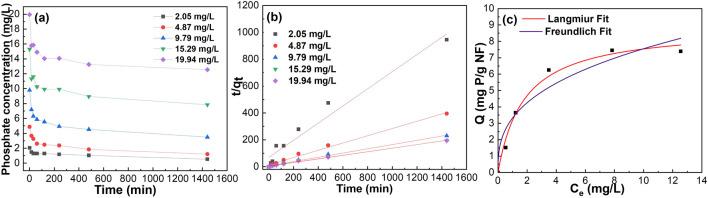
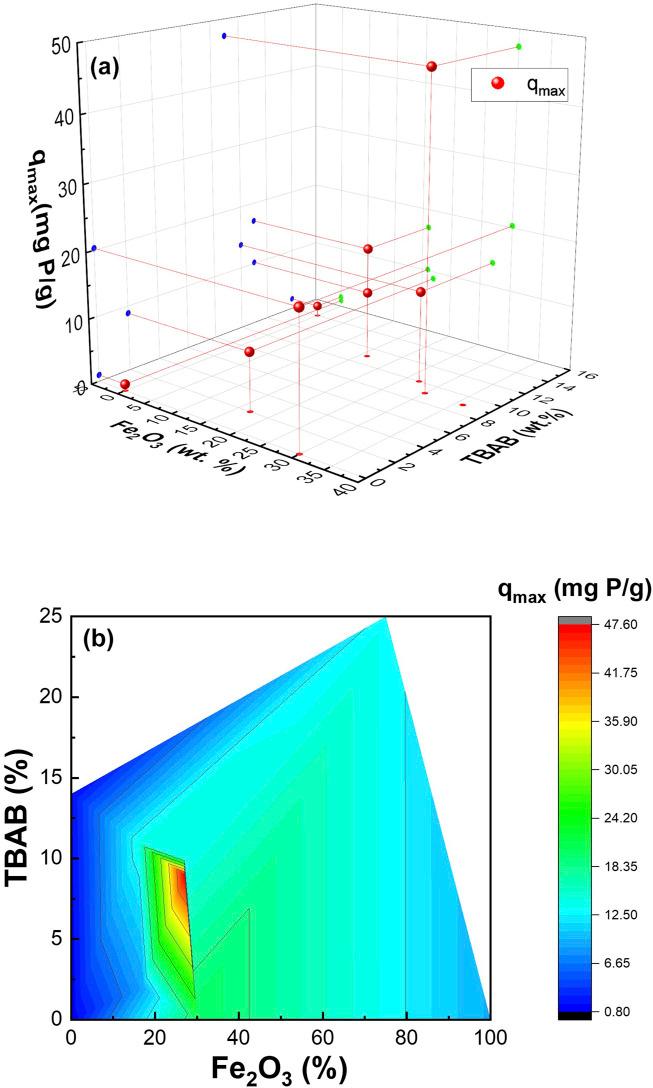
Essential properties for a Point of Use (POU) water filter include maintaining high removal capacity and rate, with excellent mechanical properties to withstand pressure drop. Herein, mechanically robust tri-composite polyamide 6/iron oxide nanoparticles/tetra-n-butylammonium bromide (PA6/α-FeO/TBAB) nanofiber composite membranes were electrospun for phosphate (P) remediation, where the diameter and composition were tuned by controlling solution compositions and electrospinning conditions. Tri-composite composition and morphology affect phosphate uptake where the adsorption capacity followed Langmuir isotherm whereas the adsorption kinetics followed pseudo second order behavior. Mechanical properties (i.e., Young's Modulus () and toughness) were significantly influenced by the composition and morphology of the tri-composite, as well. Although additional TBAB and iron oxide decreased toughness, there are optimum composition ranges which resulted in maximum Young's Modulus. Of the synthesized nanofiber membranes, PA6/α-FeO/TBAB nanofibers with 17% α-FeO and 2% TBAB showed excellent phosphate uptake capacity [i.e. 8.9 mg/g (52 mg of P/g of α-FeO)] while it is bendable, stretchable, and able to plastically deform without fracturing (i.e., Young's modulus of 2.06 × 10 Pa and Toughness of 1.35 × 10 J m). With concerns over the impact of P on water resources and the long-term availability of limited P resources, this tri-composite membrane is well suited for applications in both wastewater treatment and resource recovery.
使用点(POU)水过滤器的基本特性包括保持高去除能力和速率,以及具有出色的机械性能以承受压降。在此,通过控制溶液组成和静电纺丝条件来调节直径和组成,静电纺制了机械性能稳健的三复合聚酰胺6/氧化铁纳米颗粒/四丁基溴化铵(PA6/α-FeO/TBAB)纳米纤维复合膜用于磷酸盐(P)修复。三复合组成和形态影响磷酸盐吸收,其中吸附容量遵循朗缪尔等温线,而吸附动力学遵循准二级行为。三复合材料的组成和形态也对机械性能(即杨氏模量()和韧性)有显著影响。虽然额外的TBAB和氧化铁降低了韧性,但存在导致最大杨氏模量的最佳组成范围。在合成的纳米纤维膜中,含有17%α-FeO和2%TBAB的PA6/α-FeO/TBAB纳米纤维表现出优异的磷酸盐吸收能力[即8.9毫克/克(52毫克P/克α-FeO)],同时它可弯曲、可拉伸,并且能够在不破裂的情况下发生塑性变形(即杨氏模量为2.06×10帕,韧性为1.35×10焦/米)。鉴于对磷对水资源的影响以及有限磷资源的长期可用性的担忧,这种三复合膜非常适合用于废水处理和资源回收应用。
 Zotero 插件