
恢复期血浆和免疫球蛋白在 COVID-19 大流行中的作用,包括对未来准备工作的影响。
The role of convalescent plasma and hyperimmune immunoglobulins in the COVID-19 pandemic, including implications for future preparedness.
机构信息
Department Transfusion Medicine, Division Blood Bank, Sanquin Blood Supply Foundation, Amsterdam, Netherlands.
Department Hematology, Erasmus Medical Centre, Rotterdam, Netherlands.
出版信息
Front Immunol. 2024 Sep 9;15:1448720. doi: 10.3389/fimmu.2024.1448720. eCollection 2024.
INTRODUCTION
When Coronavirus Disease-19 (COVID-19) struck the world in December 2019, initiatives started to investigate the efficacy of convalescent plasma, a readily available source of passive antibodies, collected from recovered patients as a therapeutic option. This was based on historical observational data from previous virus outbreaks.
METHODS
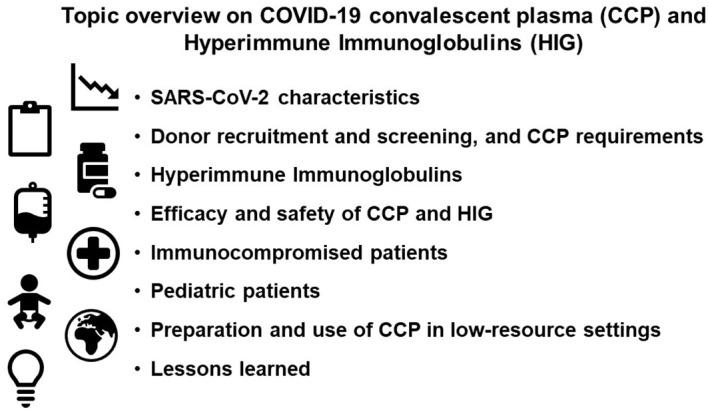
A scoping review was conducted on the efficacy and safety of convalescent plasma and hyperimmune immunoglobulins for COVID-19 treatment. This review included the latest Cochrane systematic review update on 30-day mortality and safety. We also covered use in pediatric and immunocompromised patients, as well as the logistic challenges faced in donor recruitment and plasma collection in general. Challenges for low resource countries were specifically highlighted.
RESULTS
A major challenge is the high donation frequency required from first-time donors to ensure a safe product, which minimizes the risk of transfusion-transmitted infectious. This is particularly difficult in low- and middle- income countries due to inadequate infrastructure and insufficient blood product supplies. High-certainty evidence indicates that convalescent plasma does not reduce mortality or significantly improve clinical outcomes in patients with moderate to severe COVID-19 infection. However, CCP may provide a viable treatment for patients unable to mount an endogenous immune response to SARS-CoV-2, based on mostly observational studies and subgroup data of published and ongoing randomized trials. Convalescent plasma has been shown to be safe in adults and children with COVID-19 infection. However, the efficacy in pediatric patients remains unclear.
DISCUSSION
Data on efficacy and safety of CCP are still underway in ongoing (randomized) studies and by reporting the challenges, limitations and successes encountered to-date, research gaps were identified to be addressed for the future.
CONCLUSION
This experience serves as a valuable example for future pandemic preparedness, particularly when therapeutic options are limited, and vaccines are either being developed or ineffective due to underlying immunosuppression.
简介
2019 年 12 月,新型冠状病毒病(COVID-19)在全球爆发,人们开始研究恢复期血浆的疗效。恢复期血浆是一种从康复患者中收集的现成的被动抗体来源,作为一种治疗选择。这是基于以往病毒爆发的历史观察数据。
方法
我们对恢复期血浆和免疫球蛋白治疗 COVID-19 的疗效和安全性进行了范围综述。本次综述包括了最新的 Cochrane 系统综述,关于 30 天死亡率和安全性的更新。我们还涵盖了在儿科和免疫功能低下患者中的应用,以及在一般情况下,在招募供体和收集血浆方面所面临的后勤挑战。特别强调了资源匮乏国家所面临的挑战。
结果
一个主要的挑战是,为了确保产品的安全性,初次捐献者需要较高的捐献频率,以最大限度地降低输血传播感染的风险。由于基础设施不足和血液制品供应不足,在中低收入国家这尤其困难。高确定性证据表明,恢复期血浆并不能降低中度至重度 COVID-19 感染患者的死亡率或显著改善其临床结局。然而,基于大多数观察性研究和已发表和正在进行的随机试验的亚组数据,CCP 可能为那些无法对 SARS-CoV-2 产生内源性免疫反应的患者提供一种可行的治疗方法。恢复期血浆在 COVID-19 感染的成人和儿童中已被证明是安全的。然而,其在儿科患者中的疗效仍不清楚。
讨论
在正在进行的(随机)研究中,以及通过报告迄今为止遇到的挑战、限制和成功,有关恢复期血浆疗效和安全性的数据仍在进行中。确定了研究空白,以便为未来的研究提供参考。
结论
这一经验为未来的大流行准备提供了宝贵的范例,特别是在治疗选择有限且疫苗由于潜在的免疫抑制而正在开发或无效的情况下。
 Zotero 插件