
全球疫苗免疫联盟(Gavi) eligible国家住院和门诊呼吸道合胞病毒死亡率特征。 (注:这里“Gavi-eligible”准确意思可能需要结合更多背景信息,直译为“符合Gavi条件的” ,这里暂且保留英文表述供你参考,你可根据实际情况调整完善译文)
Characteristics of inpatient and outpatient respiratory syncytial virus mortality in Gavi-eligible countries.
作者信息
Willemsen Joukje E, Vernooij Femke S, Shaaban Farina L, Chikoti Chilufya, Bont Louis J, Drylewicz Julia
机构信息
Centre for Translational Immunology, University Medical Centre Utrecht, Utrecht, The Netherlands.
Division of Infectious Diseases, Department of Pediatrics, University Medical Centre Utrecht, Utrecht, The Netherlands.
出版信息
Vaccine X. 2024 Sep 13;20:100554. doi: 10.1016/j.jvacx.2024.100554. eCollection 2024 Oct.
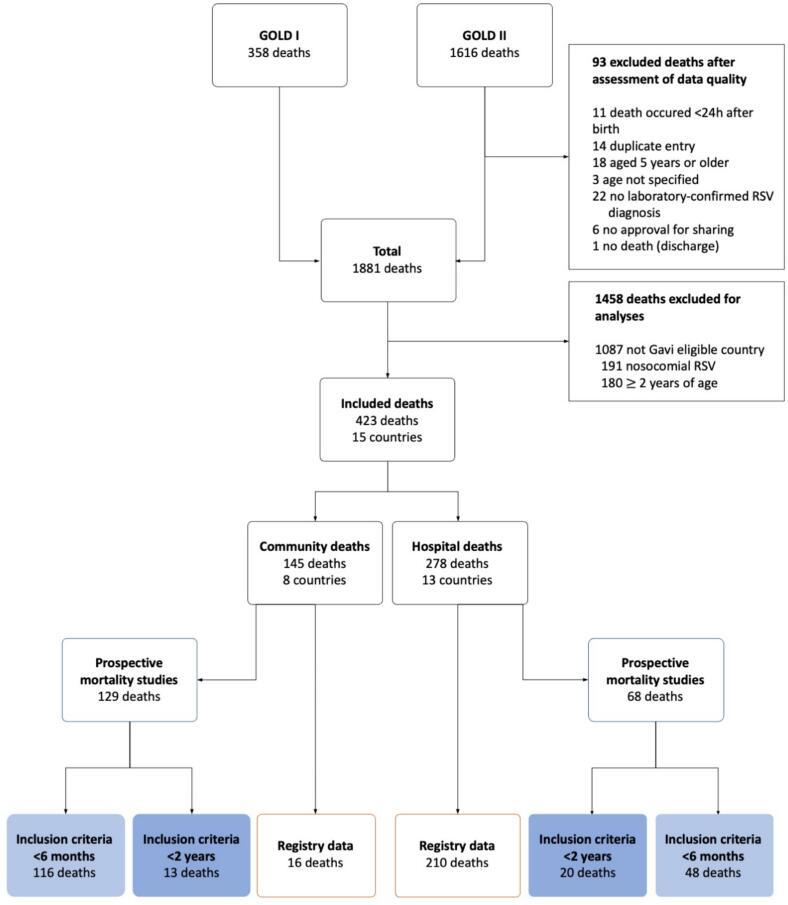
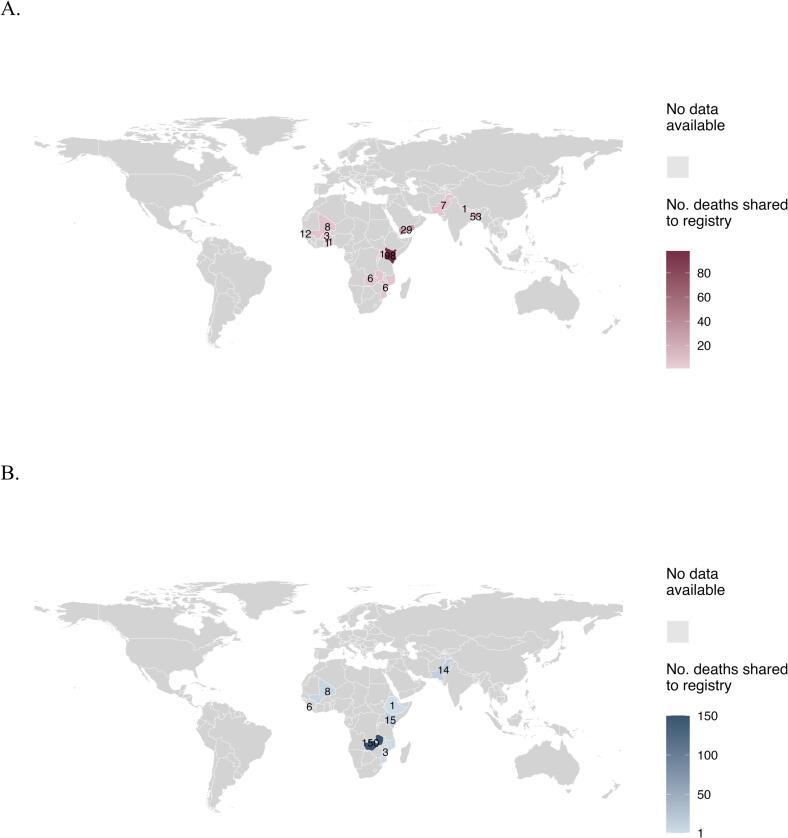
The current understanding of the RSV-related mortality age distribution in low- and lower-middle-income countries (LMICs) relies on a limited number of disease incidence studies reporting wide age bands, and lacking specificity to Gavi-eligible countries. Understanding the age distribution of RSV-related deaths is crucial for the implementation of RSV interventions in LMICs that rely on support from Gavi. This study aims to provide the age profile of RSV mortality specifically in Gavi-eligible countries. Utilizing data from the RSV GOLD project, an ongoing global online mortality registry focusing on children under the age of 5 with laboratory-confirmed RSV infection, we employed two models (Complete Data Model and Prospective Data Model) to estimate the age profiles. To mitigate biases related to age group representation, we applied post-stratification weighting in our analysis. We included 423 pediatric deaths, including 145 from the community, under 2 years of age from 15 Gavi-eligible countries. Both models identified a peak age at 1 month and found that the majority of RSV-related mortality cases (59-77 %) from Gavi-eligible countries occur before 6 months of life. However, the models exhibited disparities in other age-related metrics. We present fitted age-at-time-of-death probability distributions to aid impact and cost-effectiveness studies. We expect that implementing infant RSV immunization strategies, such as maternal vaccination or infant immunoprophylaxis, will have high impact on RSV-related mortality in Gavi-eligible countries. The divergent results from the two models underscore the importance of carefully considering potential biases in retrospective and surveillance data when interpreting the age profile of RSV mortality cases in future research.
目前对低收入和中低收入国家(LMICs)呼吸道合胞病毒(RSV)相关死亡率年龄分布的理解,依赖于数量有限的疾病发病率研究,这些研究报告的年龄范围较宽,且对符合全球疫苗免疫联盟(Gavi)资助条件的国家缺乏针对性。了解RSV相关死亡的年龄分布对于在依赖Gavi支持的LMICs实施RSV干预措施至关重要。本研究旨在提供特别是在符合Gavi资助条件国家的RSV死亡率年龄分布情况。利用RSV全球观察数据库(RSV GOLD项目)的数据,这是一个正在进行的全球在线死亡率登记系统,聚焦于5岁以下实验室确诊RSV感染的儿童,我们采用了两种模型(完整数据模型和前瞻性数据模型)来估计年龄分布情况。为了减轻与年龄组代表性相关的偏差,我们在分析中应用了事后分层加权法。我们纳入了来自15个符合Gavi资助条件国家的423例儿科死亡病例,其中包括145例来自社区的2岁以下儿童死亡病例。两种模型均确定1个月时为死亡高峰年龄,并发现符合Gavi资助条件国家的大多数RSV相关死亡病例(59%-77%)发生在6个月龄之前。然而,这两种模型在其他与年龄相关的指标上存在差异。我们给出了拟合的死亡年龄概率分布,以辅助影响和成本效益研究。我们预计,实施婴儿RSV免疫策略,如母体疫苗接种或婴儿免疫预防,将对符合Gavi资助条件国家的RSV相关死亡率产生重大影响。这两种模型的不同结果凸显了在未来研究中解释RSV死亡病例年龄分布情况时,仔细考虑回顾性和监测数据中潜在偏差的重要性。



 Zotero 插件