
在印度中央邦传播的新冠病毒奥密克戎变种的结构和基因组进化动态
Structural and genomic evolutionary dynamics of Omicron variant of SARS-CoV-2 circulating in Madhya Pradesh, India.
作者信息
Dhankher Suman, Yadav Pooja, Sharma Shashi, Gupta Ekta, Yadav Ram Govind, Dash Paban Kumar, Parida Manmohan
机构信息
Virology Division, Defence Research and Development Establishment, Gwalior, India.
出版信息
Front Med (Lausanne). 2024 Sep 11;11:1416006. doi: 10.3389/fmed.2024.1416006. eCollection 2024.
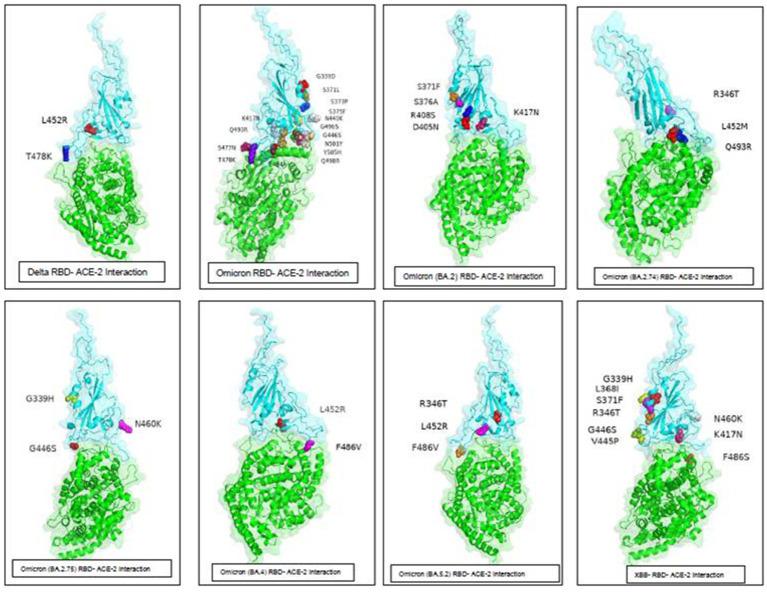
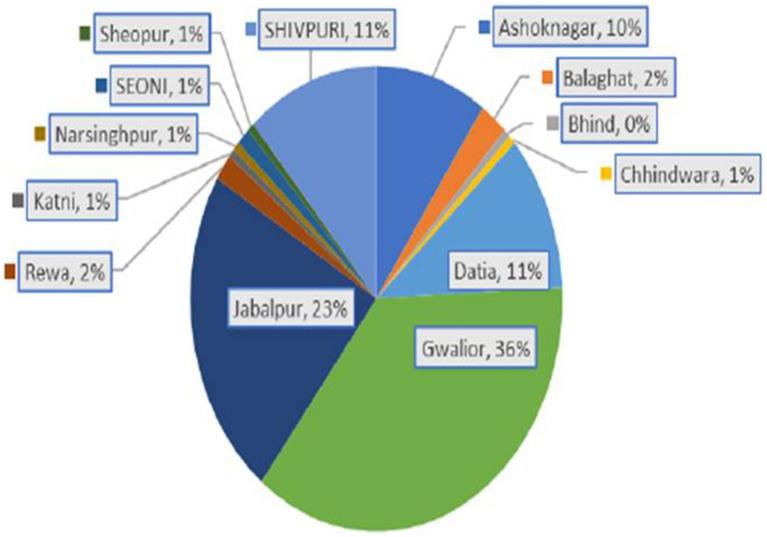
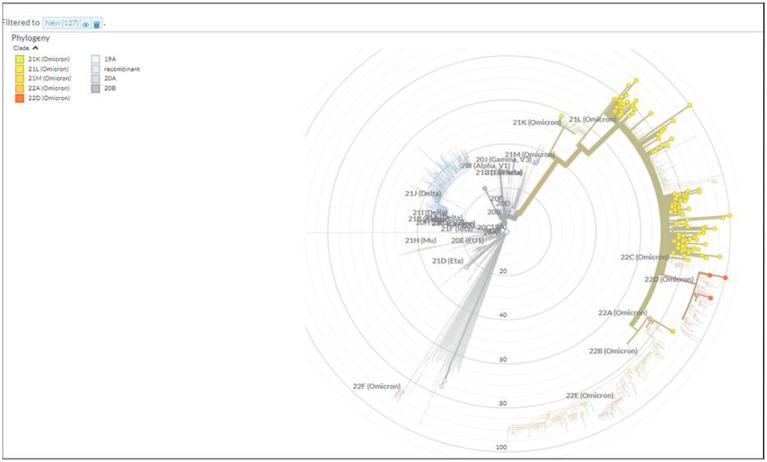
The SARS-CoV-2 Omicron (B.1.1.529) variant emerged in early November 2021 and its rapid spread created fear worldwide. This was attributed to its increased infectivity and escaping immune mechanisms. The spike protein of Omicron has more mutations (>30) than any other previous variants and was declared as the variant of concern (VOC) by the WHO. The concern among the scientific community was huge about this variant, and a piece of updated information on circulating viral strains is important in order to better understand the epidemiology, virus pathogenicity, transmission, therapeutic interventions, and vaccine development. A total of 710 samples were processed for sequencing and identification up to a resolution of sub-lineage. The sequence analysis revealed Omicron variant with distribution as follows: B.1.1, B.1.1.529, BA.1, BA.2, BA.2.10, BA.2.10.1, BA.2.23, BA.2.37, BA.2.38, BA.2.43, BA.2.74, BA.2.75, BA.2.76, and BA.4 sub-lineages. There is a shift noted in circulating lineage from BA.1 to BA.2 to BA.4 over a period from January to September 2022. Multiple signature mutations were identified in S protein T376A, D405N, and R408S mutations, which were new and common to all BA.2 variants. Additionally, R346T was seen in emerging BA.2.74 and BA.2.76 variants. The emerging BA.4 retained the common T376A, D405N, and R408S mutations of BA.2 along with a new mutation F486V. The samples sequenced were from different districts of Madhya Pradesh and showed a predominance of BA.2 and its variants circulating in this region. The current study identified circulation of BA.1 and BA.1.1 variants during initial phase. The predominant Delta strain of the second wave has been replaced by the Omicron variant in this region over a period of time. This study successfully deciphers the dynamics of the emergence and replacement of various sub-lineages of SARS-CoV-2 in central India on real real-time basis.
严重急性呼吸综合征冠状病毒2(SARS-CoV-2)奥密克戎(B.1.1.529)变种于2021年11月初出现,其迅速传播在全球引起恐慌。这归因于其传染性增强和免疫逃逸机制。奥密克戎的刺突蛋白比以往任何变种都有更多突变(超过30个),并被世界卫生组织宣布为关注变种(VOC)。科学界对该变种极为关注,一份关于流行病毒株的最新信息对于更好地了解流行病学、病毒致病性、传播、治疗干预措施和疫苗研发非常重要。总共处理了710份样本进行测序和鉴定,直至亚谱系分辨率。序列分析揭示了奥密克戎变种的分布情况如下:B.1.1、B.1.1.529、BA.1、BA.2、BA.2.10、BA.2.10.1、BA.2.23、BA.2.37、BA.2.38、BA.2.43、BA.2.74、BA.2.75、BA.2.76和BA.4亚谱系。在2022年1月至9月期间,流行谱系从BA.1转变为BA.2再到BA.4。在刺突蛋白中鉴定出多个特征性突变,如T376A、D405N和R408S突变,这些是所有BA.2变种新出现且共有的。此外,在新出现的BA.2.74和BA.2.76变种中发现了R346T突变。新出现的BA.4保留了BA.2共有的T376A、D405N和R408S突变以及一个新突变F486V。测序的样本来自中央邦的不同地区,显示该地区BA.2及其变种占主导。当前研究确定在初始阶段BA.1和BA.1.1变种也有传播。在该地区,第二波占主导的德尔塔毒株在一段时间后已被奥密克戎变种取代。本研究成功实时解读了印度中部SARS-CoV-2各种亚谱系出现和替代的动态情况。




 Zotero 插件