
微塑料和纳米塑料对环境的毒性影响综述:2014年至2023年文献计量分析
Perspectives on the Toxic Effects of Micro- and Nanoplastics on the Environment: A Bibliometric Analysis of the 2014 to 2023 Period.
作者信息
Li Xianhong, Li Zhonghong
机构信息
Hangzhou Institute of National Extremely-Weak Magnetic Field Infrastructure, Hangzhou 310028, China.
School of Instrumentation and Optoelectronics Engineering, Beihang University, Beijing 100191, China.
出版信息
Toxics. 2024 Sep 16;12(9):676. doi: 10.3390/toxics12090676.
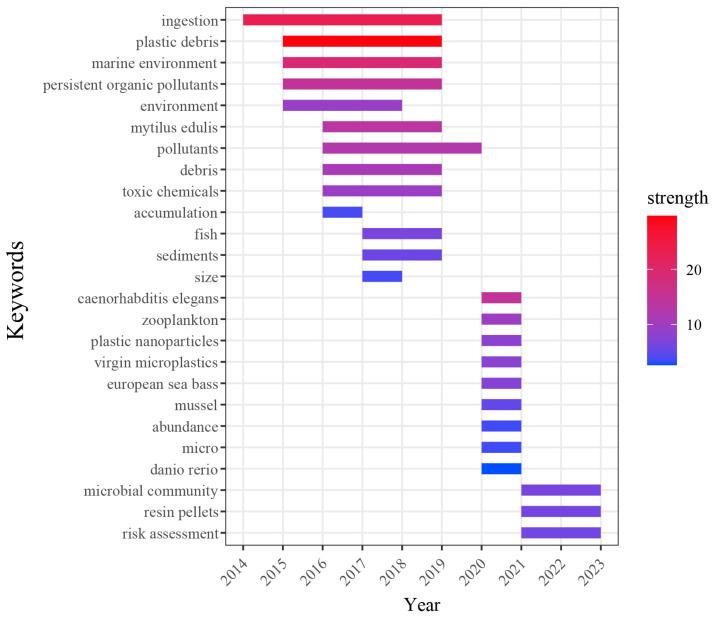
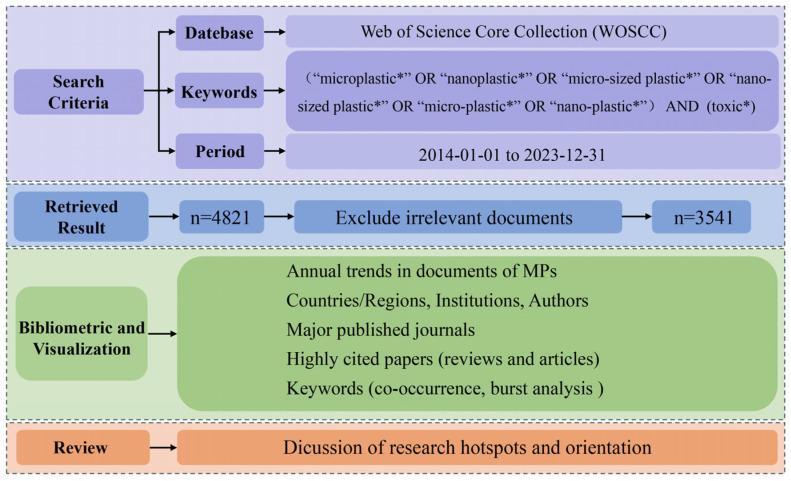
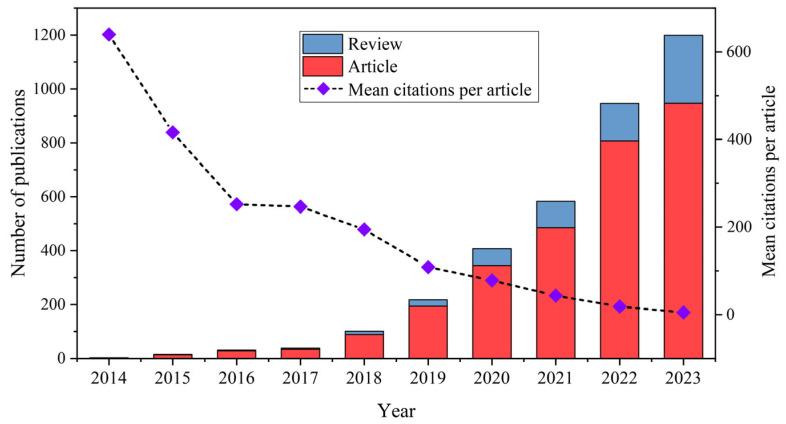
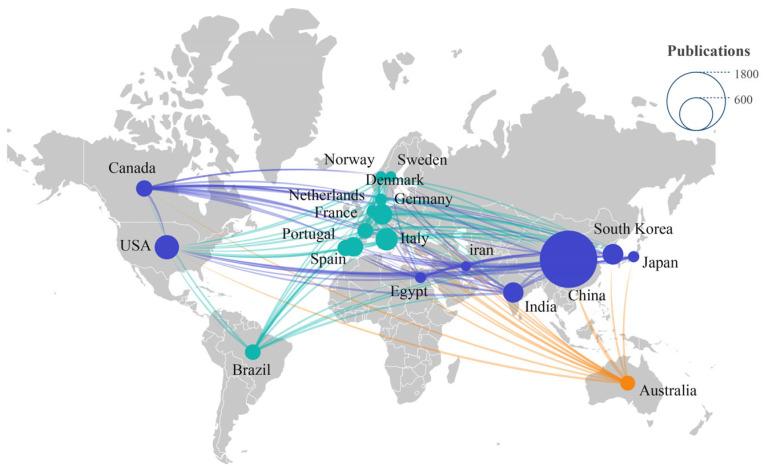
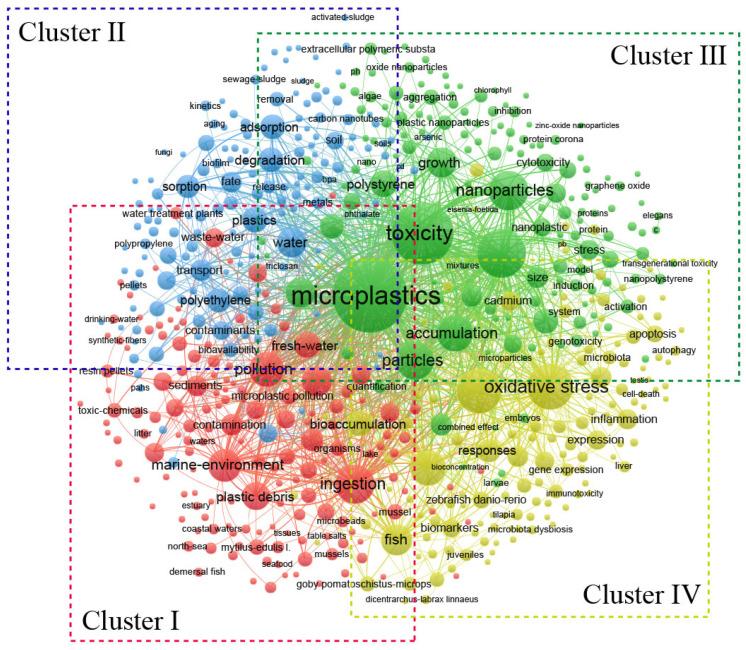
Over the past decade, micro- and nanoplastics (MNPs) have garnered significant attention due to their frequent detection in and potential toxic effects on the environment and organisms, making them a serious threat to human health. To comprehensively understand the research on MNPs' toxicity, we employed the R language-based Bibliometrix toolkit (version 4.3.0), VOSviewer (version 1.6.11) and CiteSpace (version 6.3.R1) to perform statistical and visual analyses of 3541 articles pertaining to MNPs' toxicity between 2014 and 2023, which were retrieved from the Web of Science Core Collection (WOSCC) database. The analysis revealed that research related to MNPs' toxicity has experienced a rapid increase in recent years. China's particularly prominent influence in the field of MNPs' toxicity is evidenced by its academic exchanges and the establishment of a mature cooperation system with other countries (regions), such as the USA and Germany. Studies related to MNPs' toxicity are primarily published in leading journals, including the , , and the . The Chinese Academy of Sciences was identified as the leading institution in terms of research on MNPs' toxicity, contributing 203 papers to the total number of studies published. Keyword co-occurrence and burst analyses indicated that the current research on MNPs' toxicity mainly focuses on the toxic effects of MNPs on aquatic organisms, the combined toxicity of MNPs and other contaminants, and the toxic effects and mechanisms of MNPs. Future research should integrate computational toxicology and toxicomics to enhance our understanding of MNPs' toxicity mechanisms and assess the potential health risks posed by atmospheric MNPs.
在过去十年中,微塑料和纳米塑料(MNPs)因其在环境和生物体中频繁被检测到以及潜在的毒性影响而备受关注,这使其成为对人类健康的严重威胁。为全面了解有关MNPs毒性的研究,我们使用基于R语言的Bibliometrix工具包(版本4.3.0)、VOSviewer(版本1.6.11)和CiteSpace(版本6.3.R1),对2014年至2023年间从科学网核心合集(WOSCC)数据库中检索到的3541篇关于MNPs毒性的文章进行统计和可视化分析。分析表明,近年来与MNPs毒性相关的研究迅速增加。中国在MNPs毒性领域的影响力尤为突出,这体现在其学术交流以及与美国和德国等其他国家(地区)建立的成熟合作体系上。与MNPs毒性相关的研究主要发表在包括《 》《 》和《 》等领先期刊上。中国科学院被确定为在MNPs毒性研究方面的领先机构,其发表的论文占研究总数的203篇。关键词共现和爆发分析表明,目前关于MNPs毒性的研究主要集中在MNPs对水生生物的毒性影响、MNPs与其他污染物的联合毒性以及MNPs的毒性影响和机制上。未来的研究应整合计算毒理学和毒组学,以加深我们对MNPs毒性机制的理解,并评估大气中MNPs带来的潜在健康风险。
 Zotero 插件