
药理激活和 SIRT1 转基因过表达减轻钝挫伤性颅脑损伤致视神经病变。
Pharmacological Activation and Transgenic Overexpression of SIRT1 Attenuate Traumatic Optic Neuropathy Induced by Blunt Head Impact.
机构信息
Department of Ophthalmology, University of Pennsylvania, Philadelphia, PA, USA.
F. M. Kirby Center for Molecular Ophthalmology, Scheie Eye Institute, University of Pennsylvania Perelman School of Medicine, Philadelphia, PA, USA.
出版信息
Transl Vis Sci Technol. 2024 Sep 3;13(9):27. doi: 10.1167/tvst.13.9.27.
PURPOSE
Resveratrol (RSV) is a nutraceutical compound known for its therapeutic potential in neurodegenerative and metabolic diseases. RSV promotes survival signals in retinal ganglion cells (RGCs) through activation of SIRT1, an NAD+-dependent deacetylase. RSV and SIRT1 reduce RGC loss induced by direct optic nerve injury, but effects in indirect models of traumatic optic neuropathy remain unknown and are examined in this study.
METHODS
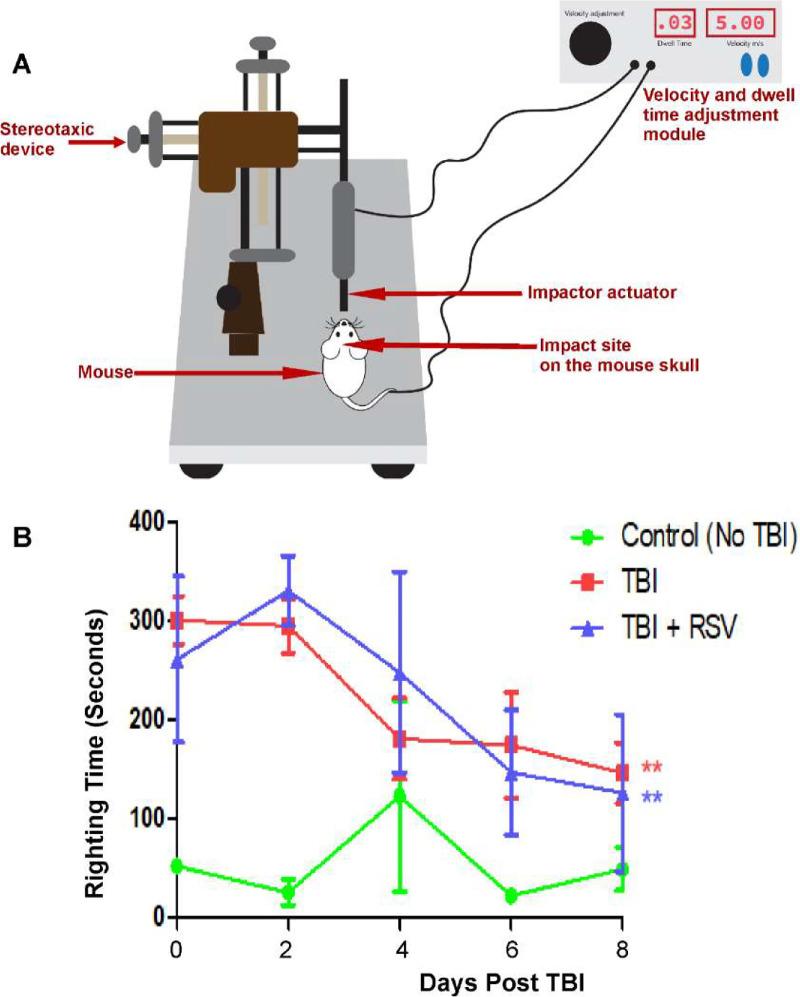
An electromagnetic stereotaxic impactor device was used to impart five traumatic skull impacts with an inter-concussion interval of 48 hours to wild type (WT) and SIRT1 knock in (KI) C57BL/6J mice overexpressing the SIRT1 gene. A cohort of WT mice also received intranasal administration of RSV (16 mg/kg) throughout the experimental period. Loss of righting reflex (RR), optokinetic response (OKR) scores, and immunolabeled RGC count are determined to assess optic neuropathy in this model of traumatic brain injury (TBI).
RESULTS
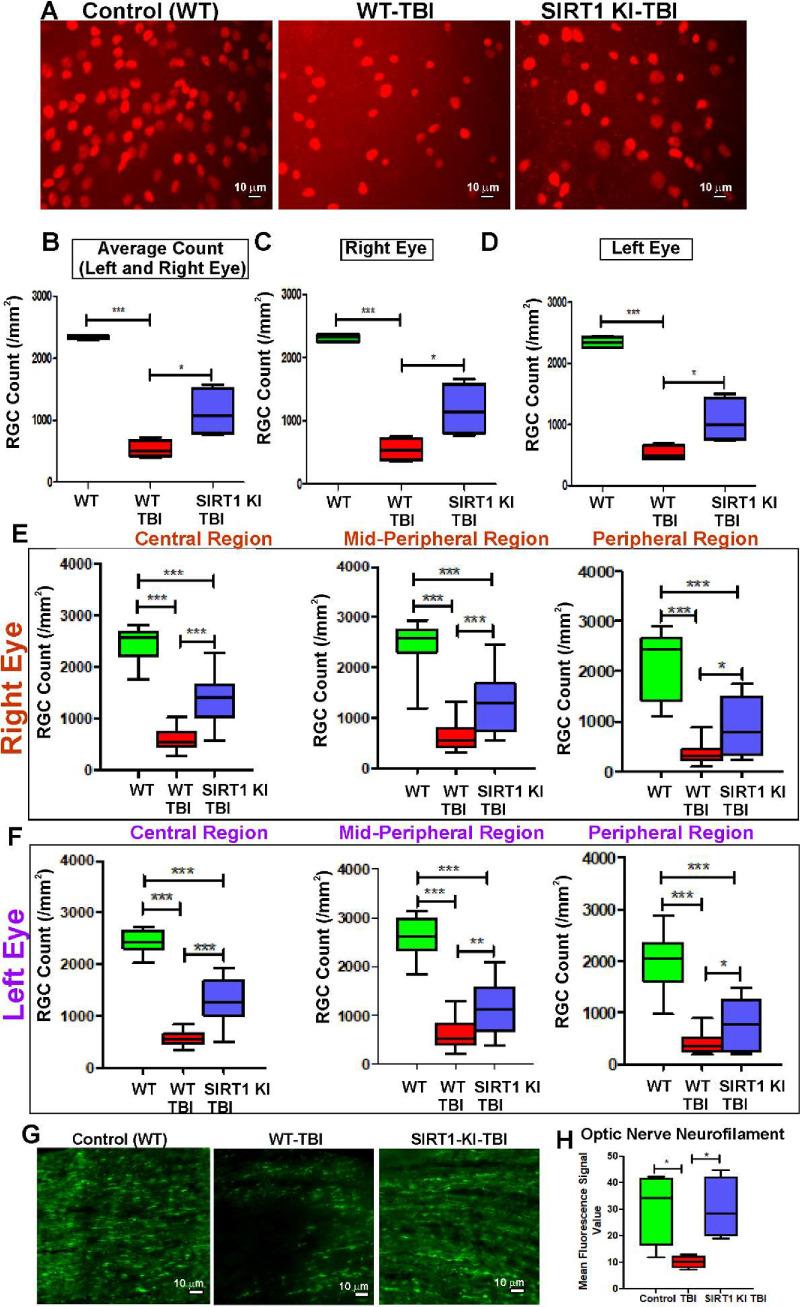
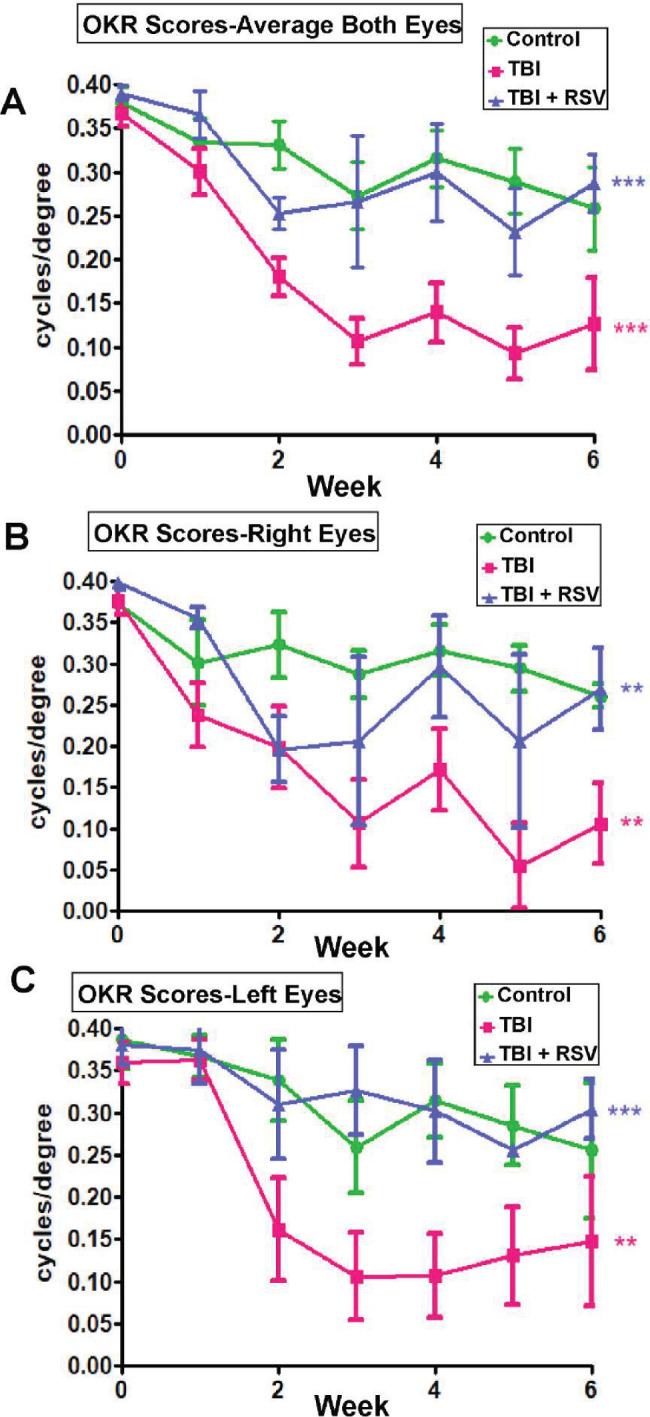
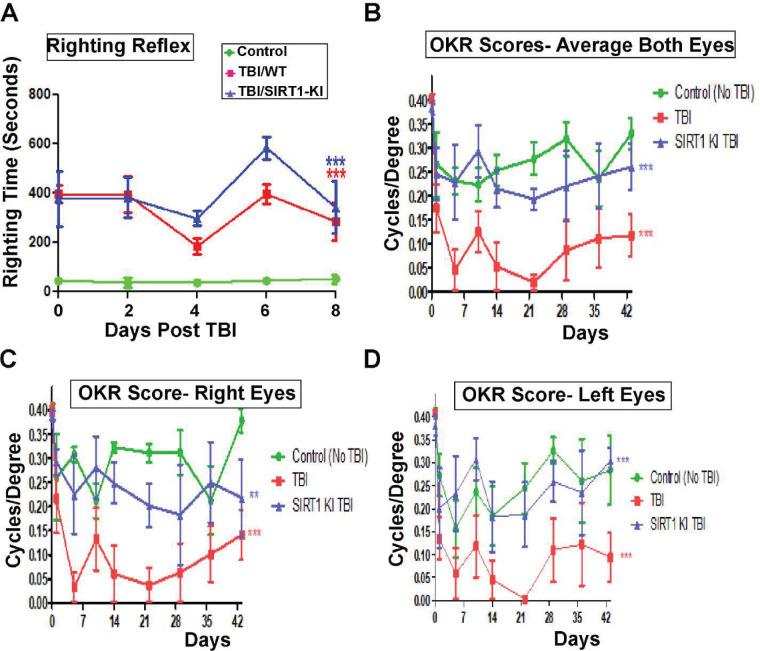
TBI significantly decreases RGC survival and decreases OKR scores compared with control uninjured mice. Either RSV administration in WT mice, or SIRT1 overexpression in SIRT1 KI mice, significantly increases RGC survival and improves OKR scores. RR time increases after the first few impacts in all groups of mice subjected to TBI, demonstrating that RSV and SIRT1 overexpression are able to attenuate optic neuropathy following similar degrees of TBI.
CONCLUSIONS
Intranasal RSV is effective in preserving visual function in WT mice following TBI. Constitutive overexpression of SIRT1 recapitulates the neuroprotective effect of RSV.
TRANSLATIONAL RELEVANCE
Results support future exploration of RSV as a potential therapy for indirect traumatic optic neuropathy.
目的
白藜芦醇(RSV)是一种具有治疗潜力的营养化合物,可用于治疗神经退行性和代谢性疾病。RSV 通过激活 NAD+依赖性去乙酰化酶 SIRT1,促进视网膜神经节细胞(RGC)的存活信号。RSV 和 SIRT1 减少了直接视神经损伤引起的 RGC 损失,但在创伤性视神经病变的间接模型中的作用尚不清楚,本研究对此进行了研究。
方法
使用电磁立体定位撞击器装置对过表达 SIRT1 基因的野生型(WT)和 SIRT1 敲入(KI)C57BL/6J 小鼠施加五次创伤性颅骨撞击,两次撞击之间间隔 48 小时。WT 小鼠的一个队列还接受了 RSV(16mg/kg)的鼻内给药,整个实验期间都接受了 RSV 的治疗。通过测定翻正反射(RR)、视动反应(OKR)评分和免疫标记的 RGC 计数,评估这种创伤性脑损伤(TBI)模型中的视神经病变。
结果
与未受伤的对照小鼠相比,TBI 显著降低了 RGC 的存活率,并降低了 OKR 评分。WT 小鼠中 RSV 的给药,或 SIRT1 KI 小鼠中 SIRT1 的过表达,都显著增加了 RGC 的存活率,并改善了 OKR 评分。在接受 TBI 的所有小鼠组中,RR 时间在几次撞击后首次增加,表明 RSV 和 SIRT1 的过表达能够减轻 TBI 后相似程度的视神经病变。
结论
鼻内 RSV 可有效保护 TBI 后 WT 小鼠的视觉功能。SIRT1 的组成型过表达再现了 RSV 的神经保护作用。
翻译结果仅供参考,具体请以原文为准。

 Zotero 插件