
探索外泌体微小RNA在胶质瘤中的临床意义及应用:一项综合研究
Exploring the clinical implications and applications of exosomal miRNAs in gliomas: a comprehensive study.
作者信息
Yang Liang, Niu Zhen, Ma Zhixuan, Wu Xiaojie, Vong Chi Teng, Li Ge, Feng Ying
机构信息
School of Medicine, South China University of Technology, Guangzhou, Guangdong, China.
State Key Laboratory of Quality Research in Chinese Medicine, Institute of Chinese Medical Sciences, University of Macau, Macau, China.
出版信息
Cancer Cell Int. 2024 Sep 27;24(1):323. doi: 10.1186/s12935-024-03507-x.
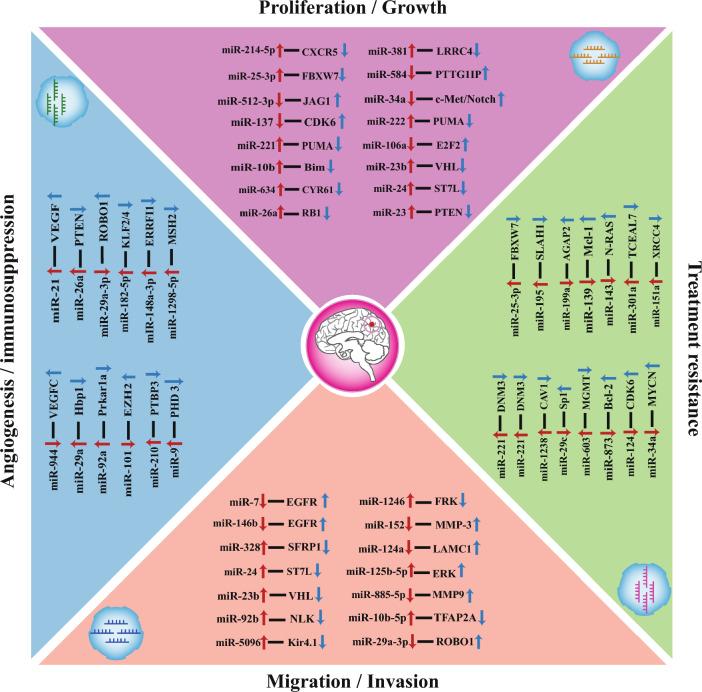
Gliomas are aggressive brain tumors associated with poor prognosis and limited treatment options due to their invasive nature and resistance to current therapeutic modalities. Research suggests that exosomal microRNAs have emerged as key players in intercellular communication within the tumor microenvironment, influencing tumor progression and therapeutic responses. Exosomal microRNAs (miRNAs), small non-coding RNAs, are crucial in glioma development, invasion, metastasis, angiogenesis, and immune evasion by binding to target genes. This comprehensive review examines the clinical relevance and implications of exosomal miRNAs in gliomas, highlighting their potential as diagnostic biomarkers, therapeutic targets and prognosis biomarker. Additionally, we also discuss the limitations of current exsomal miRNA treatments and address challenges and propose future directions for leveraging exosomal miRNAs in precision oncology for glioma management.
胶质瘤是侵袭性脑肿瘤,因其浸润性本质和对当前治疗方式的抗性,预后较差且治疗选择有限。研究表明,外泌体微小RNA已成为肿瘤微环境中细胞间通讯的关键参与者,影响肿瘤进展和治疗反应。外泌体微小RNA(miRNA)是小的非编码RNA,通过与靶基因结合,在胶质瘤的发生、侵袭、转移、血管生成和免疫逃逸中起关键作用。这篇综述探讨了外泌体miRNA在胶质瘤中的临床相关性和意义,强调了它们作为诊断生物标志物、治疗靶点和预后生物标志物的潜力。此外,我们还讨论了当前外泌体miRNA治疗的局限性,应对挑战,并为在胶质瘤精准肿瘤学中利用外泌体miRNA提出未来方向。

 Zotero 插件