
用于预防种植体周围炎的金属涂层或钛牙种植体表面物理、化学改性的抗菌效果:体内研究的系统评价
Antimicrobial Effects of Metal Coatings or Physical, Chemical Modifications of Titanium Dental Implant Surfaces for Prevention of Peri-Implantitis: A Systematic Review of In Vivo Studies.
作者信息
Gkioka Maria, Rausch-Fan Xiaohui
机构信息
Department of Dentistry, Division of Oral and Maxillofacial Surgery, Vaud University Hospital Center, 1005 Lausanne, Switzerland.
Division of Conservative Dentistry and Periodontology, School of Dentistry, Medical University of Vienna, 1090 Vienna, Austria.
出版信息
Antibiotics (Basel). 2024 Sep 23;13(9):908. doi: 10.3390/antibiotics13090908.
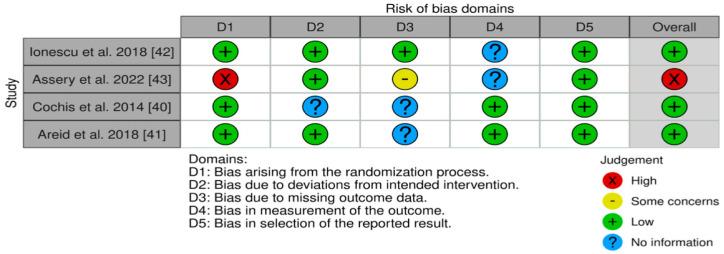
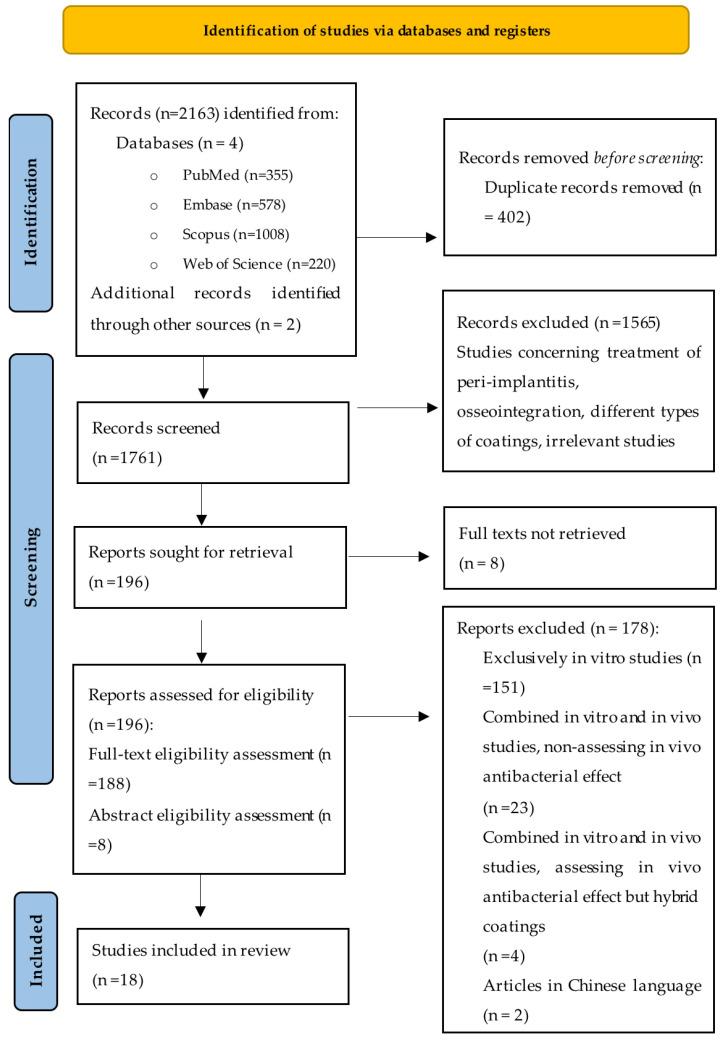
Peri-implantitis poses a significant challenge for implant dentistry due to its association with bacterial colonization on implant surfaces and the complexity of its management. This systematic review aims to assess evidence from in vivo studies regarding the antimicrobial efficacy of titanium (Ti) dental implant surfaces following physical/chemical modifications or the application of various metal element coatings in preventing bacterial growth associated with peri-implantitis. A literature review was conducted across four scientific databases (PubMed, Embase, Scopus, Web of Science), encompassing in vivo studies published between 2013 and 2024, and 18 reports were included in the systematic review. The findings suggest that titanium dental implant surfaces, following physical/chemical modifications and metal element coatings, exhibit antimicrobial effects against bacteria associated with peri-implantitis in humans and various animal models. The reviewed studies indicated a reduction in bacterial colonization, diminished biofilm formation, and decreased signs of inflammation in the peri-implant tissues, which provides evidence that physical/chemical alterations on titanium dental implant surfaces or metal element coatings, like silver (Ag), zinc (Zn), magnesium (Mg), and copper (Cu), demonstrate antimicrobial properties in in vivo studies. However, caution is warranted when translating findings to clinical practice due to methodological disparities and high bias risks. Further larger-scale clinical trials are imperative to assess their long-term efficacy and validate their clinical applicability.
种植体周围炎对种植牙科来说是一项重大挑战,因为它与种植体表面的细菌定植有关,且管理复杂。本系统评价旨在评估来自体内研究的证据,这些研究涉及物理/化学改性或应用各种金属元素涂层后的钛(Ti)牙科种植体表面在预防与种植体周围炎相关的细菌生长方面的抗菌效果。在四个科学数据库(PubMed、Embase、Scopus、Web of Science)中进行了文献综述,涵盖2013年至2024年发表的体内研究,18篇报告纳入了该系统评价。研究结果表明,经过物理/化学改性和金属元素涂层处理后的钛牙科种植体表面,对人类和各种动物模型中与种植体周围炎相关的细菌具有抗菌作用。综述研究表明,种植体周围组织中的细菌定植减少、生物膜形成减少以及炎症迹象减轻,这提供了证据,证明钛牙科种植体表面的物理/化学改变或银(Ag)、锌(Zn)、镁(Mg)和铜(Cu)等金属元素涂层在体内研究中具有抗菌特性。然而,由于方法上的差异和高偏倚风险,在将研究结果转化为临床实践时需谨慎。必须进行进一步的大规模临床试验,以评估其长期疗效并验证其临床适用性。
 Zotero 插件