
急性白血病中的微小残留病:从急性早幼粒细胞白血病中汲取的经验教训。
MRD in Acute Leukemias: Lessons Learned from Acute Promyelocytic Leukemia.
作者信息
Kegyes David, Thiagarajan Praveena S, Ghiaur Gabriel
机构信息
MedFuture Research Center for Advanced Medicine, Iuliu Hațieganu University of Medicine and Pharmacy, 400349 Cluj-Napoca, Romania.
The Sidney Kimmel Cancer Center, The Johns Hopkins University, Baltimore, MD 21205, USA.
出版信息
Cancers (Basel). 2024 Sep 20;16(18):3208. doi: 10.3390/cancers16183208.
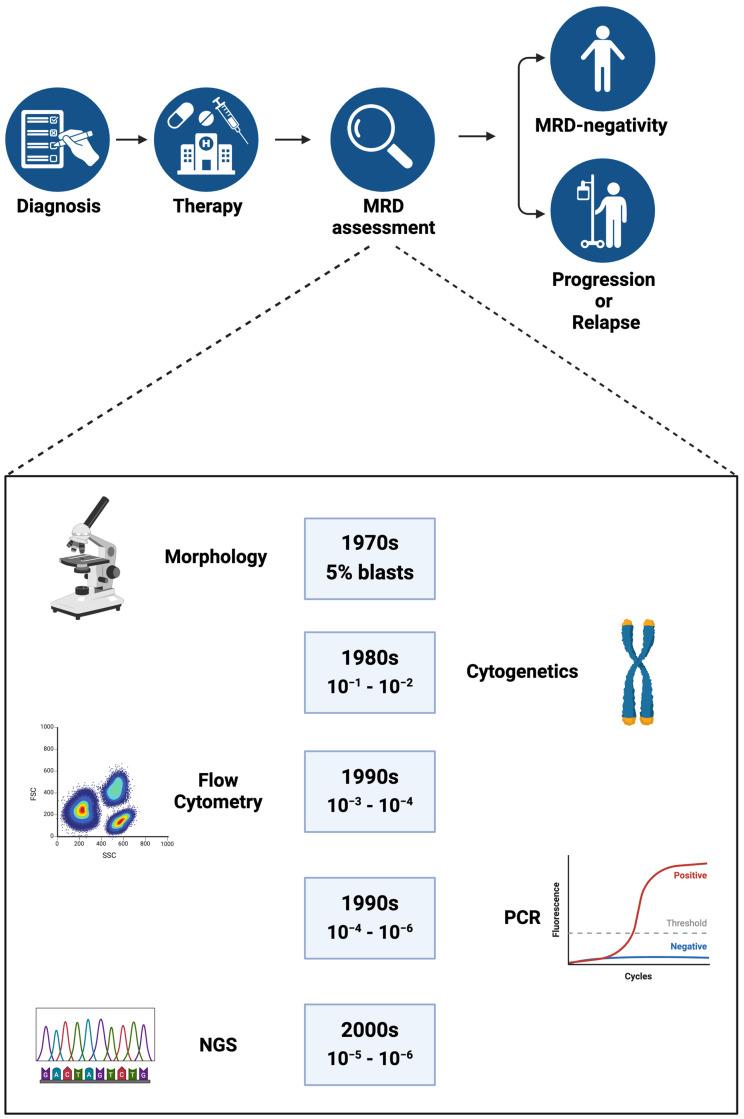
Advances in molecular biology, polymerase chain reaction (PCR), and next-generation sequencing (NGS) have transformed the concept of minimal residual disease (MRD) from a philosophical idea into a measurable reality. Acute promyelocytic leukemia (APL) leads the way in this transformation, initially using PCR to detect MRD in patients in remission, and more recently, aiming to eliminate it entirely with modern treatment strategies. Along the way, we have gained valuable insights that, when applied to other forms of acute leukemia, hold the potential to significantly improve the outcomes of these challenging diseases. In this review, we explore the current use of MRD in the management of acute leukemia and delve into the biological processes that contribute to MRD persistence, including its overlap with leukemia stem cells and the role of the bone marrow microenvironment.
分子生物学、聚合酶链反应(PCR)和新一代测序(NGS)的进展已将微小残留病(MRD)的概念从一个哲学理念转变为一个可测量的现实。急性早幼粒细胞白血病(APL)在这一转变中走在前列,最初使用PCR来检测缓解期患者的MRD,最近则旨在通过现代治疗策略将其完全消除。在此过程中,我们获得了宝贵的见解,这些见解应用于其他形式的急性白血病时,有可能显著改善这些具有挑战性疾病的治疗结果。在本综述中,我们探讨了MRD在急性白血病管理中的当前应用,并深入研究了导致MRD持续存在的生物学过程,包括其与白血病干细胞的重叠以及骨髓微环境的作用。
 Zotero 插件