
地榆苷通过活性氧介导的内质网应激诱导人结直肠癌细胞在体外和异种移植模型中的 G1 期细胞周期停滞和凋亡。
Decursin Induces G1 Cell Cycle Arrest and Apoptosis through Reactive Oxygen Species-Mediated Endoplasmic Reticulum Stress in Human Colorectal Cancer Cells in In Vitro and Xenograft Models.
机构信息
Division of Research Center, Scripps Korea Antibody Institute, Chuncheon 24341, Republic of Korea.
出版信息
Int J Mol Sci. 2024 Sep 14;25(18):9939. doi: 10.3390/ijms25189939.
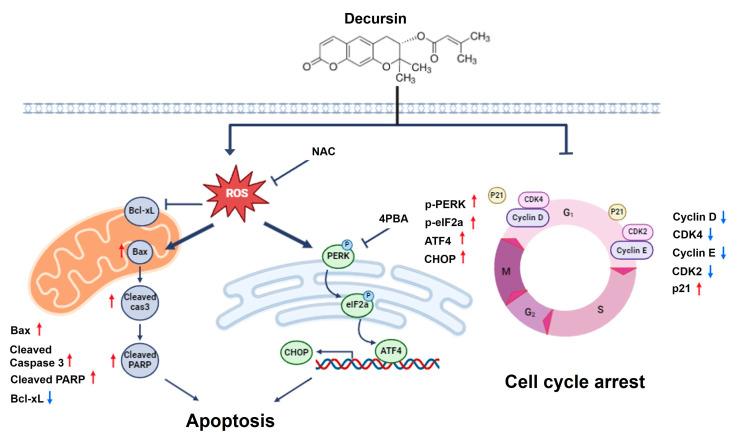
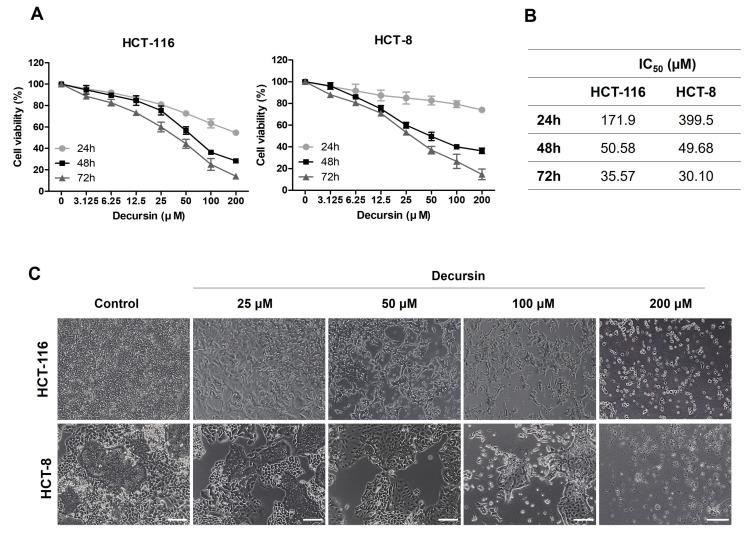
Decursin, a coumarin isolated from Nakai, possesses anti-inflammatory and anti-cancer properties. However, the molecular mechanisms underlying its anti-cancer effects against human colorectal cancer (CRC) are unclear. Therefore, this study aimed to evaluate the biological activities of decursin in CRC in vitro and in vivo and to determine its underlying mechanism of action. Decursin exhibited anti-tumor activity in vitro, accompanied by an increase in G1 cell cycle arrest and apoptosis in HCT-116 and HCT-8 CRC cells. Decursin also induced the production of reactive oxygen species (ROS), thereby activating the endoplasmic reticulum (ER) stress apoptotic pathway in CRC cells. Furthermore, the role of ROS in decursin-induced apoptosis was investigated using the antioxidant N-acetyl-L-cysteine. Inhibiting ROS production reversed decursin-induced ER stress. Moreover, decursin significantly suppressed tumor growth in a subcutaneous xenograft mouse model of HCT-116 and HCT-8 CRC cells without causing host toxicity. Decursin also decreased cell proliferation, as documented by Ki-67, and partly increased cleaved caspase 3 expression in tumor tissues by activating ER stress apoptotic pathways. These findings suggest that decursin induces cell cycle arrest and apoptosis in human CRC cells via ROS-mediated ER stress, suggesting that decursin could be a therapeutic agent for CRC.
蛇床子素是从当归中分离得到的香豆素,具有抗炎和抗癌作用。然而,其抑制人结直肠癌细胞(CRC)的分子机制尚不清楚。因此,本研究旨在评估蛇床子素在体外和体内对 CRC 的生物学活性,并确定其作用机制。蛇床子素在体外表现出抗肿瘤活性,伴随着 HCT-116 和 HCT-8 CRC 细胞中 G1 细胞周期阻滞和凋亡的增加。蛇床子素还诱导活性氧(ROS)的产生,从而激活 CRC 细胞中的内质网(ER)应激凋亡途径。此外,使用抗氧化剂 N-乙酰-L-半胱氨酸研究了 ROS 在蛇床子素诱导的细胞凋亡中的作用。抑制 ROS 产生逆转了蛇床子素诱导的 ER 应激。此外,蛇床子素显著抑制了 HCT-116 和 HCT-8 CRC 细胞皮下异种移植小鼠模型中的肿瘤生长,而没有引起宿主毒性。蛇床子素还通过激活 ER 应激凋亡途径,降低了 Ki-67 记录的细胞增殖,并部分增加了肿瘤组织中 cleaved caspase 3 的表达。这些发现表明,蛇床子素通过 ROS 介导的 ER 应激诱导人 CRC 细胞的细胞周期阻滞和凋亡,提示蛇床子素可能是 CRC 的一种治疗药物。


 Zotero 插件