
儿童和青少年 1 型糖尿病的泪液蛋白质组学:一种有希望的糖尿病发病机制和并发症生物标志物鉴定方法。
Tear Proteomics in Children and Adolescents with Type 1 Diabetes: A Promising Approach to Biomarker Identification of Diabetes Pathogenesis and Complications.
机构信息
Diabetes Center, Division of Endocrinology, Metabolism and Diabetes, First Department of Pediatrics, National and Kapodistrian University of Athens Medical School, "Aghia Sophia" Children's Hospital, 11527 Athens, Greece.
Postgraduate Course of the Science of Stress and Health Promotion, School of Medicine, National and Kapodistrian University of Athens, 11527 Athens, Greece.
出版信息
Int J Mol Sci. 2024 Sep 17;25(18):9994. doi: 10.3390/ijms25189994.
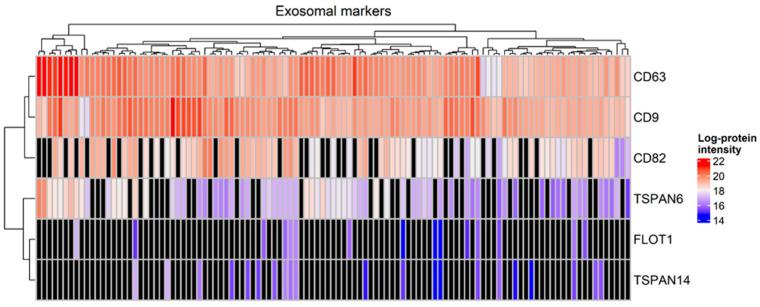
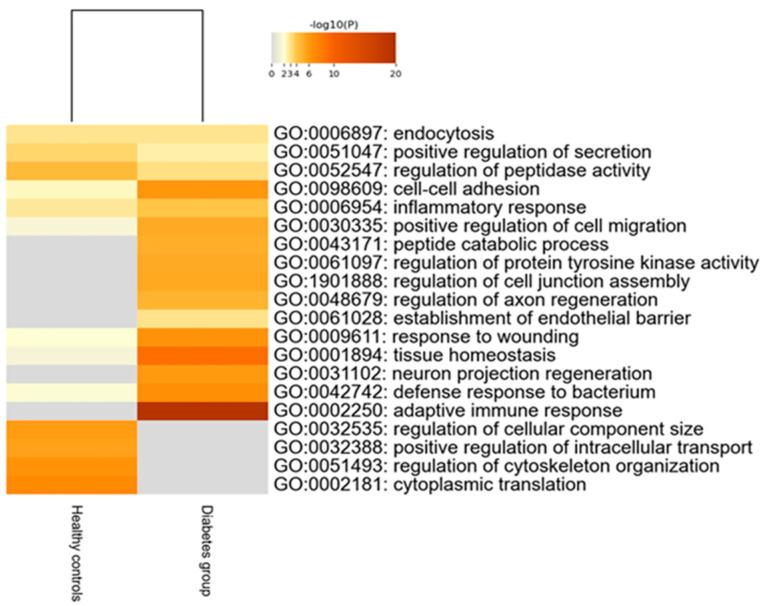
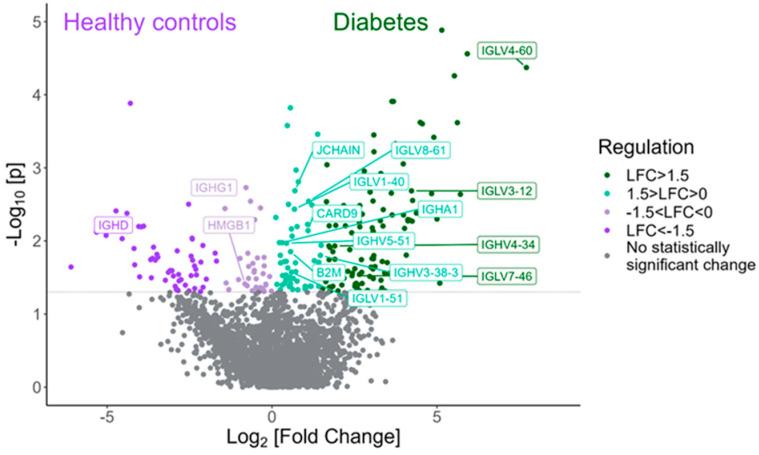
The aim of the current study was to investigate the tear proteome in children and adolescents with type 1 diabetes (T1D) compared to healthy controls, and to identify differences in the tear proteome of children with T1D depending on different characteristics of the disease. Fifty-six children with T1D at least one year after diagnosis, aged 6-17 years old, and fifty-six healthy age- and sex-matched controls were enrolled in this cross-sectional study. The proteomic analysis was based on liquid chromatography tandem mass spectrometry (LC-MS/MS) enabling the identification and quantification of the protein content via Data-Independent Acquisition by Neural Networks (DIA-NN). Data are available via ProteomeXchange with the identifier PXD052994. In total, 3302 proteins were identified from tear samples. Two hundred thirty-nine tear proteins were differentially expressed in children with T1D compared to healthy controls. Most of them were involved in the immune response, tissue homeostasis and inflammation. The presence of diabetic ketoacidosis at diagnosis and the level of glycemic control of children with T1D influenced the tear proteome. Tear proteomics analysis revealed a different proteome pattern in children with T1D compared to healthy controls offering insights on deregulated biological processes underlying the pathogenesis of T1D. Differences within the T1D group could unravel biomarkers for early detection of long-term complications of T1D.
本研究旨在探讨 1 型糖尿病(T1D)患儿与健康对照者的泪液蛋白质组,并鉴定 T1D 患儿的泪液蛋白质组在疾病不同特征方面的差异。本横断面研究纳入了 56 名至少在诊断后 1 年患有 T1D 的 6-17 岁儿童和 56 名年龄和性别匹配的健康对照者。蛋白质组学分析基于液相色谱串联质谱(LC-MS/MS),通过神经网络的数据非依赖性采集(DIA-NN)进行蛋白质含量的鉴定和定量。通过 ProteomeXchange 可获取数据,标识符为 PXD052994。从泪液样本中鉴定出 3302 种蛋白质。与健康对照组相比,239 种蛋白质在 T1D 患儿的泪液中表达差异。其中大多数与免疫反应、组织稳态和炎症有关。诊断时存在糖尿病酮症酸中毒和 T1D 患儿的血糖控制水平影响了泪液蛋白质组。泪液蛋白质组学分析显示,与健康对照组相比,T1D 患儿的蛋白质组模式存在差异,为 T1D 发病机制中失调的生物学过程提供了见解。T1D 组内的差异可能揭示了 T1D 长期并发症早期检测的生物标志物。

 Zotero 插件