
基于静电纺纳米纤维的电化学传感器在食品安全中的应用。
Application of Electrospun Nanofiber-Based Electrochemical Sensors in Food Safety.
机构信息
College of Intelligent Systems Science and Engineering, Hubei Minzu University, Enshi 445000, China.
出版信息
Molecules. 2024 Sep 17;29(18):4412. doi: 10.3390/molecules29184412.
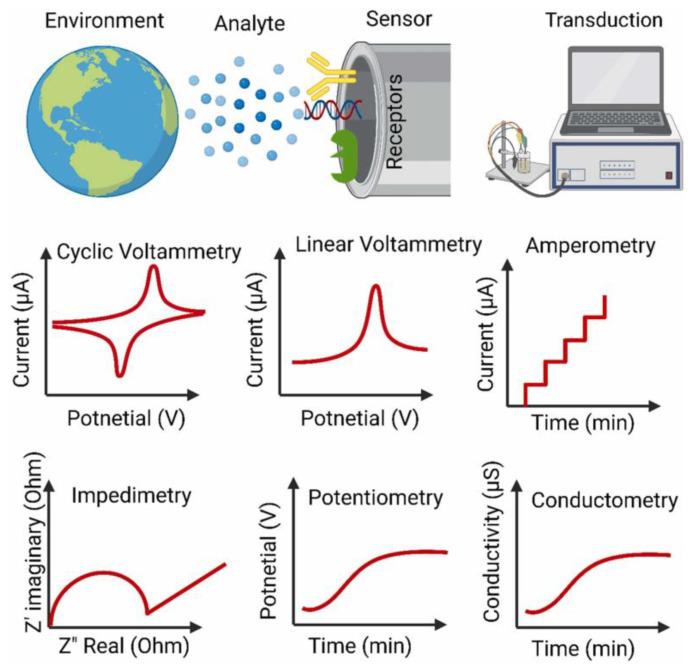
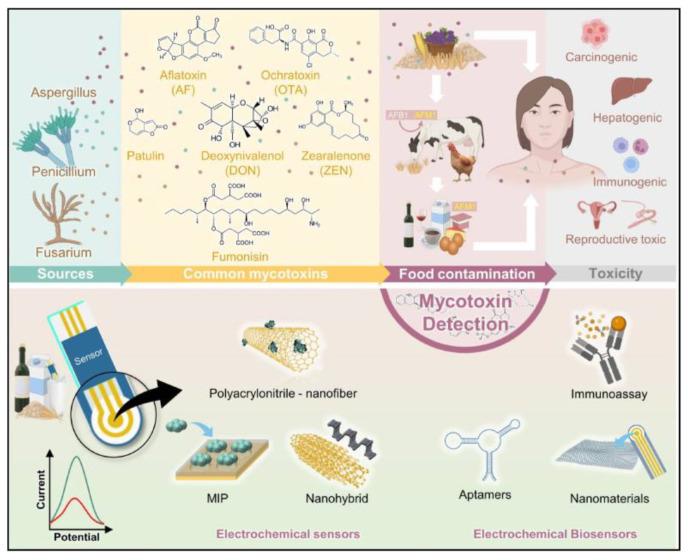
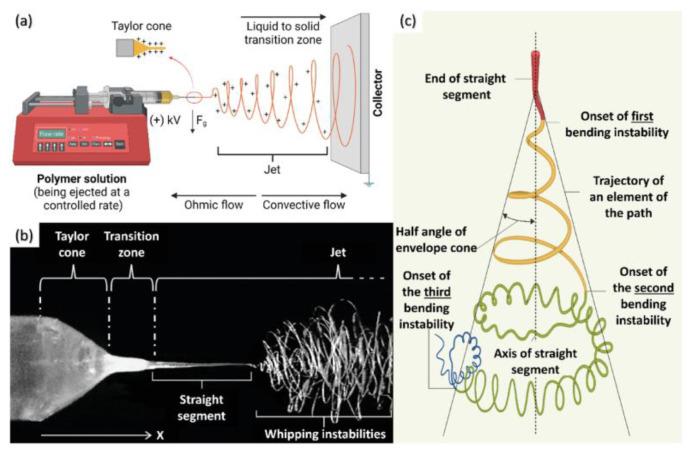
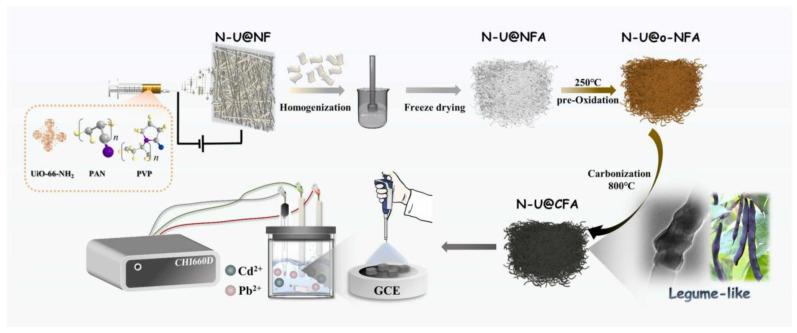
Food safety significantly impacts public health and social welfare. Recently, issues such as heavy metal ions, drug residues, food additives, and microbial contamination in food have become increasingly prominent. Electrochemical sensing technology, known for its low cost, simplicity, rapid response, high sensitivity, and excellent selectivity, has been crucial in food safety detection. Electrospun nanofibers, with their high specific surface area, superior mechanical properties, and design flexibility, offer new insights and technical platforms for developing electrochemical sensors. This study introduces the fundamental principles, classifications, and detection mechanisms of electrochemical sensors, along with the principles and classifications of electrospinning technology. The applications of electrospun nanofiber-based electrochemical sensors in food safety detection over the past five years are detailed, and the limitations and future research prospects are discussed. Continuous innovation and optimization are expected to make electrospun nanofiber-based electrochemical sensors a key technology in rapid food safety detection, providing valuable references for expanding their application and advancing food safety detection methods.
食品安全对公众健康和社会福利具有重大影响。近年来,食品中重金属离子、药物残留、食品添加剂和微生物污染等问题日益突出。电化学传感技术以其成本低、简单、快速响应、高灵敏度和优异的选择性而成为食品安全检测的关键技术。电纺纳米纤维具有比表面积大、机械性能优异和设计灵活等特点,为开发电化学传感器提供了新的思路和技术平台。本文介绍了电化学传感器的基本原理、分类和检测机制,以及电纺技术的原理和分类。详细介绍了过去五年基于电纺纳米纤维的电化学传感器在食品安全检测中的应用,并讨论了其局限性和未来的研究前景。预计不断的创新和优化将使基于电纺纳米纤维的电化学传感器成为快速食品安全检测的关键技术,为扩大其应用和推进食品安全检测方法提供有价值的参考。





 Zotero 插件