
年龄相关的固有和适应性免疫变化:肠道微生物组的作用。
Age-associated changes in innate and adaptive immunity: role of the gut microbiota.
机构信息
College of Life Science, Yangtze University, Jingzhou, China.
Department of Chemistry, Faculty of Science, University of Hradec Králové, Hradec Králové, Czechia.
出版信息
Front Immunol. 2024 Sep 16;15:1421062. doi: 10.3389/fimmu.2024.1421062. eCollection 2024.
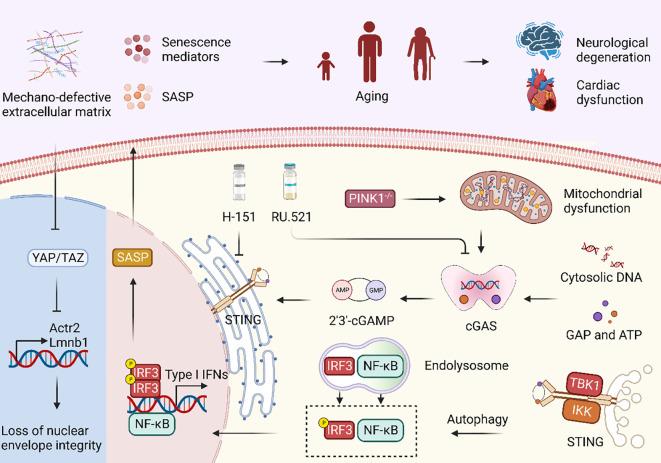
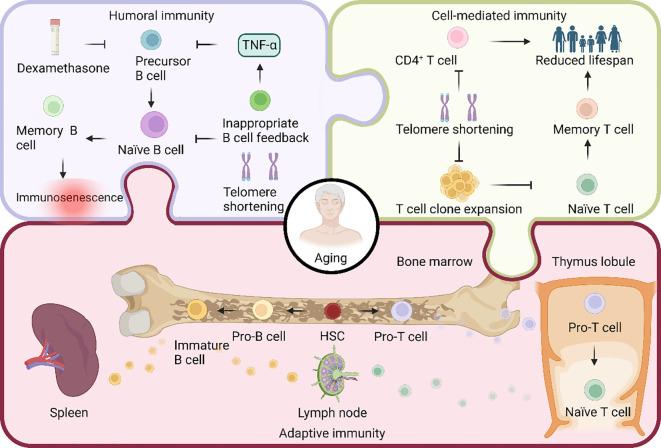
Aging is generally regarded as an irreversible process, and its intricate relationship with the immune system has garnered significant attention due to its profound implications for the health and well-being of the aging population. As people age, a multitude of alterations occur within the immune system, affecting both innate and adaptive immunity. In the realm of innate immunity, aging brings about changes in the number and function of various immune cells, including neutrophils, monocytes, and macrophages. Additionally, certain immune pathways, like the cGAS-STING, become activated. These alterations can potentially result in telomere damage, the disruption of cytokine signaling, and impaired recognition of pathogens. The adaptive immune system, too, undergoes a myriad of changes as age advances. These include shifts in the number, frequency, subtype, and function of T cells and B cells. Furthermore, the human gut microbiota undergoes dynamic changes as a part of the aging process. Notably, the interplay between immune changes and gut microbiota highlights the gut's role in modulating immune responses and maintaining immune homeostasis. The gut microbiota of centenarians exhibits characteristics akin to those found in young individuals, setting it apart from the microbiota observed in typical elderly individuals. This review delves into the current understanding of how aging impacts the immune system and suggests potential strategies for reversing aging through interventions in immune factors.
衰老是一个被普遍认为不可逆转的过程,由于其对老年人群健康和幸福的深远影响,其与免疫系统的复杂关系引起了广泛关注。随着人们年龄的增长,免疫系统会发生多种改变,影响固有免疫和适应性免疫。在固有免疫方面,衰老导致各种免疫细胞(包括中性粒细胞、单核细胞和巨噬细胞)数量和功能发生变化。此外,某些免疫途径,如 cGAS-STING,会被激活。这些改变可能导致端粒损伤、细胞因子信号传导中断以及病原体识别受损。随着年龄的增长,适应性免疫系统也会发生多种变化。这些变化包括 T 细胞和 B 细胞数量、频率、亚型和功能的改变。此外,人类肠道微生物组也会随着衰老过程发生动态变化。值得注意的是,免疫变化和肠道微生物组之间的相互作用强调了肠道在调节免疫反应和维持免疫稳态方面的作用。百岁老人的肠道微生物组表现出与年轻人相似的特征,这与典型老年人的肠道微生物组明显不同。本综述深入探讨了衰老如何影响免疫系统的现有认识,并提出了通过干预免疫因素来逆转衰老的潜在策略。


 Zotero 插件