
通过 和 抑制生物膜。
Inhibition of biofilm by and .
机构信息
Department of Infectious Diseases and Hospital Epidemiology, University Hospital Zurich, University Zurich, Zurich, Switzerland.
出版信息
mSphere. 2024 Oct 29;9(10):e0043024. doi: 10.1128/msphere.00430-24. Epub 2024 Oct 3.
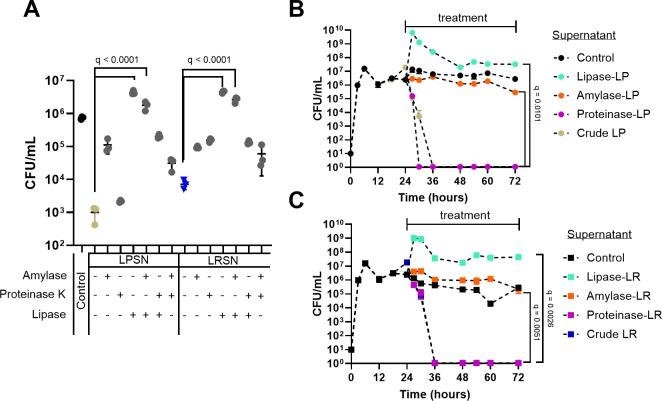
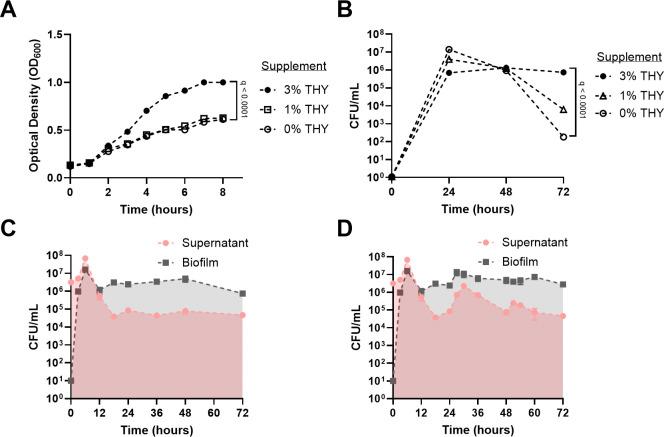
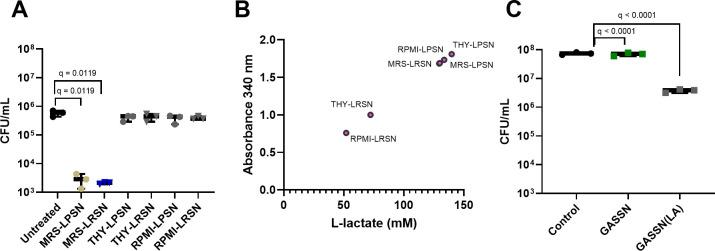
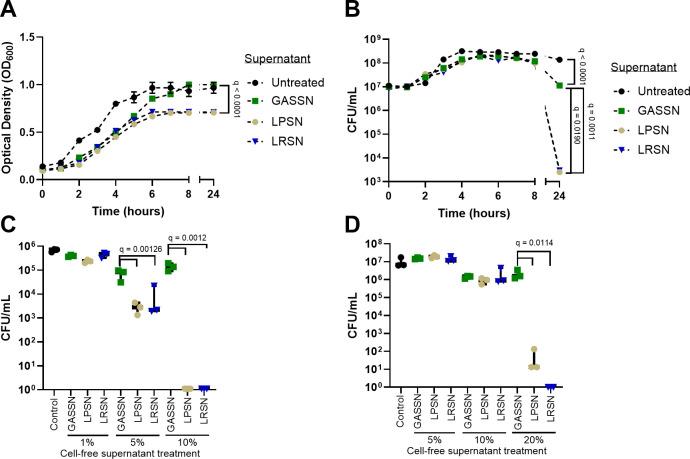
The human pathobiont forms biofilms and causes infections, such as pharyngotonsillitis and necrotizing fasciitis. Bacterial biofilms are more resilient to antibiotic treatment, and new therapeutic strategies are needed to control biofilm-associated infections, such as recurrent pharyngotonsillitis. and are two bacterial commensals used for their probiotic properties. This study aimed to elucidate the anti-biofilm properties of and cell-free supernatants (LPSN and LRSN, respectively) on biofilms grown in supplemented minimal medium. When planktonic or biofilm were exposed to LPSN or LRSN survival was reduced significantly in a concentration-dependent manner, and the effect was more pronounced on preformed biofilms. Enzymatic digestion of LPSN and LRSN suggested that glycolipid compounds might cause the antimicrobial effect. In conclusion, this study indicates that and produce glycolipid bioactive compounds that reduce the viability of in planktonic and biofilm cultures.IMPORTANCE infections are a significant concern for populations at risk, such as children and the elderly, as non-invasive conditions such as impetigo and strep throat can lead to severe invasive diseases such as necrotizing fasciitis. Despite its susceptibility to current antibiotics, the formation of biofilm by this pathogen decreases the efficacy of antibiotic treatment alone. The ability of commensal lactobacillus to kill has been documented by previous studies using settings. The relevance of our study is in using a physiological setup and a more detailed understanding of the nature of the lactobacillus molecule affecting the viability of . This additional knowledge will help for a better comprehension of the molecules' characteristics and kinetics, which in turn will facilitate new avenues of research for its translation to new therapies.
人体共生菌形成生物膜并引起感染,如咽炎和坏死性筋膜炎。细菌生物膜对抗生素治疗更具弹性,需要新的治疗策略来控制生物膜相关感染,如复发性咽炎。和是两种用于其益生菌特性的细菌共生菌。本研究旨在阐明和细胞无细胞上清液(分别为 LPSN 和 LRSN)对补充最小培养基中生长的生物膜的抗生物膜特性。当浮游或生物膜暴露于 LPSN 或 LRSN 时,存活率以浓度依赖的方式显着降低,并且对预先形成的生物膜的影响更为明显。LPSN 和 LRSN 的酶消化表明,糖脂化合物可能导致抗菌作用。总之,这项研究表明和产生糖脂生物活性化合物,可降低浮游和生物膜培养物中活力的存活率。
重要的是,对于处于危险中的人群,如儿童和老年人,感染是一个重大问题,因为非侵入性疾病,如脓疱疮和链球菌性咽炎,可能导致严重的侵袭性疾病,如坏死性筋膜炎。尽管该病原体对当前抗生素敏感,但生物膜的形成会降低单独使用抗生素治疗的效果。先前的研究使用 设定已经证明了共生乳杆菌杀死的能力。我们的研究的相关性在于使用生理设置和更详细地了解影响活力的乳杆菌分子的性质。这种额外的知识将有助于更好地理解分子的特性和动力学,从而为其转化为新疗法开辟新的研究途径。

 Zotero 插件