
8. 带状疱疹及带状疱疹后神经痛。
8. Herpes zoster and post herpetic neuralgia.
作者信息
Adriaansen Elisabeth J M, Jacobs Julien G, Vernooij Lisette M, van Wijck Albert J M, Cohen Steven P, Huygen Frank J P M, Rijsdijk Mienke
机构信息
Pain Clinic, Department of Anesthesiology, University Medical Center Utrecht, Utrecht University, Utrecht, The Netherlands.
Anesthesiology, Amsterdam University Medical Center, Amsterdam, The Netherlands.
出版信息
Pain Pract. 2024 Oct 4;25(1). doi: 10.1111/papr.13423.
INTRODUCTION
Patients suffering from postherpetic neuralgia (PHN) report unilateral chronic pain in one or more dermatomes after an acute herpes zoster (HZ) infection. The incidence of acute HZ ranges between three and five patients per 1000 person-years. In one out of four patients, acute HZ-related pain will transition into PHN. PHN can be very disabling for patients and reduce quality of life. Additionally, the treatment of PHN is characterized by high failure rates. The aim of this review is to give an update on the previous practical guideline published in 2011 and revised in 2015 (published in 2019) and to provide an overview of current interventional treatment options for HZ infection and PHN.
METHODS
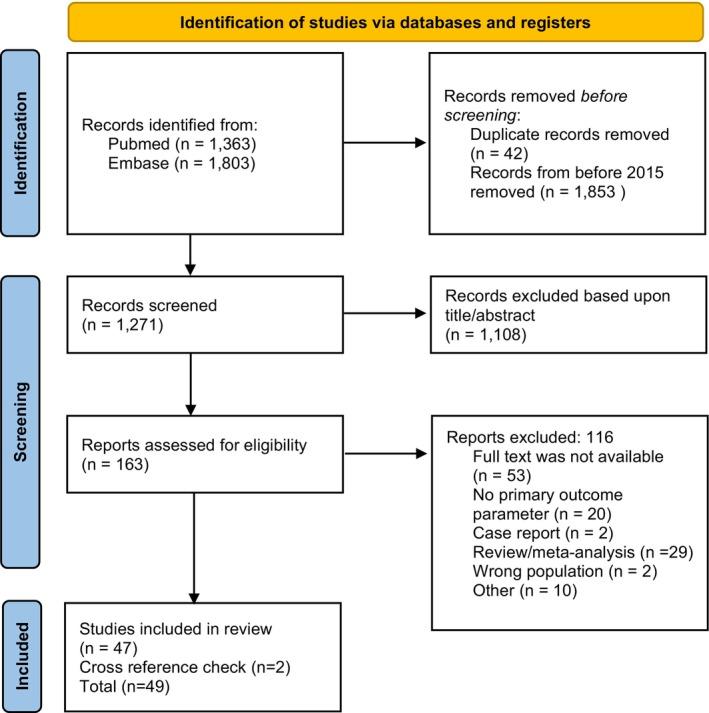
The literature on the diagnosis and treatment of HZ and PHN was systematically reviewed and summarized.
RESULTS
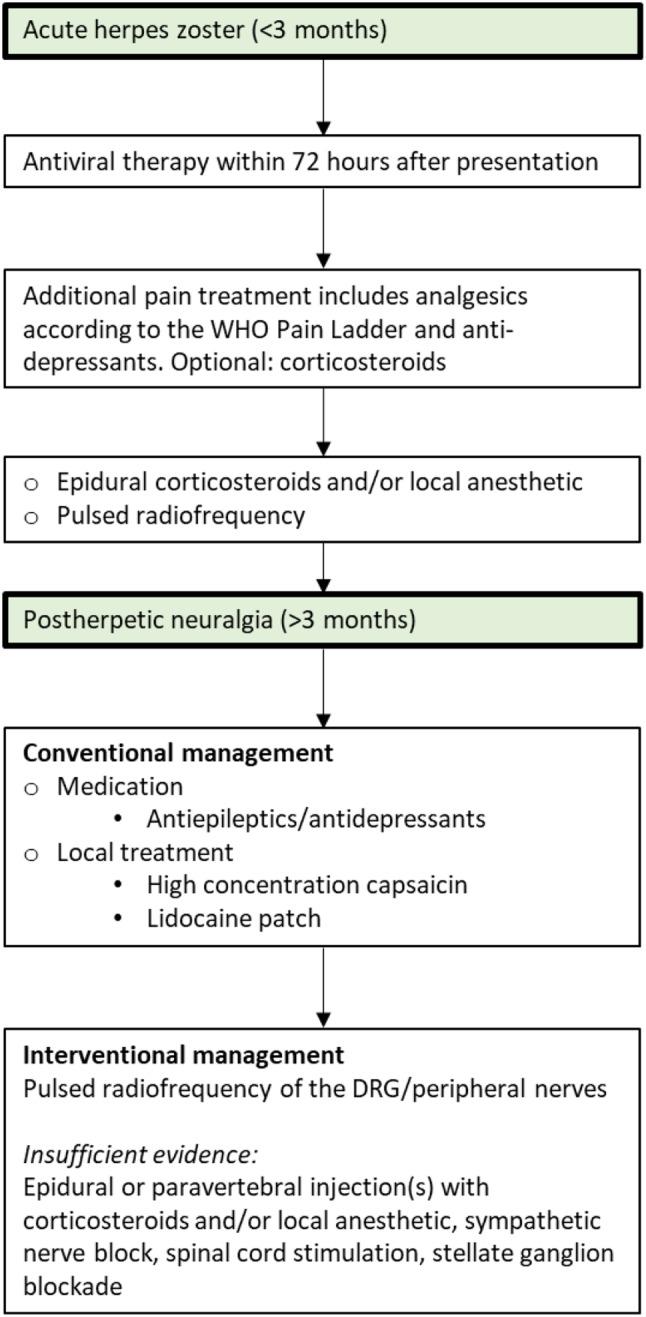
The most important treatment for acute HZ-related pain is antiviral therapy within 72 h of symptom onset. Additional symptomatic treatment options are analgesic drugs according to the WHO pain ladder, tricyclic antidepressants (eg, nortriptyline), and antiepileptic drugs (eg, gabapentin). If pain is not sufficiently reduced, interventional treatment such as an epidural injection with local anesthetics and corticosteroids or pulsed radiofrequency of the dorsal root ganglion (DRG) are options. Treatment for PHN is preferably transdermal capsaicin, lidocaine, or oral drugs such as antidepressants or antiepileptics.
CONCLUSIONS
Treatment of acute HZ-related pain especially PHN is challenging. Besides the conventional treatment for PHN, interventional management is considered a new treatment option. PRF of DRG seems to be the most promising interventional management.
引言
带状疱疹后神经痛(PHN)患者在急性带状疱疹(HZ)感染后,会出现一个或多个皮节的单侧慢性疼痛。急性HZ的发病率为每1000人年3至5例。四分之一的急性HZ相关疼痛患者会转变为PHN。PHN会使患者严重致残并降低生活质量。此外,PHN的治疗失败率很高。本综述的目的是更新2011年发表并于2015年修订(2019年出版)的先前实用指南,并概述当前针对HZ感染和PHN的介入治疗选择。
方法
对有关HZ和PHN诊断与治疗的文献进行了系统回顾和总结。
结果
急性HZ相关疼痛的最重要治疗方法是在症状出现后72小时内进行抗病毒治疗。其他对症治疗选择包括根据世界卫生组织疼痛阶梯使用的镇痛药、三环类抗抑郁药(如去甲替林)和抗癫痫药(如加巴喷丁)。如果疼痛没有充分减轻,可以选择介入治疗,如硬膜外注射局部麻醉药和皮质类固醇或背根神经节(DRG)脉冲射频。PHN的治疗首选透皮辣椒素、利多卡因或口服药物,如抗抑郁药或抗癫痫药。
结论
急性HZ相关疼痛尤其是PHN的治疗具有挑战性。除了PHN的传统治疗方法外,介入治疗被认为是一种新的治疗选择。DRG脉冲射频似乎是最有前景的介入治疗方法。
 Zotero 插件