
通过使用AC70人血管紧张素转换酶2转基因小鼠来表征新型冠状病毒的神经侵袭和神经病理学。
Characterizing neuroinvasion and neuropathology of SARS-CoV-2 by using AC70 human ACE2 transgenic mice.
作者信息
Hsu Jason C, Saenkham-Huntsinger Panatda, Huang Pinghan, Octaviani Cassio Pontes, Drelich Aleksandra K, Peng Bi-Hung, Tseng Chien-Te K
机构信息
Department of Biochemistry, Cell & Molecular Biology, The University of Texas Medical Branch, Galveston, TX, United States.
Department of Microbiology & Immunology, The University of Texas Medical Branch, Galveston, TX, United States.
出版信息
Front Microbiol. 2024 Sep 24;15:1455462. doi: 10.3389/fmicb.2024.1455462. eCollection 2024.
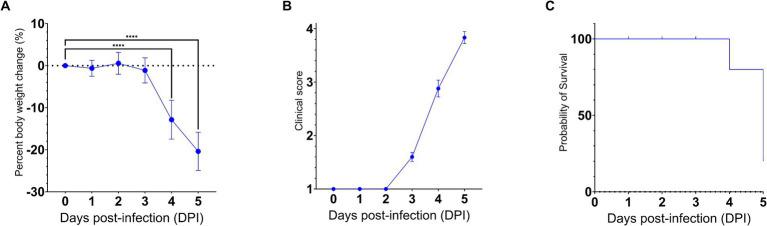
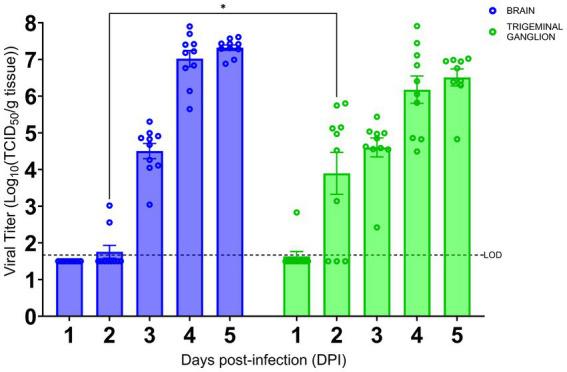
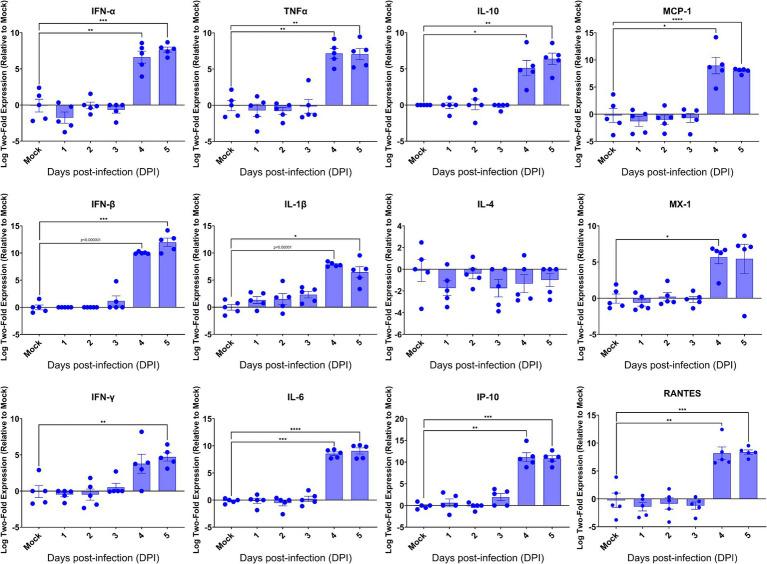
COVID-19 presents with a plethora of neurological signs and symptoms despite being characterized as a respiratory disease, including seizures, anxiety, depression, amnesia, attention deficits, and alterations in consciousness. The olfactory nerve is widely accepted as the neuroinvasive route by which the etiological agent SARS-CoV-2 enters the brain, but the trigeminal nerve is an often-overlooked additional route. Based on this consensus, we initially conducted a pilot experiment investigating the olfactory nerve route of SARS-CoV-2 neuroinvasion via intranasal inoculation in AC70 human ACE2 transgenic mice. Notably, we found that the trigeminal ganglion is an early and highly efficient site of viral replication, which then rapidly spread widely throughout the brain where neurons were primarily targeted. Despite the extensive viral infection across the brain, obvious evidence of tissue pathology including inflammatory infiltration, glial activation, and apoptotic cell deaths were not consistently observed, albeit inflammatory cytokines were significantly induced. However, the expression levels of different genes related to neuronal function, including the neurotransmitter dopamine pathway as well as synaptic function, and markers of neuronal damage were altered as compared to mock-infected mice. Our findings suggest that the trigeminal nerve may serve as a neuroinvasive route complementary to the olfactory nerve and that the ensuing neuroinvasion presented a unique neuropathological profile. This study provides insights into potential neuropathogenic mechanisms utilized by coronaviruses.
尽管新冠病毒肺炎(COVID-19)被定义为一种呼吸系统疾病,但它会出现大量神经学体征和症状,包括癫痫发作、焦虑、抑郁、失忆、注意力缺陷以及意识改变。嗅觉神经被广泛认为是病原体严重急性呼吸综合征冠状病毒2(SARS-CoV-2)进入大脑的神经侵袭途径,但三叉神经是一条经常被忽视的额外途径。基于这一共识,我们最初进行了一项初步实验,通过在AC70人血管紧张素转换酶2(ACE2)转基因小鼠中鼻内接种来研究SARS-CoV-2神经侵袭的嗅觉神经途径。值得注意的是,我们发现三叉神经节是病毒复制的早期且高效的位点,然后病毒迅速广泛传播至整个大脑,主要靶向神经元。尽管病毒在整个大脑中广泛感染,但尽管炎症细胞因子被显著诱导,却并未始终观察到包括炎性浸润、胶质细胞活化和凋亡性细胞死亡在内的明显组织病理学证据。然而,与假感染小鼠相比,与神经元功能相关的不同基因的表达水平发生了改变,包括神经递质多巴胺途径以及突触功能,还有神经元损伤的标志物。我们的研究结果表明,三叉神经可能作为嗅觉神经的一种补充性神经侵袭途径,并且随之而来的神经侵袭呈现出独特的神经病理学特征。这项研究为冠状病毒利用的潜在神经致病机制提供了见解。





 Zotero 插件