
异质结半导体纳米催化剂用于癌症诊疗
Heterojunction semiconductor nanocatalysts as cancer theranostics.
作者信息
Sabu Arjun, Kandel Manoj, Sarma Ritwick Ranjan, Ramesan Lakshminarayan, Roy Ekta, Sharmila Ramalingam, Chiu Hsin-Cheng
机构信息
Department of Biomedical Engineering and Environmental Sciences, National Tsing Hua University, Hsinchu, Taiwan.
出版信息
APL Bioeng. 2024 Oct 4;8(4):041502. doi: 10.1063/5.0223718. eCollection 2024 Dec.
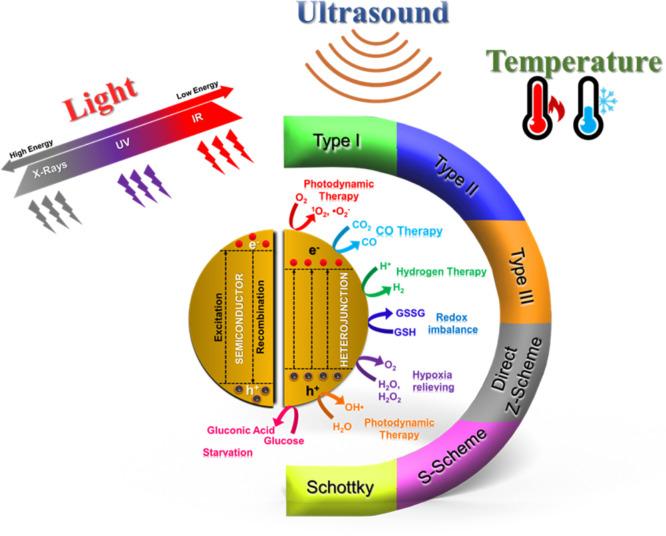
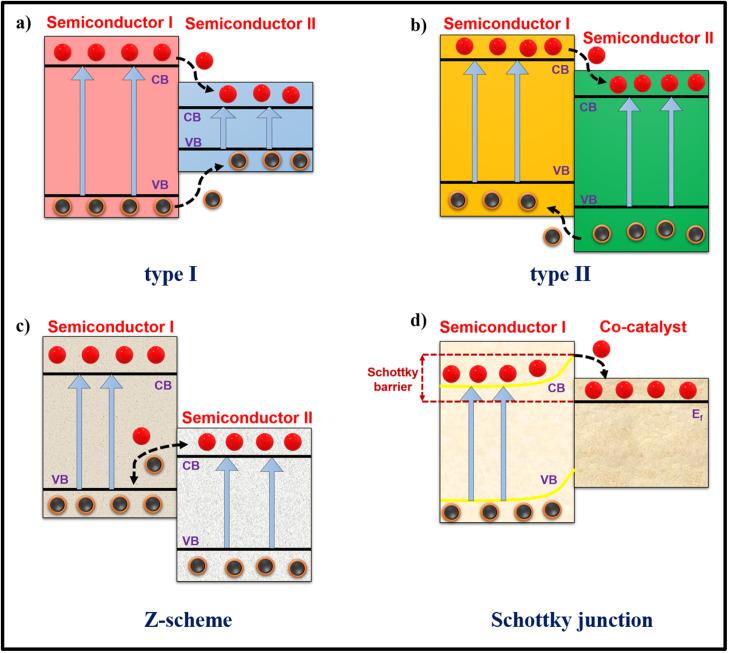
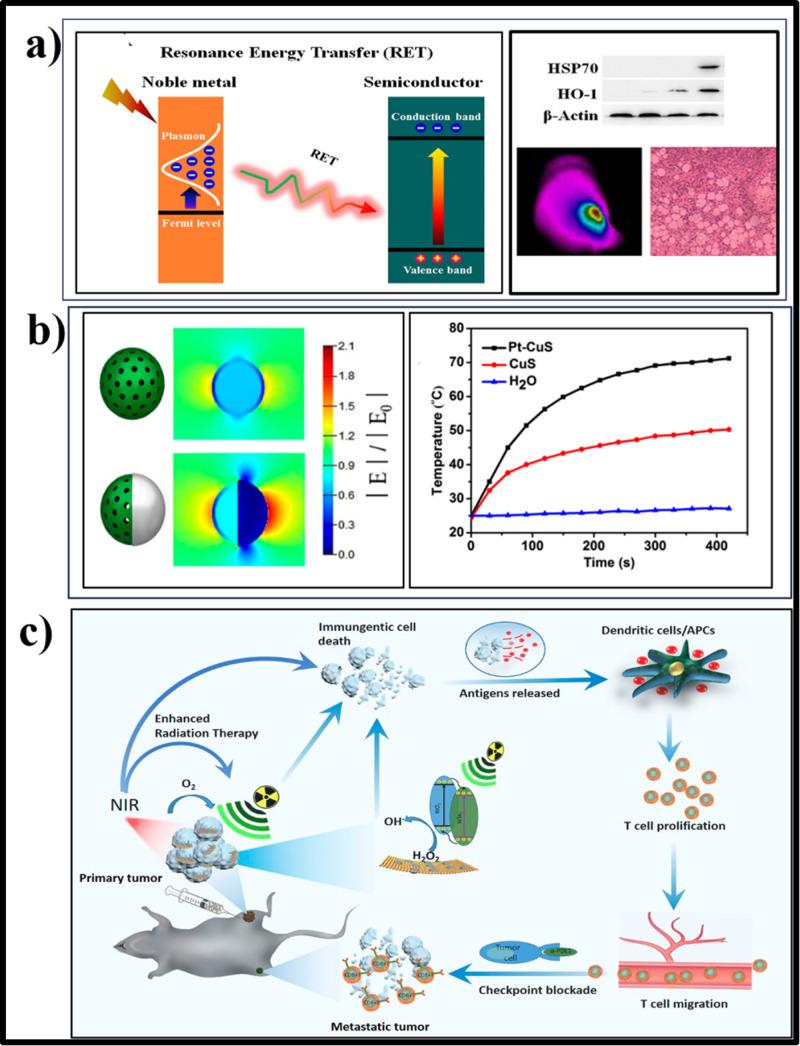
Cancer nanotechnology is a promising area of cross-disciplinary research aiming to develop facile, effective, and noninvasive strategies to improve cancer diagnosis and treatment. Catalytic therapy based on exogenous stimulus-responsive semiconductor nanomaterials has shown its potential to address the challenges under the most global medical needs. Semiconductor nanocatalytic therapy is usually triggered by the catalytic action of hot electrons and holes during local redox reactions within the tumor, which represent the response of nontoxic semiconductor nanocatalysts to pertinent internal or external stimuli. However, careful architecture design of semiconductor nanocatalysts has been the major focus since the catalytic efficiency is often limited by facile hot electron/hole recombination. Addressing these challenges is vital for the progress of cancer catalytic therapy. In recent years, diverse strategies have been developed, with heterojunctions emerging as a prominent and extensively explored method. The efficiency of charge separation under exogenous stimulation can be heightened by manipulating the semiconducting performance of materials through heterojunction structures, thereby enhancing catalytic capabilities. This review summarizes the recent applications of exogenous stimulus-responsive semiconducting nanoheterojunctions for cancer theranostics. The first part of the review outlines the construction of different heterojunction types. The next section summarizes recent designs, properties, and catalytic mechanisms of various semiconductor heterojunctions in tumor therapy. The review concludes by discussing the challenges and providing insights into their prospects within this dynamic and continuously evolving field of research.
癌症纳米技术是一个充满前景的跨学科研究领域,旨在开发简便、有效且无创的策略以改善癌症诊断与治疗。基于外源性刺激响应型半导体纳米材料的催化疗法已展现出应对全球最迫切医疗需求所面临挑战的潜力。半导体纳米催化疗法通常由肿瘤内局部氧化还原反应过程中热电子和空穴的催化作用引发,这体现了无毒半导体纳米催化剂对相关内部或外部刺激的响应。然而,由于催化效率常常受到热电子/空穴易复合的限制,半导体纳米催化剂的精心架构设计一直是主要关注点。应对这些挑战对癌症催化疗法的进展至关重要。近年来,已开发出多种策略,其中异质结作为一种突出且被广泛探索的方法崭露头角。通过异质结结构操控材料的半导体性能可提高外源性刺激下的电荷分离效率,从而增强催化能力。本综述总结了外源性刺激响应型半导体纳米异质结在癌症诊疗中的最新应用。综述的第一部分概述了不同异质结类型的构建。下一部分总结了各种半导体异质结在肿瘤治疗中的近期设计、特性及催化机制。综述最后讨论了挑战,并对这一动态且不断发展的研究领域中的前景提供了见解。



 Zotero 插件