
苯扎贝特通过抑制 p38MAPK/NF-κB 信号通路的激活减轻冠状动脉微栓塞所致的心肌损伤。
Bezafibrate mitigates cardiac injury against coronary microembolization by preventing activation of p38 MAPK/NF-κB signaling.
机构信息
Department of Cardiology, Dongguan Songshan Lake Central Hospital, Dongguan 523326, Guangdong Province, China.
Department of Cardiology, The First Affiliated Hospital of Ji’nan University, Guangzhou 510627, Guangdong Province, China.
出版信息
Aging (Albany NY). 2024 Oct 9;16(19):12769-12780. doi: 10.18632/aging.205707.
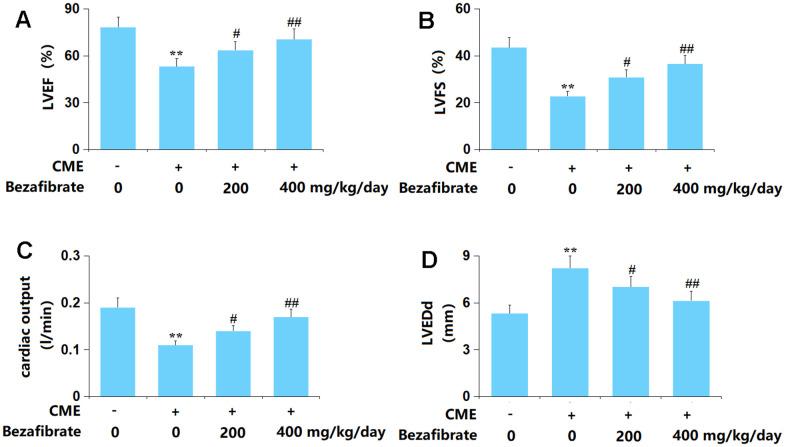
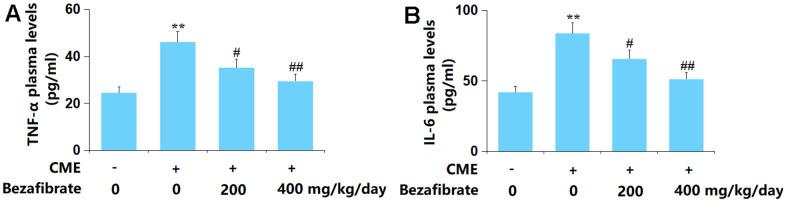
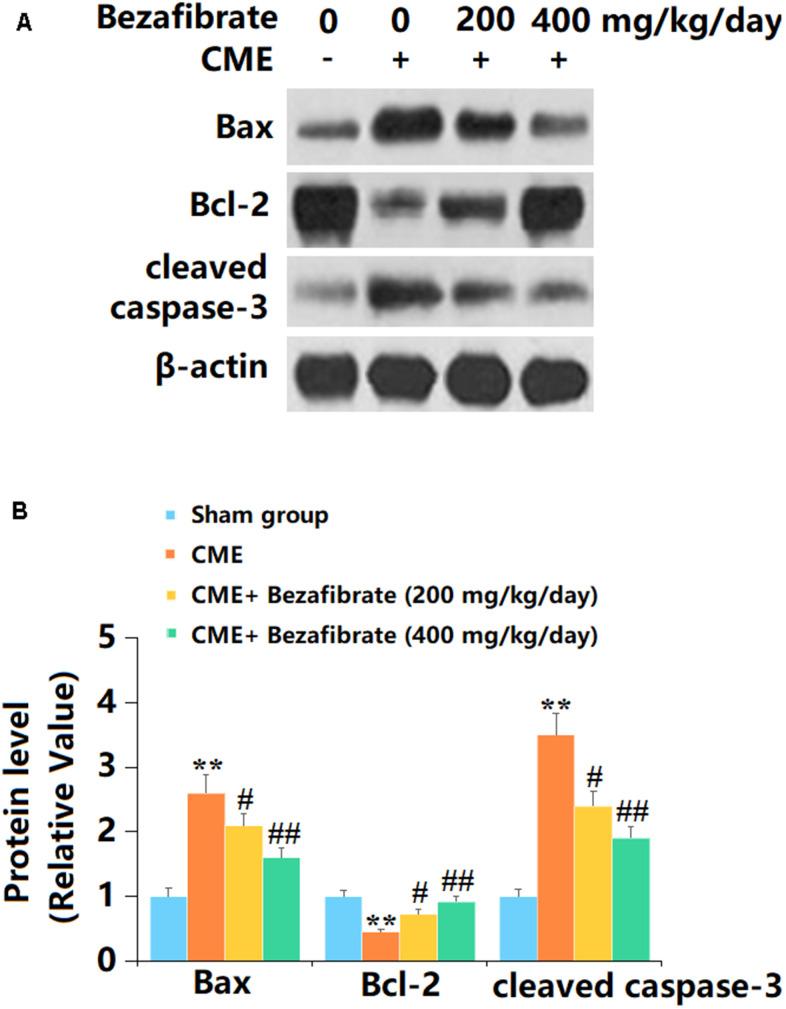
Coronary microembolization (CME)-induced inflammatory response and cardiomyocyte apoptosis are the main contributors to CME-associated myocardial dysfunction. Bezafibrate, a peroxisome proliferator-activated receptors (PPARs) agonist, has displayed various benefits in different types of diseases. However, it is unknown whether Bezafibrate possesses a protective effect in myocardial dysfunction against CME. In this study, we aimed to investigate the pharmacological function of Bezafibrate in CME-induced insults in myocardial injury and progressive cardiac dysfunction and explore the underlying mechanism. A CME model was established in rats, and cardiac function was detected. The levels of injury biomarkers in serum including CK-MB, AST, and LDH were determined using commercial kits, and pro-inflammatory mediators including TNF-α and IL-6 were detected using ELISA kits. Our results indicate that Bezafibrate improved cardiac function after CME induction. Bezafibrate reduced the release of myocardial injury indicators such as CK-MB, AST, and LDH in CME rats. We also found that Bezafibrate ameliorated oxidative stress by increasing the levels of the antioxidant GPx and the activity of SOD and reducing the levels of TBARS and the activity of NOX. Bezafibrate inhibited the expression of pro-inflammatory cytokines such as TNF-α and IL-6. Importantly, Bezafibrate was found to mitigate CME-induced myocardial apoptosis by increasing the expression of Bcl-2 and reducing the levels of Bax and cleaved caspase-3. Mechanistically, Bezafibrate could prevent the activation of p38 MAPK/NF-κB signaling. These findings suggest that Bezafibrate may be a candidate therapeutic agent for cardioprotection against CME in clinical applications.
冠状动脉微栓塞 (CME) 诱导的炎症反应和心肌细胞凋亡是 CME 相关心肌功能障碍的主要原因。苯扎贝特是过氧化物酶体增殖物激活受体 (PPARs) 激动剂,在不同类型的疾病中显示出多种益处。然而,尚不清楚苯扎贝特是否对 CME 引起的心肌功能障碍具有保护作用。在这项研究中,我们旨在研究苯扎贝特在 CME 诱导的心肌损伤和进行性心功能障碍中的药理作用,并探讨其潜在机制。建立了大鼠 CME 模型,检测心功能。使用商业试剂盒测定血清损伤标志物 CK-MB、AST 和 LDH 的水平,使用 ELISA 试剂盒测定 TNF-α 和 IL-6 等促炎介质的水平。我们的结果表明,苯扎贝特改善了 CME 诱导后的心脏功能。苯扎贝特降低了 CME 大鼠心肌损伤标志物 CK-MB、AST 和 LDH 的释放。我们还发现,苯扎贝特通过增加抗氧化剂 GPx 的水平和 SOD 的活性以及降低 TBARS 的水平和 NOX 的活性来改善氧化应激。苯扎贝特抑制 TNF-α 和 IL-6 等促炎细胞因子的表达。重要的是,苯扎贝特通过增加 Bcl-2 的表达和降低 Bax 和 cleaved caspase-3 的水平来减轻 CME 诱导的心肌细胞凋亡。机制上,苯扎贝特可以防止 p38 MAPK/NF-κB 信号通路的激活。这些发现表明,苯扎贝特可能是临床应用中对抗 CME 的心肌保护的候选治疗药物。




 Zotero 插件