
胃癌的新型免疫治疗方法。
Novel immunotherapeutic approaches in gastric cancer.
作者信息
Yang Meng, Lin Wuhao, Huang Jiaqian, Mannucci Alessandro, Luo Huiyan
机构信息
Department of Medical Oncology, State Key Laboratory of Oncology in South China, Collaborative Innovation Center for Cancer Medicine, Guangdong Provincial Clinical Research Center for Cancer, Sun Yat-sen University Cancer Center, Guangzhou 510060, China.
Research Unit of Precision Diagnosis and Treatment for Gastrointestinal Cancer, Chinese Academy of Medical Sciences, Guangzhou 510060, China.
出版信息
Precis Clin Med. 2024 Sep 19;7(4):pbae020. doi: 10.1093/pcmedi/pbae020. eCollection 2024 Dec.
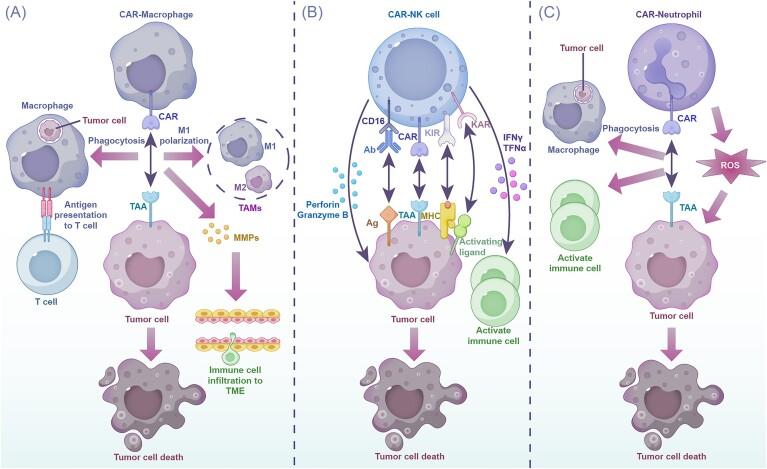
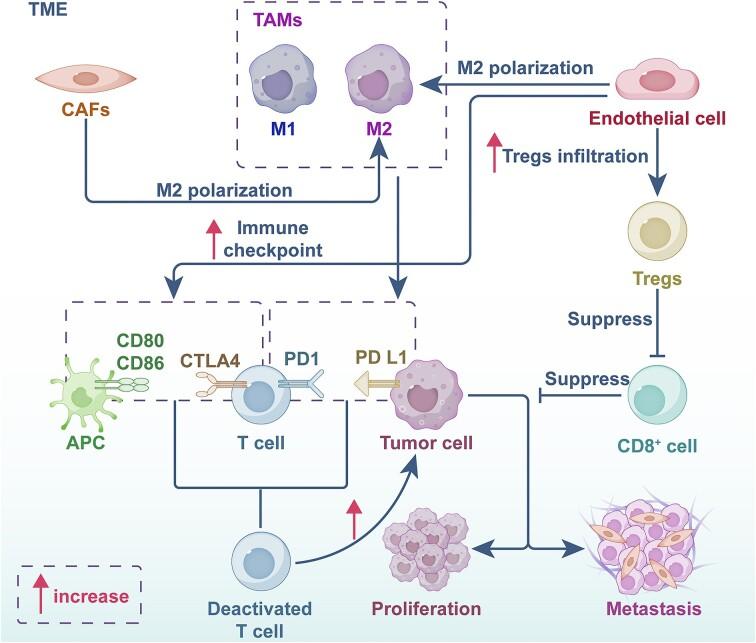
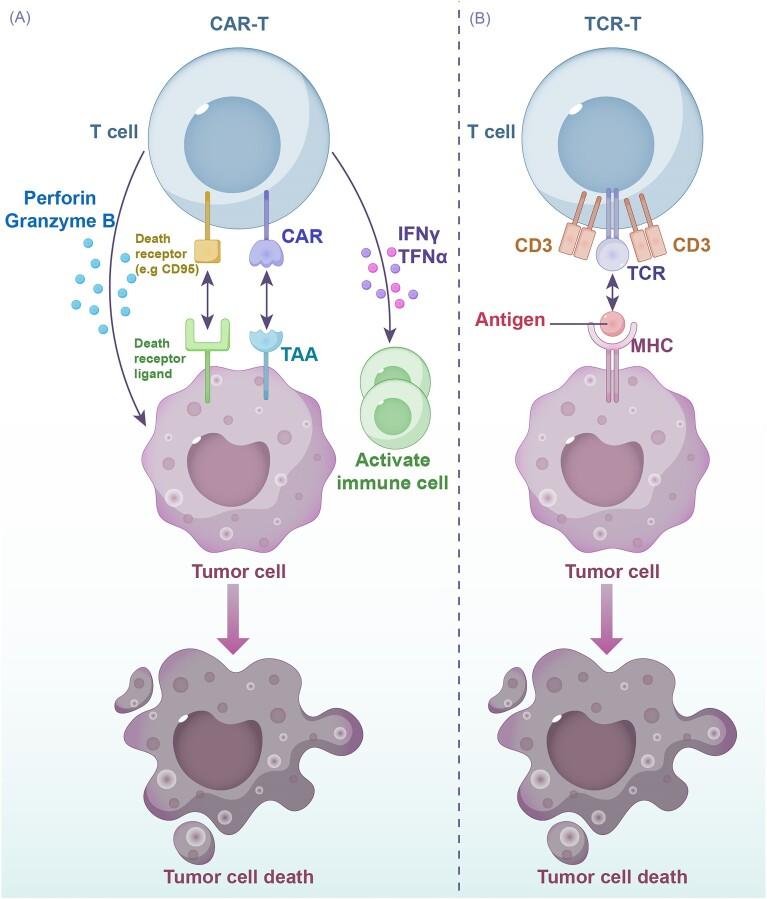
Gastric cancer is a malignant tumor that ranks third in cancer-related deaths worldwide. Early-stage gastric cancer can often be effectively managed through surgical resection. However, the majority of cases are diagnosed in advanced stages, where outcomes with conventional radiotherapy and chemotherapy remain unsatisfactory. Immunotherapy offers a novel approach to treating molecularly heterogeneous gastric cancer by modifying the immunosuppressive tumor microenvironment. Immune checkpoint inhibitors and adoptive cell therapy are regarded as promising modalities in cancer immunotherapy. Food and Drug Administration-approved programmed death-receptor inhibitors, such as pembrolizumab, in combination with chemotherapy, have significantly extended overall survival in gastric cancer patients and is recommended as a first-line treatment. Despite challenges in solid tumor applications, adoptive cell therapy has demonstrated efficacy against various targets in gastric cancer treatment. Among these approaches, chimeric antigen receptor-T cell therapy research is the most widely explored and chimeric antigen receptor-T cell therapy targeting claudin18.2 has shown acceptable safety and robust anti-tumor capabilities. However, these advancements primarily remain in preclinical stages and further investigation should be made to promote their clinical application. This review summarizes the latest research on immune checkpoint inhibitors and adoptive cell therapy and their limitations, as well as the role of nanoparticles in enhancing immunotherapy.
胃癌是一种恶性肿瘤,在全球癌症相关死亡中排名第三。早期胃癌通常可以通过手术切除得到有效治疗。然而,大多数病例在晚期才被诊断出来,传统放疗和化疗的效果仍不尽人意。免疫疗法通过改变免疫抑制性肿瘤微环境,为治疗分子异质性胃癌提供了一种新方法。免疫检查点抑制剂和过继性细胞疗法被认为是癌症免疫疗法中有前景的治疗方式。美国食品药品监督管理局批准的程序性死亡受体抑制剂,如帕博利珠单抗,与化疗联合使用,显著延长了胃癌患者的总生存期,并被推荐作为一线治疗方案。尽管在实体瘤应用中存在挑战,但过继性细胞疗法在胃癌治疗中已显示出针对各种靶点的疗效。在这些方法中,嵌合抗原受体T细胞疗法的研究最为广泛,靶向Claudin18.2的嵌合抗原受体T细胞疗法已显示出可接受的安全性和强大的抗肿瘤能力。然而,这些进展主要仍处于临床前阶段,应进一步研究以促进其临床应用。本综述总结了免疫检查点抑制剂和过继性细胞疗法的最新研究及其局限性,以及纳米颗粒在增强免疫治疗中的作用。

 Zotero 插件