
空间多组学揭示肺癌脑转移瘤中具有不同细胞因子网络的肿瘤内免疫异质性。
Spatial Multiomics Reveals Intratumoral Immune Heterogeneity with Distinct Cytokine Networks in Lung Cancer Brain Metastases.
机构信息
Department of Experimental Medical Science, Lund University, Lund, Sweden.
Lund University Cancer Centre (LUCC), Lund University, Lund, Sweden.
出版信息
Cancer Res Commun. 2024 Nov 1;4(11):2888-2902. doi: 10.1158/2767-9764.CRC-24-0201.
UNLABELLED
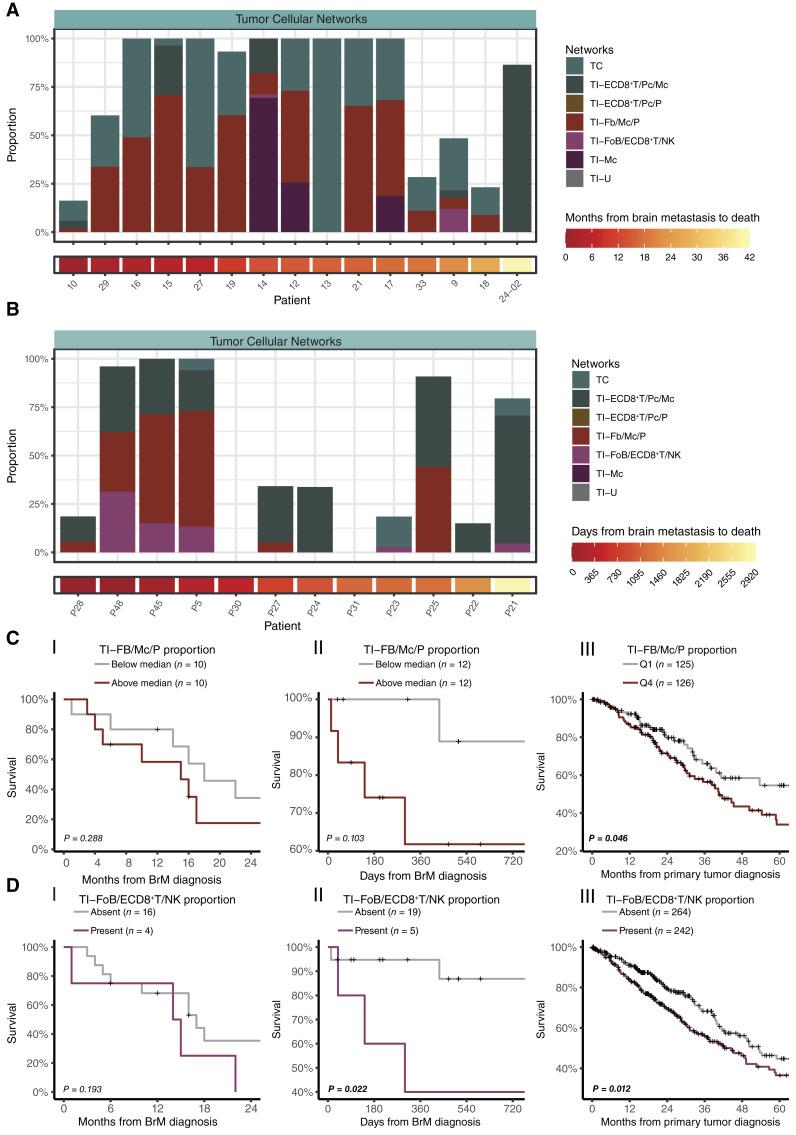
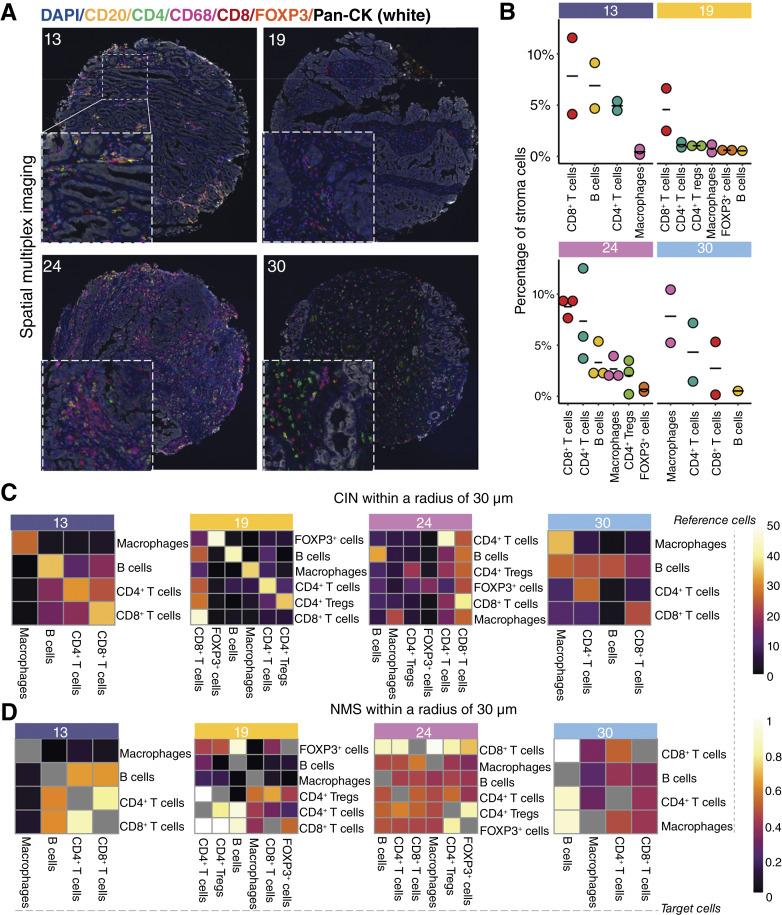
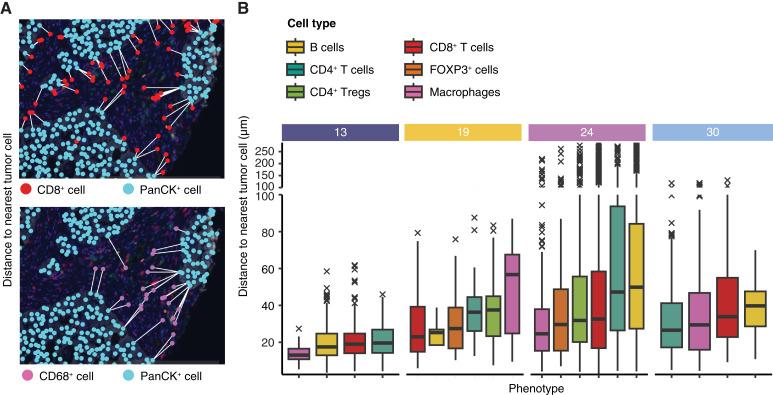
The tumor microenvironment of brain metastases has become a focus in the development of immunotherapeutic drugs. However, countless patients with brain metastasis have not experienced clinical benefit. Thus, understanding the immune cell composition within brain metastases and how immune cells interact with each other and other microenvironmental cell types may be critical for optimizing immunotherapy. We applied spatial whole-transcriptomic profiling with extensive multiregional sampling (19-30 regions per sample) and multiplex IHC on formalin-fixed, paraffin-embedded lung cancer brain metastasis samples. We performed deconvolution of gene expression data to infer the abundances of immune cell populations and inferred spatial relationships from the multiplex IHC data. We also described cytokine networks between immune and tumor cells and used a protein language model to predict drug-target interactions. Finally, we performed deconvolution of bulk RNA data to assess the prognostic significance of immune-metastatic tumor cellular networks. We show that immune cell infiltration has a negative prognostic role in lung cancer brain metastases. Our in-depth multiomics analyses further reveal recurring intratumoral immune heterogeneity and the segregation of myeloid and lymphoid cells into distinct compartments that may be influenced by distinct cytokine networks. By using computational modeling, we identify drugs that may target genes expressed in both tumor core and regions bordering immune infiltrates. Finally, we illustrate the potential negative prognostic role of our immune-metastatic tumor cell networks. Our findings advocate for a paradigm shift from focusing on individual genes or cell types toward targeting networks of immune and tumor cells.
SIGNIFICANCE
Immune cell signatures are conserved across lung cancer brain metastases, and immune-metastatic tumor cell networks have a prognostic effect, implying that targeting cytokine networks between immune and metastatic tumor cells may generate more precise immunotherapeutic approaches.
未加标签
脑转移瘤的肿瘤微环境已成为免疫治疗药物发展的重点。然而,无数脑转移瘤患者并未从中获益。因此,了解脑转移瘤内的免疫细胞组成以及免疫细胞如何相互作用以及与其他微环境细胞类型相互作用,对于优化免疫疗法可能至关重要。我们应用空间全转录组谱分析,对福尔马林固定、石蜡包埋的肺癌脑转移瘤样本进行了广泛的多区域采样(每个样本 19-30 个区域)和多重免疫组化分析。我们对基因表达数据进行去卷积,以推断免疫细胞群体的丰度,并从多重免疫组化数据中推断空间关系。我们还描述了免疫和肿瘤细胞之间的细胞因子网络,并使用蛋白质语言模型来预测药物-靶标相互作用。最后,我们对批量 RNA 数据进行去卷积,以评估免疫-转移性肿瘤细胞网络的预后意义。我们表明,免疫细胞浸润对肺癌脑转移瘤具有负预后作用。我们的深入多组学分析进一步揭示了肿瘤内免疫异质性的重现,以及髓样和淋巴样细胞分化为不同隔室的现象,这可能受到不同细胞因子网络的影响。通过计算模型,我们确定了可能靶向肿瘤核心和免疫浸润边缘区域中表达的基因的药物。最后,我们说明了我们的免疫-转移性肿瘤细胞网络可能具有潜在的负预后作用。我们的研究结果主张从关注单个基因或细胞类型转向针对免疫和肿瘤细胞网络的范式转变。
意义
肺癌脑转移瘤的免疫细胞特征是保守的,免疫-转移性肿瘤细胞网络具有预后作用,这意味着靶向免疫和转移性肿瘤细胞之间的细胞因子网络可能产生更精确的免疫治疗方法。



 Zotero 插件