
居住在宗教社区的女性的健康态度——一项初步研究
Health Attitudes of Women Living in Religious Communities-A Preliminary Study.
作者信息
Teodorczyk Paulina, Najechalski Paweł, Walędziak Maciej, Różańska-Walędziak Anna
机构信息
Clinical Nursing Department, Faculty of Medicine, Collegium Medicum, Cardinal Stefan Wyszynski University in Warsaw, 01-938 Warsaw, Poland.
Faculty of Medicine, Lazarski University, 02-662 Warsaw, Poland.
出版信息
Healthcare (Basel). 2024 Sep 25;12(19):1922. doi: 10.3390/healthcare12191922.
INTRODUCTION
Members of consecrated life communities exhibit homogeneity with regard to factors that are relevant to health, including diet, daily activities, religiosity, and housing. This may be indicative of the manner in which the community influences the formation of the health-seeking attitudes of its members.
PURPOSE OF THE STUDY
The objective of this study was to validate a survey about health awareness and health-seeking attitudes among consecrated people and to identify potential issues to be improved. In addition, the study aspires to provide insights into the lifestyles of consecrated persons in Poland, based on the results of the survey and available data.
MATERIALS AND METHODS
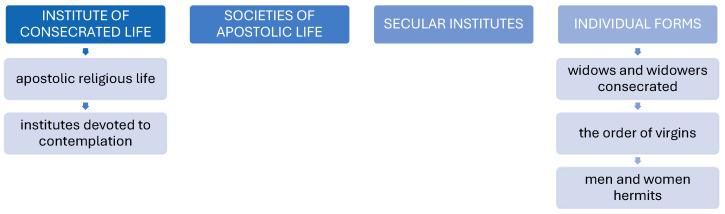
The study group included 27 female participants, members of societies of apostolic life and non-habitual apostolic religious congregations of the Roman Catholic Church. The participants were invited to express their comments and suggestions on the survey, with the purpose of validating the survey before using it as a tool for a larger study.
RESULTS
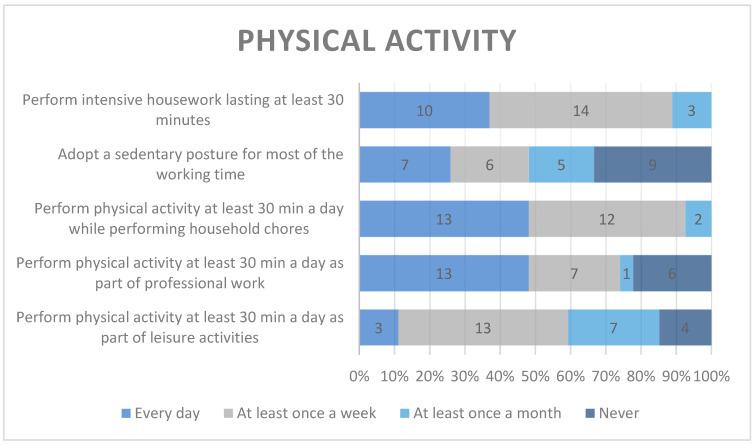
All participants agreed that nutrition, rest, and physical activity had a significant impact on health. A total of 89% of participants considered their lifestyle as healthy and a similar proportion indicated that living in a consecrated community had a positive impact on their health, with the most positive influence of factors related to spiritual exercise, rhythm of the day, and sense of interpersonal connection within the community. Approximately 44% of participants indicated that their attitude was based on a healthy diet and adequate sleep quality. However, they identified an existing need to improve the balance between work and rest. Additionally, 4% of respondents admitted irregular eating habits, ignoring quality of alimentary products, non-satisfactory rest time, and insufficient sleep.
CONCLUSIONS
Even though the purpose of this study was only to validate a survey predestined for a larger study, it already gives an insight into the level of awareness of health behavior and lifestyle of residents of religious communities.
引言
在与健康相关的因素方面,如饮食、日常活动、宗教信仰和居住环境,献身生活团体的成员表现出同质性。这可能表明该团体影响其成员形成寻求健康态度的方式。
研究目的
本研究的目的是验证一项关于献身者健康意识和寻求健康态度的调查,并确定有待改进的潜在问题。此外,该研究希望根据调查结果和现有数据,深入了解波兰献身者的生活方式。
材料与方法
研究组包括27名女性参与者,她们是罗马天主教会使徒生活社团和非习惯性使徒宗教团体的成员。邀请参与者对该调查发表意见和建议,以便在将其用作更大规模研究的工具之前对调查进行验证。
结果
所有参与者都认为营养、休息和体育活动对健康有重大影响。共有89%的参与者认为自己的生活方式健康,类似比例的参与者表示生活在献身团体对他们的健康有积极影响,其中与精神修炼、日常节奏和团体内部人际关系感相关的因素影响最为积极。约44%的参与者表示他们的态度基于健康饮食和充足的睡眠质量。然而,他们指出目前需要改善工作与休息之间的平衡。此外,4%的受访者承认有不规律的饮食习惯、忽视食品质量、休息时间不理想和睡眠不足的问题。
结论
尽管本研究的目的只是验证一项预定用于更大规模研究的调查,但它已经让我们深入了解了宗教团体居民的健康行为和生活方式意识水平。



 Zotero 插件