
当微塑料/塑料遇上金属有机框架材料:化威胁为机遇。
When microplastics/plastics meet metal-organic frameworks: turning threats into opportunities.
作者信息
Wu Pengfei, Guo Mengting, Zhang Ran-Wei, Huang Qing, Wang Guibin, Lan Ya-Qian
机构信息
State Key Laboratory of Tree Genetics and Breeding, Co-Innovation Center for Sustainable Forestry in Southern China, Nanjing Forestry University Nanjing 210037 China
Co-Innovation Center of Efficient Processing and Utilization of Forest Resources, College of Materials Science and Engineering, Nanjing Forestry University No. 159 Longpan Road Nanjing 210037 China.
出版信息
Chem Sci. 2024 Oct 8;15(43):17781-98. doi: 10.1039/d4sc05205f.
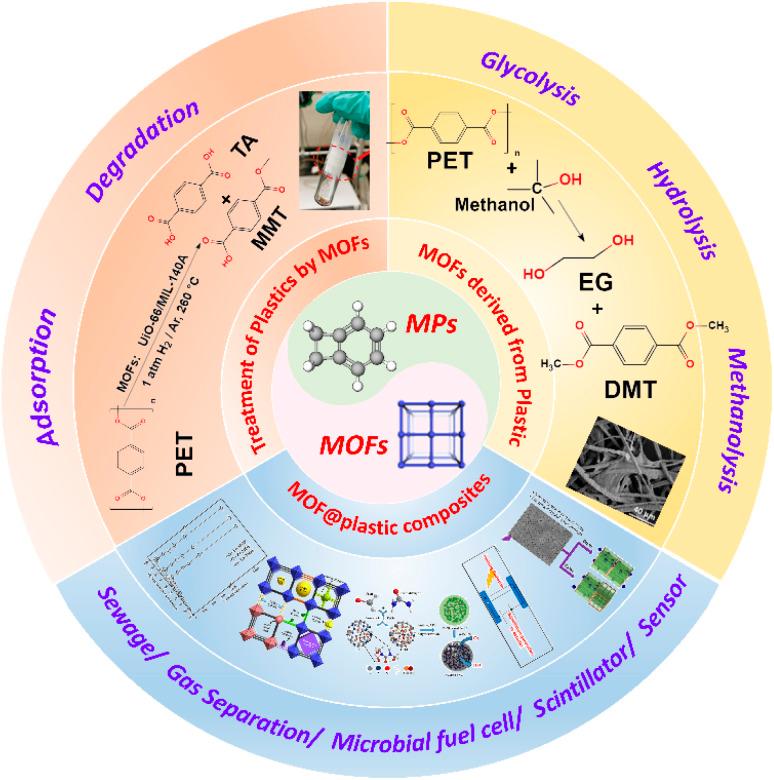
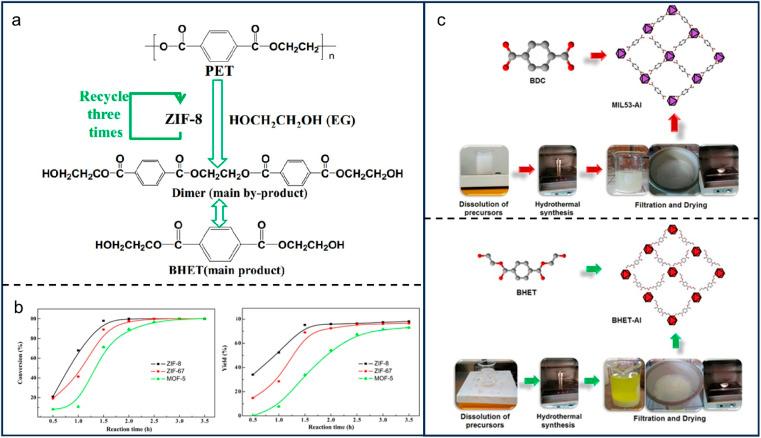
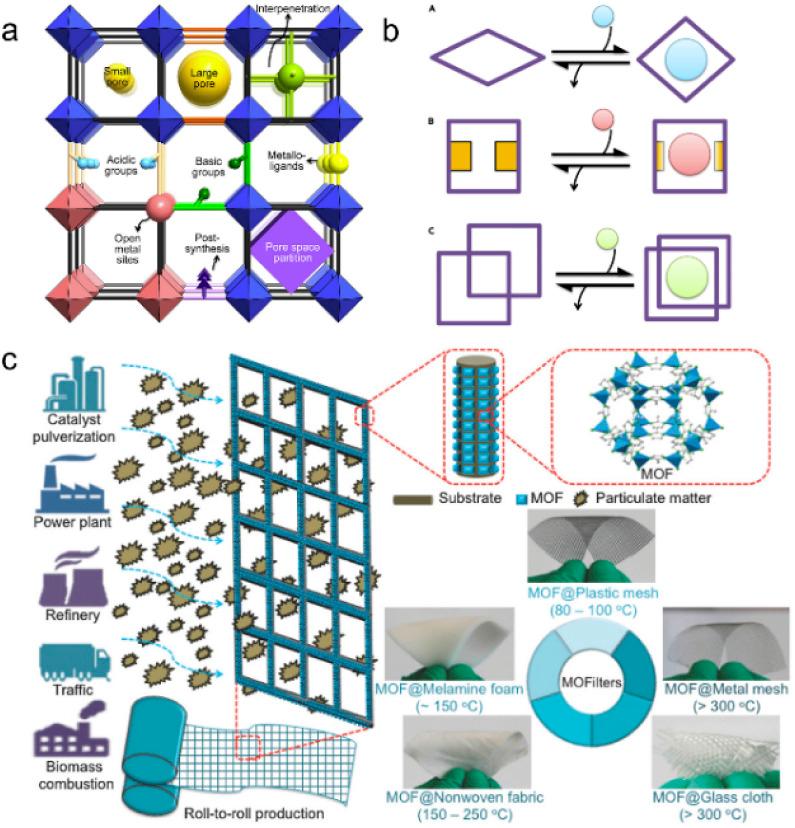
Significant efforts have been devoted to removal and recycling of microplastics (MPs; <5 mm) to address the environmental crises caused by their ubiquitous presence and improper treatment. Metal-organic frameworks (MOFs) demonstrate compatibility with MPs/plastics through adsorption, degradation, or assembly with the MPs/plastic polymers. Above 90% of MPs/plastic particles can be adsorbed on MOF materials the hydrophobic interaction, electrical attraction, π-π stacking, and van der Waals forces. Meanwhile, certain MOFs have successfully converted various types of plastics into high-valued small molecules through thermocatalysis and photocatalysis. In thermocatalysis, the primary process should be C-O bond cleavage, whereas in photocatalysis it ought to be the generation of reactive oxygen species (ROS). Moreover, the construction of novel MOFs using waste MPs/plastics as the ligands was mostly accomplished through three dominant ways, including glycolysis, hydrolysis and methanolysis. Once successfully composited, the MOF@plastic materials illustrated tremendous promise for interdisciplinary research in multifunctional applications, including sewage treatment, gas adsorption/separation, and the preparation of microbial fuel cells, plastic scintillators and other sensors. The review explicated the relationships between MPs/plastics and MOF materials, as well as the challenges and perspectives for their development. It can provide a deeper understanding of how MOFs remove/degrade MP/plastic particles, how MPs/plastics are recycled to prepare MOFs, and how to build multifunctional MOF@plastic composites. Overall, this analysis is anticipated to outline future prospects for turning the threats (MPs/plastics contamination) into opportunities (, as ligands to prepare MOF or MOF@plastic materials for further applications).
人们已付出巨大努力致力于微塑料(MPs;<5毫米)的去除和回收,以应对其无处不在的存在和不当处理所引发的环境危机。金属有机框架(MOFs)通过吸附、降解或与MPs/塑料聚合物组装,展现出与MPs/塑料的兼容性。超过90%的MPs/塑料颗粒可通过疏水相互作用、电吸引、π-π堆积和范德华力吸附在MOF材料上。同时,某些MOFs已通过热催化和光催化成功地将各种类型的塑料转化为高价值小分子。在热催化中,主要过程应为C-O键断裂,而在光催化中则应为活性氧物种(ROS)的产生。此外,以废弃MPs/塑料为配体构建新型MOFs主要通过三种主要方式完成,包括糖酵解、水解和甲醇解。一旦成功复合,MOF@塑料材料在多功能应用的跨学科研究中展现出巨大潜力,包括污水处理、气体吸附/分离以及微生物燃料电池、塑料闪烁体和其他传感器的制备。该综述阐述了MPs/塑料与MOF材料之间的关系,以及它们发展面临的挑战和前景。它能让人更深入地了解MOFs如何去除/降解MP/塑料颗粒、MPs/塑料如何被回收以制备MOFs,以及如何构建多功能MOF@塑料复合材料。总体而言,预计该分析将勾勒出将威胁(MPs/塑料污染)转化为机遇(如作为配体制备MOF或MOF@塑料材料以用于进一步应用)的未来前景。







 Zotero 插件