
血清学检测的附加值:基于分子监测与血清学检测的孕妇流感发病率比较。
The added value of serologic testing: A comparison of influenza incidence among pregnant persons based on molecular-based surveillance versus serologic testing.
机构信息
Influenza Program, Thailand Ministry of Public Health - U.S. Centers for Disease Control and Prevention Collaboration, Nonthaburi, Thailand.
U.S. Naval Medical Research Unit SOUTH, Lima, Peru.
出版信息
Int J Infect Dis. 2024 Dec;149:107264. doi: 10.1016/j.ijid.2024.107264. Epub 2024 Oct 18.
BACKGROUND
We examined the added value of serologic testing for estimating influenza virus infection incidence based on illness surveillance with molecular testing versus periodic serologic testing.
METHODS
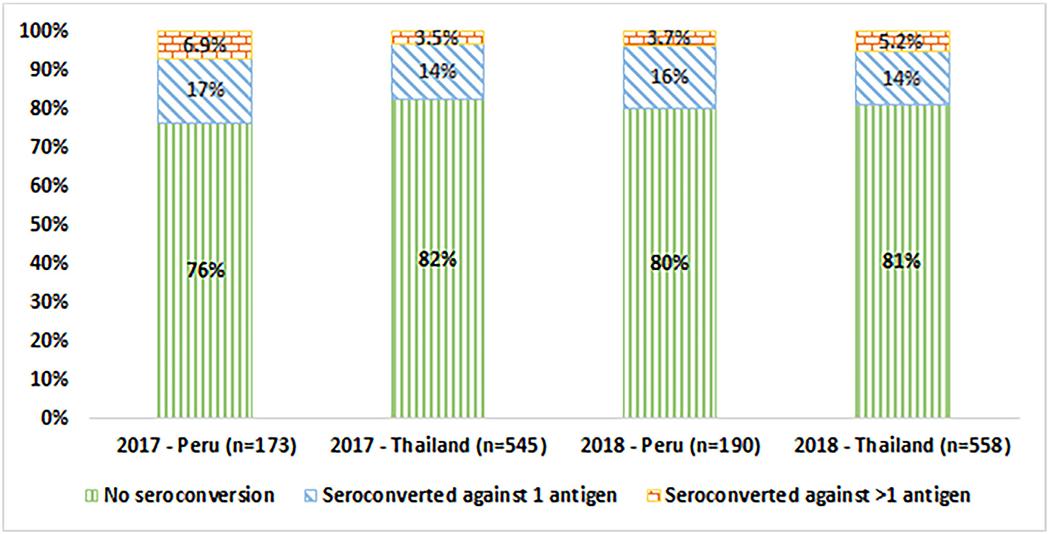
Pregnant persons unvaccinated against influenza at <28 weeks gestation were enrolled before the 2017 and 2018 influenza seasons in Peru and Thailand. Blood specimens were collected at enrollment and ≤14 days postpartum for testing by hemagglutination inhibition assay for antibodies against influenza reference viruses. Seroconversion was defined as a ≥4-fold rise in antibody titers from enrollment to postpartum with the second specimen's titer of ≥40. Throughout pregnancy, participants responded to twice weekly surveillance contacts asking about influenza vaccination and influenza-like symptoms (ILS). A mid-turbinate swab was collected with each ILS episode for influenza real-time reverse transcription polymerase chain reaction (rRT-PCR).
RESULTS
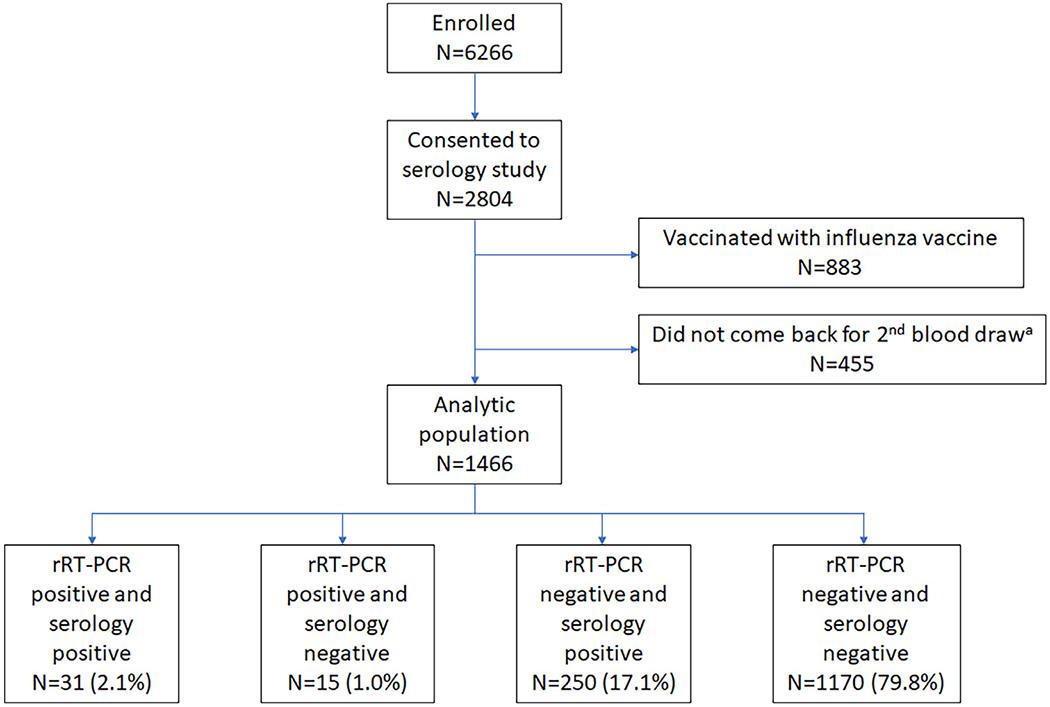
Of 1,466 participants without evidence of influenza vaccination during pregnancy, 296 (20.2%) had evidence of influenza virus infections. Fifteen (5.1%) were detected by rRT-PCR only, 250 (84.4%) by serologic testing only, and 31 (10.5%) by both methods.
CONCLUSIONS
Influenza virus infections during pregnancy occurred in 20% of cohort participants; >80% were not detected by a broad illness case definition coupled with rRT-PCR.
背景
我们研究了在分子检测基础上,通过疾病监测进行血清学检测来评估流感病毒感染发生率的增值,与定期血清学检测相比。
方法
在 2017 年和 2018 年流感季节,我们在秘鲁和泰国招募了妊娠<28 周且未接种流感疫苗的孕妇。在入组时和产后≤14 天采集血样,通过血凝抑制试验检测针对流感参考病毒的抗体。血清转化定义为从入组到产后的抗体滴度升高≥4 倍,且第二次标本的滴度≥40。在整个妊娠期间,参与者每周两次通过监测联系报告流感疫苗接种情况和流感样症状(ILI)。在每次 ILI 发作时,从中鼻甲采集鼻咽拭子进行流感实时逆转录聚合酶链反应(rRT-PCR)。
结果
在 1466 名未在妊娠期间接种流感疫苗的参与者中,有 296 名(20.2%)有流感病毒感染证据。15 名(5.1%)仅通过 rRT-PCR 检测到,250 名(84.4%)仅通过血清学检测到,31 名(10.5%)通过两种方法检测到。
结论
妊娠期间流感病毒感染发生率为队列参与者的 20%;>80%未通过广泛的疾病病例定义结合 rRT-PCR 检测到。

 Zotero 插件