
基于结构的细菌特异性和内毒素响应肽纳米网的广泛活性谱。
Structure-Guided Bacteria Specificity and Wide Activity Spectrum of Endotoxin-Responsive Peptide Nanonets.
机构信息
Department of Pharmacy, National University of Singapore, 18 Science Drive 4, Singapore 117543, Singapore.
Bioinformatics Institute (BII), Agency for Science, Technology and Research (A*STAR), 30 Biopolis Street, #07-01 Matrix, Singapore 138671, Singapore.
出版信息
Nano Lett. 2024 Oct 30;24(43):13574-13582. doi: 10.1021/acs.nanolett.4c03166. Epub 2024 Oct 21.
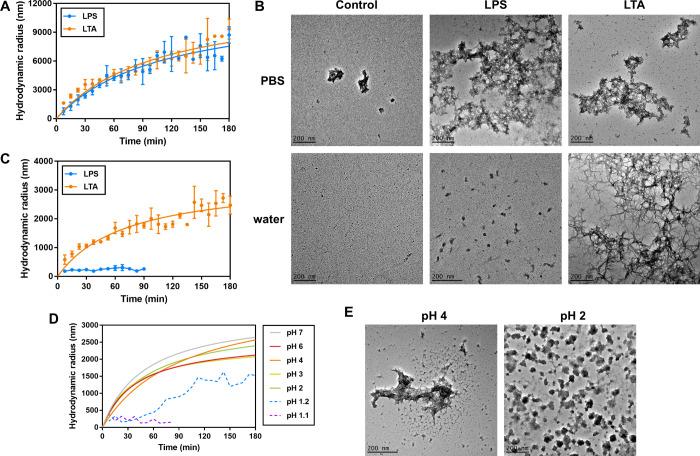
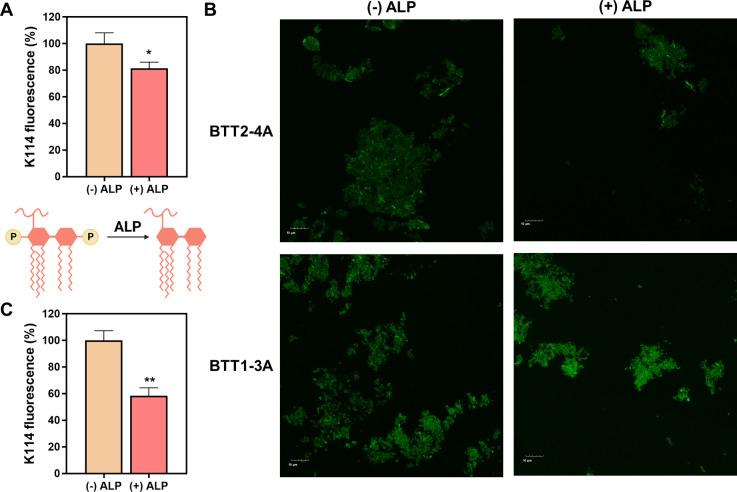
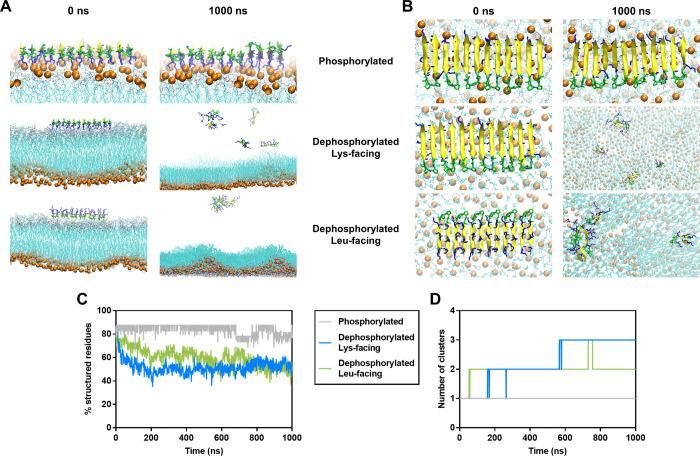
Peptide nanonets offer a promising avenue for constructing anti-infective biomaterials. Our group recently reported innovative designs of synthetic BTT nanonets that fibrillate selectively in response to bacterial endotoxins. Herein, we delved deeper into the molecular interactions between our peptides and these bacteria-specific biomolecules, which is an aspect critically missing from major works in the field. Using microscopic and biophysical techniques, we identified phosphate moieties in endotoxins as being the most essential to the initiation of peptide fibrillation. This was strongly supported by molecular dynamics simulations in an outer membrane environment with variable states of phosphorylation. To support the claim over bacterial specificity, we demonstrated a lack of nanonet formation in the presence of various phosphate-containing biomolecules native to human biology. The structural importance of phosphate moieties among pathogenic strains strongly indicates a wide clinical spectrum of our peptides, which was experimentally verified.
肽纳米网为构建抗感染生物材料提供了有前景的途径。我们小组最近报道了合成 BTT 纳米网的创新设计,这些纳米网可以选择性地在细菌内毒素的刺激下发生原纤维化。在此,我们深入研究了我们的肽与这些细菌特异性生物分子之间的分子相互作用,这是该领域主要研究工作中严重缺失的一个方面。使用显微镜和生物物理技术,我们确定内毒素中的磷酸部分对于肽原纤维化的启动是最重要的。这一观点得到了在具有不同磷酸化状态的外膜环境中进行的分子动力学模拟的有力支持。为了支持细菌特异性的说法,我们证明了在存在各种天然存在于人体生物学中的含磷生物分子的情况下,纳米网不会形成。磷酸部分在致病性菌株中的结构重要性强烈表明我们的肽具有广泛的临床应用范围,这一观点在实验中得到了验证。


 Zotero 插件