
基于TMT的传染性法氏囊病病毒感染的鸡胚成纤维细胞定量蛋白质组学分析揭示了鸡干扰素调节因子10通过抑制I型干扰素表达在传染性法氏囊病病毒复制中发挥有利作用。
TMT-based quantitative proteomic analysis of IBDV-infected CEF cells reveals a favorable role of chicken IRF10 in IBDV replication via suppressing type-I interferon expression.
作者信息
Zhang Shujun, Li Jiaxin, Gao Hui, Wang Yongqiang, Cao Hong, Li Xiaoqi, Gao Li, Zheng Shijun J
机构信息
National Key Laboratory of Veterinary Public Health Security; Animal Epidemiology of the Ministry of Agriculture; College of Veterinary Medicine, China Agricultural University, Beijing 100193, China.
China Institute of Veterinary Drug Control.
出版信息
Poult Sci. 2024 Dec;103(12):104421. doi: 10.1016/j.psj.2024.104421. Epub 2024 Oct 13.
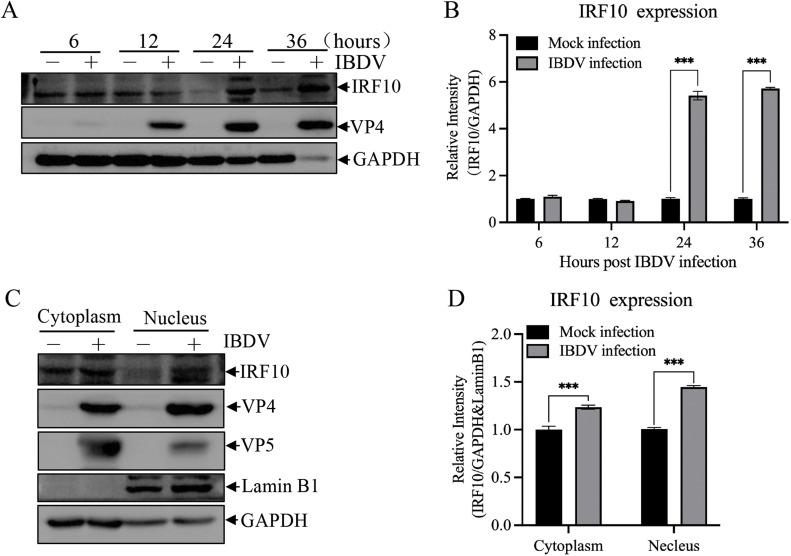
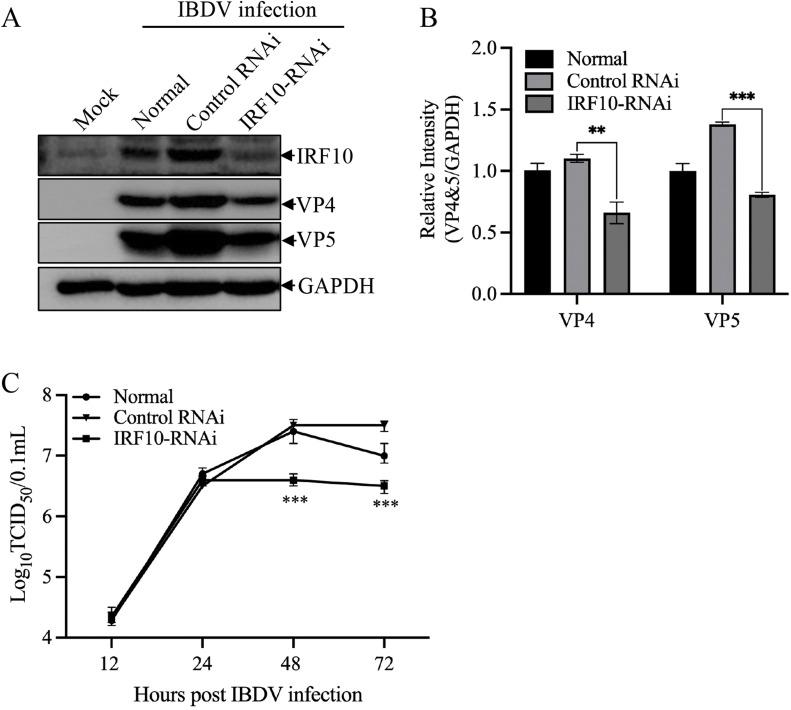
Infectious bursal disease (IBD) is an acute, highly contagious disease caused by infectious bursal disease virus (IBDV), causing huge economic losses to the poultry industry worldwide. Currently, the emerging variant strains of IBDV and new recombinants in the field are circulating in many countries and poses severe threats to the development of poultry industry. Elucidation of the pathogenesis of IBDV infection will be of great help to the development of vaccines for control of IBDV infection. In this study, liquid chromatography tandem-mass spectrometry (LC-MS/MS) combined with tandem mass tag (TMT) labeling was performed to determine the expressions of nucleus proteins in IBDV-infected chicken embryonic fibroblast (CEF) cells 24 h post-infection (hpi). Our data show that a total of 236 nucleus proteins were differentially expressed in IBDV-infected cells vs mock-infected controls, and that among those proteins, 171 were significantly upregulated while 65 downregulated. Bioinformatics analysis reveals that the differentially expressed proteins (DEPs) were mainly involved in immune response, DNA replication, mismatch repair, and RIG-I-like receptor (RLR) signaling. Consistently, the expression of ten selected upregulated genes (IRF10, IRF7, IRF1, STAT1, ATF3, GTF3A, CSRP3, RARB, BASP1, and NF-κB1) markedly increased as examined by quantitative real-time PCR (qRT-PCR). Furthermore, the expression of IRF10 was upregulated both in the cytoplasm and nucleus of DF-1 cells as examined by Western Blot. Moreover, knockdown of IRF10 remarkably inhibited IBDV replication via promoting IFN-I response, and overexpression of IRF10 significantly suppressed type I interferon and ISGs expression in both mock and IBDV-infected cells, suggesting that IRF10 serve as a negative regulator for host antiviral response. These results provide clues to further investigation into host-IBDV interactions and the underlying mechanisms of IBDV infection.
传染性法氏囊病(IBD)是由传染性法氏囊病病毒(IBDV)引起的一种急性、高度传染性疾病,给全球家禽业造成了巨大的经济损失。目前,IBDV的新兴变异株和新的重组毒株在许多国家传播,对家禽业的发展构成严重威胁。阐明IBDV感染的发病机制将对开发控制IBDV感染的疫苗有很大帮助。在本研究中,采用液相色谱串联质谱(LC-MS/MS)结合串联质量标签(TMT)标记法,以确定感染IBDV的鸡胚成纤维细胞(CEF)在感染后24小时(hpi)细胞核蛋白的表达情况。我们的数据显示,与 mock 感染对照组相比,IBDV感染细胞中共有236种细胞核蛋白差异表达,其中171种显著上调,65种下调。生物信息学分析表明,差异表达蛋白(DEPs)主要参与免疫反应、DNA复制、错配修复和RIG-I样受体(RLR)信号传导。同样,通过定量实时PCR(qRT-PCR)检测,十个选定的上调基因(IRF10、IRF7、IRF1、STAT1、ATF3、GTF3A、CSRP3、RARB、BASP1和NF-κB1)的表达明显增加。此外,通过蛋白质免疫印迹法检测,IRF10在DF-1细胞的细胞质和细胞核中表达均上调。而且,敲低IRF10通过促进I型干扰素反应显著抑制IBDV复制,而IRF10的过表达在mock和IBDV感染的细胞中均显著抑制I型干扰素和ISGs的表达,表明IRF10作为宿主抗病毒反应的负调节因子。这些结果为进一步研究宿主与IBDV的相互作用以及IBDV感染的潜在机制提供了线索。


 Zotero 插件