
肽包覆 TiO2 纳米粒子光催化降解细菌脂多糖。
Photocatalytic Degradation of Bacterial Lipopolysaccharides by Peptide-Coated TiO Nanoparticles.
机构信息
Department of Physical Chemistry 1, Lund University, Lund SE-22100, Sweden.
Institut Laue-Langevin, CS 20156, Grenoble, Cedex 9 38042, France.
出版信息
ACS Appl Mater Interfaces. 2024 Nov 6;16(44):60056-60069. doi: 10.1021/acsami.4c15706. Epub 2024 Oct 23.
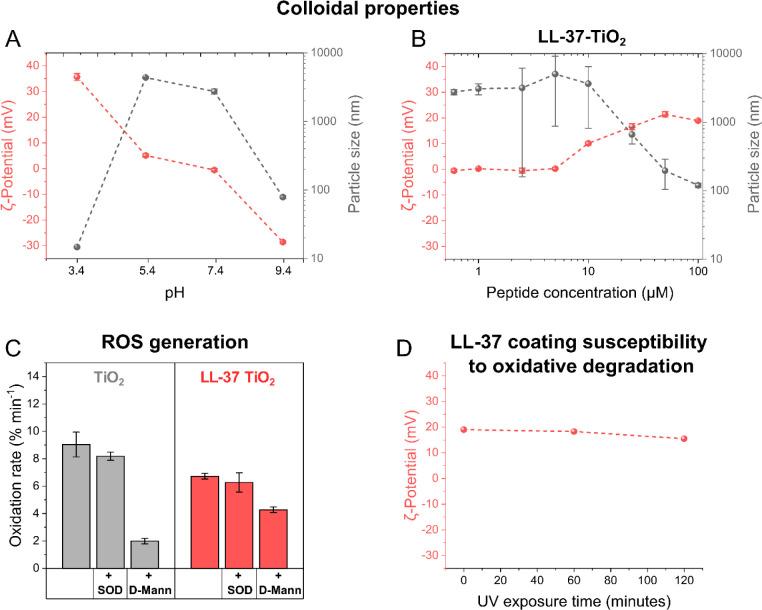
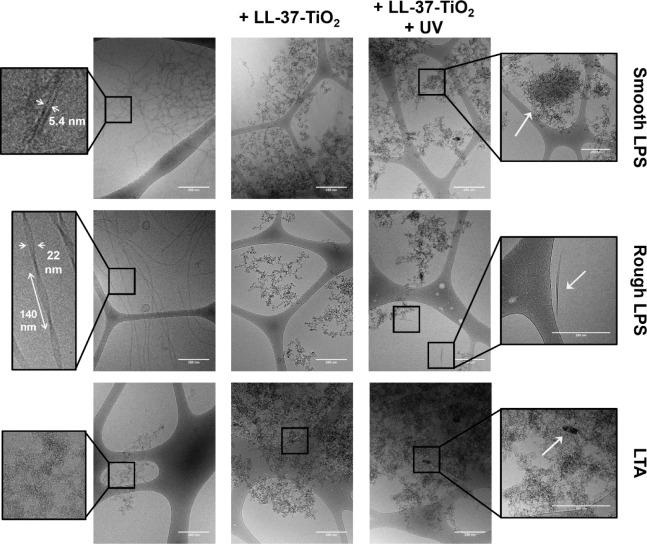
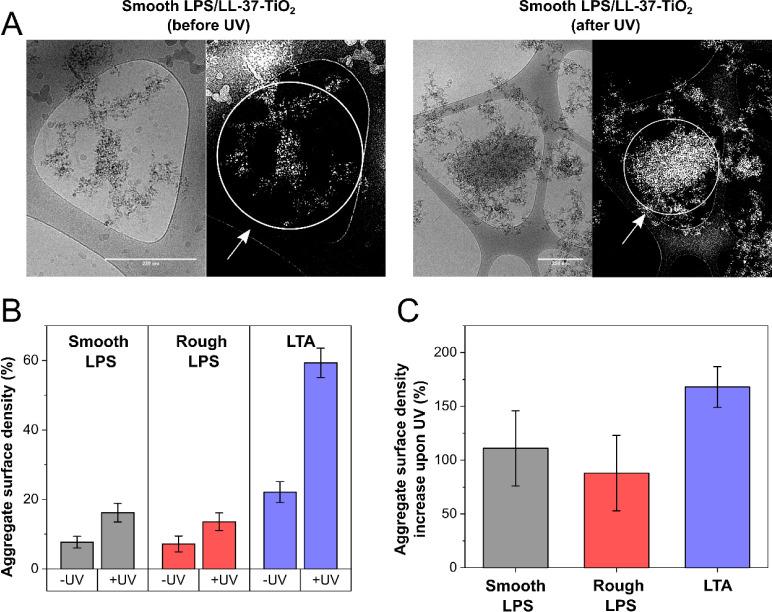
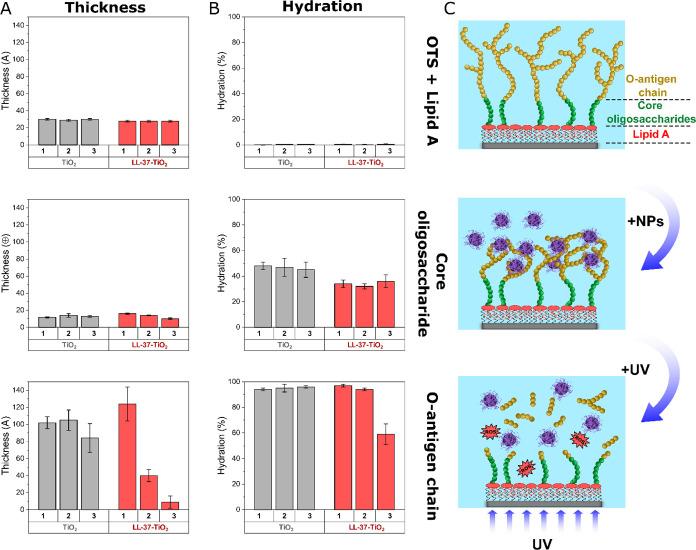
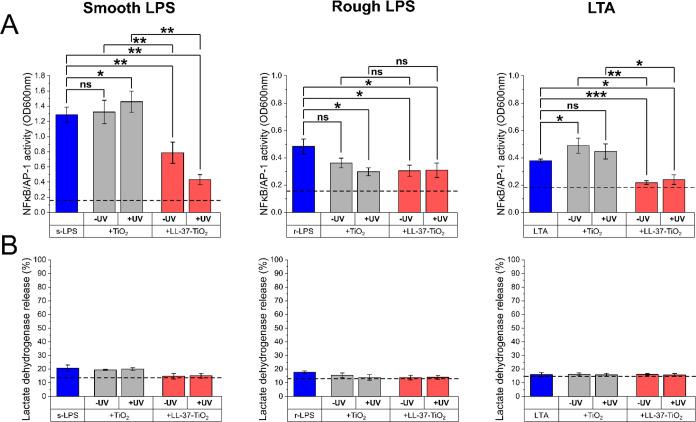
In this study, we report the degradation of smooth and rough lipopolysaccharides (LPS) from Gram-negative bacteria and of lipoteichoic acid (LTA) from Gram-positive bacteria by peptide-coated TiO nanoparticles (TiO NPs). While bare TiO NPs displayed minor binding to both LPS and LTA, coating TiO NPs with the antimicrobial peptide LL-37 dramatically increased the level of binding to both LPS and LTA, decorating these uniformly. Importantly, peptide coating did not suppress reactive oxygen species generation of TiO NPs; hence, UV illumination triggered pronounced degradation of LPS and LTA by peptide-coated TiO NPs. Structural consequences of oxidative degradation were examined by neutron reflectometry for smooth LPS, showing that degradation occurred preferentially in its outer O-antigen tails. Furthermore, cryo-TEM and light scattering showed lipopolysaccharide fragments resulting from degradation to be captured by the NP/lipopolysaccharide coaggregates. The capacity of LL-37-TiO NPs to capture and degrade LPS and LTA was demonstrated to be of importance for their ability to suppress lipopolysaccharide-induced activation in human monocytes at simultaneously low toxicity. Together, these results suggest that peptide-coated photocatalytic NPs offer opportunities for the confinement of infection and inflammation.
在这项研究中,我们报告了肽涂层二氧化钛纳米粒子(TiO NPs)对革兰氏阴性菌的光滑和粗糙脂多糖(LPS)以及革兰氏阳性菌的脂磷壁酸(LTA)的降解作用。虽然裸露的 TiO NPs 对 LPS 和 LTA 的结合能力较弱,但用抗菌肽 LL-37 对 TiO NPs 进行涂层处理后,大大增加了其与 LPS 和 LTA 的结合水平,并均匀地对其进行了修饰。重要的是,肽涂层并没有抑制 TiO NPs 产生活性氧物种;因此,紫外光照射可触发肽涂层 TiO NPs 对 LPS 和 LTA 的显著降解。通过中子反射测量法对光滑 LPS 的结构降解后果进行了研究,结果表明,降解主要发生在外层 O-抗原尾部。此外,冷冻透射电镜和光散射表明,源自降解的脂多糖片段被 NP/脂多糖共聚集物捕获。研究结果表明,LL-37-TiO NPs 捕获和降解 LPS 和 LTA 的能力对于其在低毒性的同时抑制脂多糖诱导的人单核细胞激活的能力具有重要意义。综上所述,这些结果表明,肽涂层光催化 NPs 为控制感染和炎症提供了机会。



 Zotero 插件