
成骨细胞对通过高功率激光束在钛表面获得的大范围纹理条件的反应。
Osteoblast Response to Widely Ranged Texturing Conditions Obtained through High Power Laser Beams on Ti Surfaces.
作者信息
Ruffinatti Federico Alessandro, Genova Tullio, Roato Ilaria, Perin Martina, Chinigò Giorgia, Pedraza Riccardo, Della Bella Olivio, Motta Francesca, Aimo Boot Elisa, D'Angelo Domenico, Gatti Giorgio, Scarpellino Giorgia, Munaron Luca, Mussano Federico
机构信息
Department of Life Sciences and Systems Biology, University of Torino, Via Accademia Albertina 13, 10123 Torino, Italy.
Bone and Dental Bioengineering Laboratory, CIR Dental School, Department of Surgical Sciences, University of Torino, Via Nizza 230, 10126 Torino, Italy.
出版信息
J Funct Biomater. 2024 Oct 12;15(10):303. doi: 10.3390/jfb15100303.
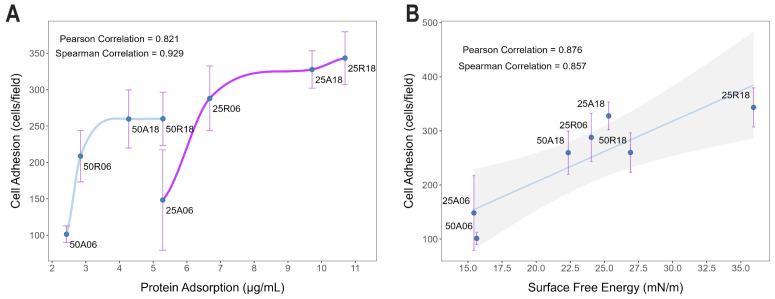
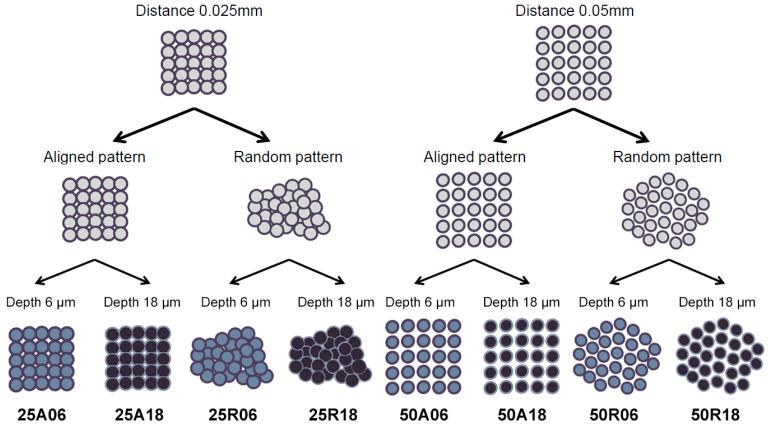
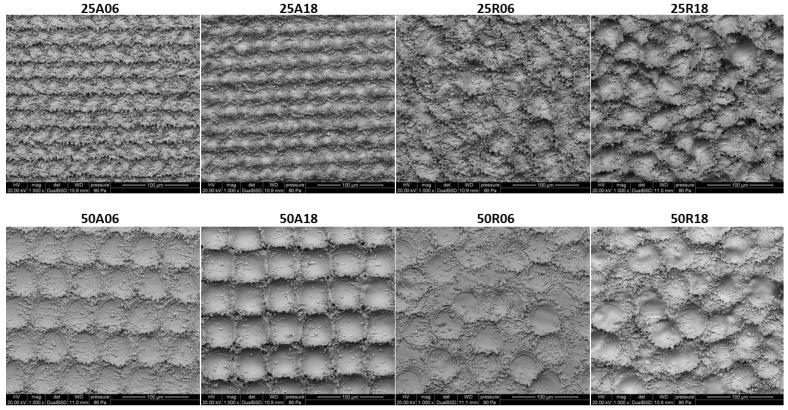
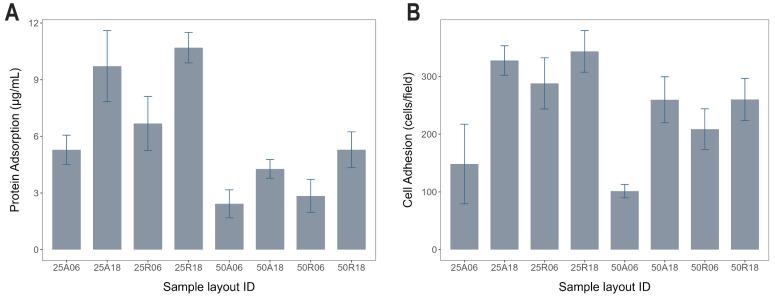
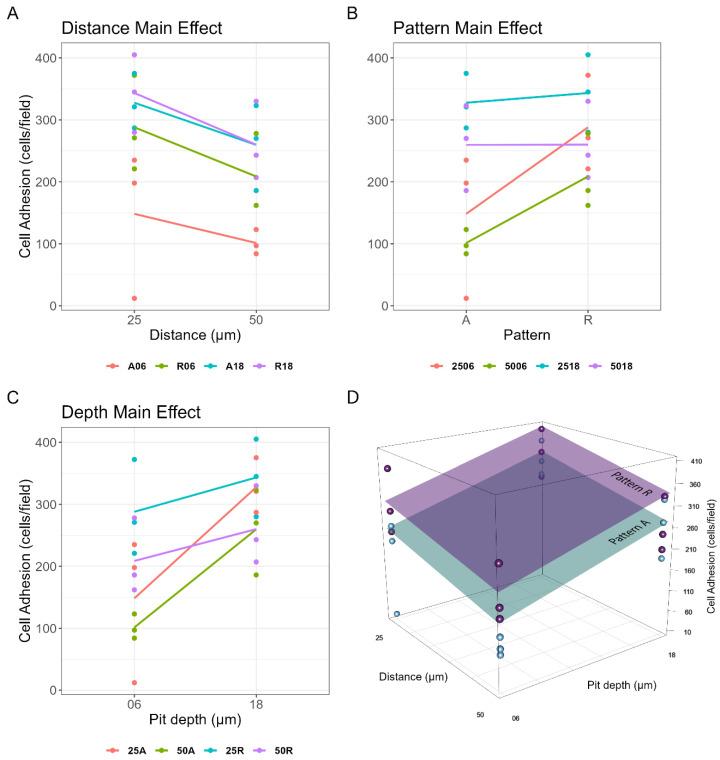
Titanium and titanium alloys are the prevailing dental implant materials owing to their favorable mechanical properties and biocompatibility, but how roughness dictates the biological response is still a matter of debate. In this study, laser texturing was used to generate eight paradigmatic roughened surfaces, with the aim of studying the early biological response elicited on MC3T3-E1 pre-osteoblasts. Prior to cell tests, the samples underwent SEM analysis, optical profilometry, protein adsorption assay, and optical contact angle measurement with water and diiodomethane to determine surface free energy. While all the specimens proved to be biocompatible, supporting similar cell viability at 1, 2, and 3 days, surface roughness could impact significantly on cell adhesion. Factorial analysis and linear regression showed, in a robust and unprecedented way, that an isotropic distribution of deep and closely spaced valleys provides the best condition for cell adhesion, to which both protein adsorption and surface free energy were highly correlated. Overall, here the authors provide, for the first time, a thorough investigation of the relationship between roughness parameters and osteoblast adhesion that may be applied to design and produce new tailored interfaces for implant materials.
钛及钛合金因其良好的机械性能和生物相容性而成为主流的牙科植入材料,但粗糙度如何决定生物学反应仍是一个有争议的问题。在本研究中,采用激光纹理化技术制备了八种典型的粗糙表面,旨在研究其对MC3T3-E1前成骨细胞引发的早期生物学反应。在细胞测试之前,对样品进行了扫描电子显微镜(SEM)分析、光学轮廓测量、蛋白质吸附测定以及用水和二碘甲烷进行的光学接触角测量,以确定表面自由能。虽然所有标本都被证明具有生物相容性,在第1、2和3天支持相似的细胞活力,但表面粗糙度可能会对细胞黏附产生显著影响。因子分析和线性回归以前所未有的稳健方式表明,深且间距紧密的各向同性分布的凹谷为细胞黏附提供了最佳条件,蛋白质吸附和表面自由能与细胞黏附高度相关。总体而言,作者在此首次对粗糙度参数与成骨细胞黏附之间的关系进行了全面研究,这可能应用于设计和生产新型定制的植入材料界面。


 Zotero 插件