
铅(Pb)诱导的老年斑马鱼转录组和表型改变的影响() 。 (注:原文括号部分内容缺失,翻译可能不完全准确,仅按现有内容翻译)
Implications of Lead (Pb)-Induced Transcriptomic and Phenotypic Alterations in the Aged Zebrafish ().
作者信息
Wu Chia-Chen, Meyer Danielle N, Haimbaugh Alex, Baker Tracie R
机构信息
Institute of Environmental Engineering, National Yang Ming Chiao Tung University, 1001, Daxue Rd, East District, Hsinchu City 300093, Taiwan.
Department of Environmental and Global Health, University of Florida, 1225 Center Drive, Gainesville, FL 32610, USA.
出版信息
Toxics. 2024 Oct 14;12(10):745. doi: 10.3390/toxics12100745.
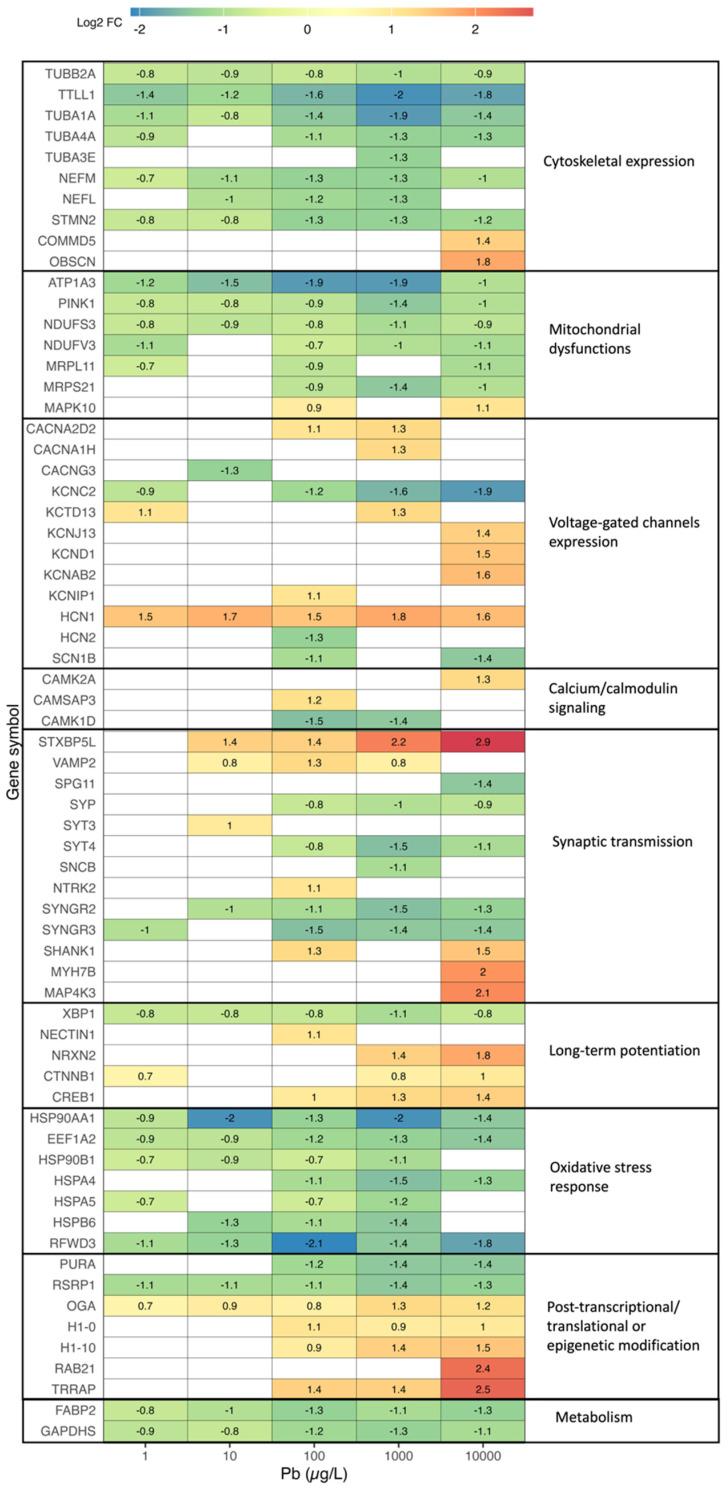
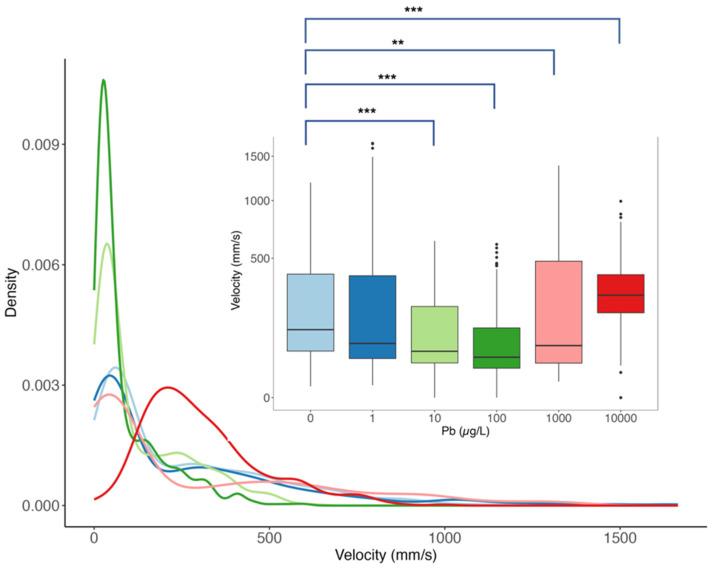
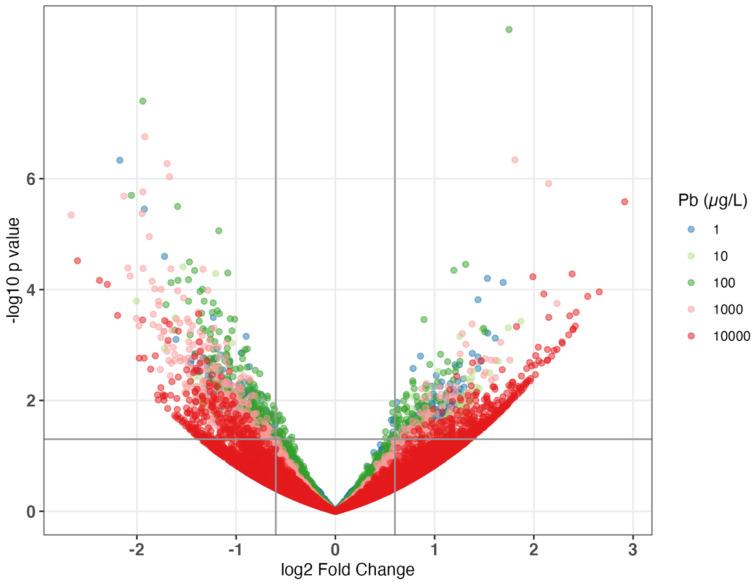
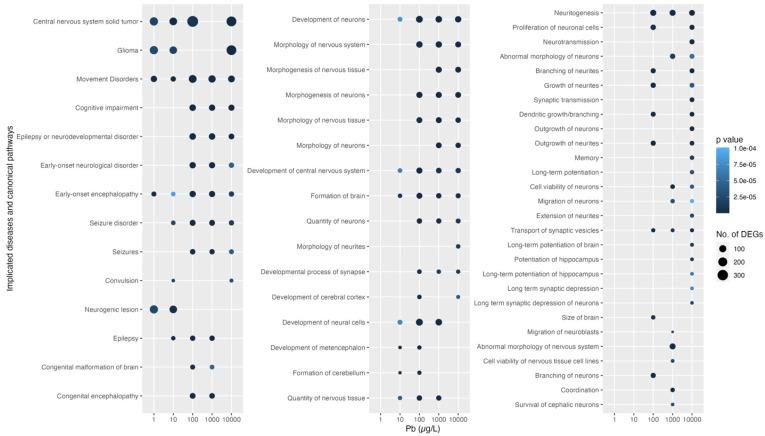
Lead (Pb) is a well-known neurotoxin with established adverse effects on the neurological functions of children and younger adults, including motor, learning, and memory abilities. However, its potential impact on older adults has received less attention. Using the zebrafish model, our study aims to characterize the dose-response relationship between environmentally relevant Pb exposure levels and their effects on changes in behavior and transcriptomics during the geriatric periods. We exposed two-year-old zebrafish to waterborne lead acetate (1, 10, 100, 1000, or 10,000 µg/L) or a vehicle (DMSO) for 5 days. While lower concentrations (1-100 µg/L) reflect environmentally relevant Pb levels, higher concentrations (1000-10,000 µg/L) were included to assess acute toxicity under extreme exposure scenarios. We conducted adult behavior assessment to evaluate the locomotor activity following exposure. The same individual fish were subsequently sacrificed for brain dissection after a day of recovery in the aquatic system. RNA extraction and sequencing were then performed to evaluate the Pb-induced transcriptomic changes. Higher (1000-10,000 ug/L) Pb levels induced hyperactive locomotor patterns in aged zebrafish, while lower (10-100 ug/L) Pb levels resulted in the lowest locomotor activity compared to the control group. Exposure to 100 µg/L led to the highest number of differentially expressed genes (DEGs), while 10,000 µg/L induced larger fold changes in both directions. The neurological pathways impacted by Pb exposure include functions related to neurotransmission, such as cytoskeletal regulation and synaptogenesis, and oxidative stress response, such as mitochondrial dysfunction and downregulation of heat shock protein genes. These findings emphasize a U-shape dose-response relationship with Pb concentrations in locomotor activity and transcriptomic changes in the aging brain.
铅(Pb)是一种众所周知的神经毒素,对儿童和年轻人的神经功能有既定的不良影响,包括运动、学习和记忆能力。然而,它对老年人的潜在影响却较少受到关注。利用斑马鱼模型,我们的研究旨在确定环境相关铅暴露水平与其对老年期行为变化和转录组学影响之间的剂量反应关系。我们将两岁的斑马鱼暴露于水中醋酸铅(1、10、100、1000或10000μg/L)或载体(二甲基亚砜)中5天。虽然较低浓度(1-100μg/L)反映了环境相关的铅水平,但纳入较高浓度(1000-10000μg/L)是为了评估极端暴露情况下的急性毒性。我们进行了成年行为评估,以评估暴露后的运动活动。在水生系统中恢复一天后,随后将同一条鱼处死以进行脑解剖。然后进行RNA提取和测序,以评估铅诱导的转录组变化。较高(1000-10000μg/L)的铅水平在老年斑马鱼中诱导了多动模式,而较低(10-100μg/L)的铅水平与对照组相比导致了最低的运动活动。暴露于100μg/L导致差异表达基因(DEG)数量最多,而10000μg/L在两个方向上诱导的倍数变化更大。受铅暴露影响的神经通路包括与神经传递相关的功能,如细胞骨架调节和突触形成,以及氧化应激反应,如线粒体功能障碍和热休克蛋白基因的下调。这些发现强调了在衰老大脑中运动活动和转录组变化方面,铅浓度与剂量反应关系呈U形。

 Zotero 插件