
发现针对复杂多跨膜蛋白的治疗性抗体。
Discovery of Therapeutic Antibodies Targeting Complex Multi-Spanning Membrane Proteins.
机构信息
Department of Biologics Engineering, Oncology R&D, The Discovery Centre, AstraZeneca, 1 Francis Crick Avenue, Cambridge, CB2 0AA, UK.
出版信息
BioDrugs. 2024 Nov;38(6):769-794. doi: 10.1007/s40259-024-00682-1. Epub 2024 Oct 25.
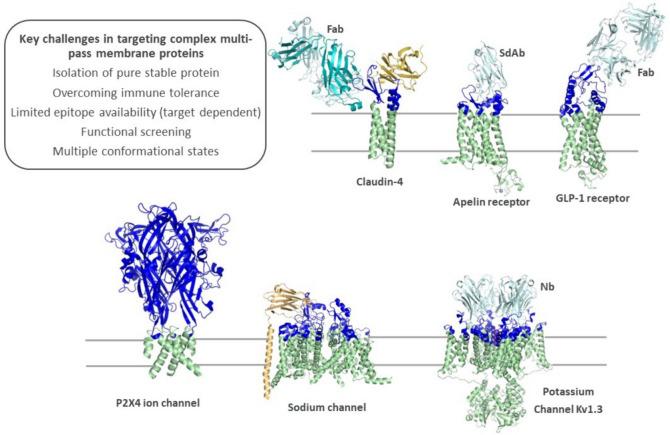
Complex integral membrane proteins, which are embedded in the cell surface lipid bilayer by multiple transmembrane spanning polypeptides, encompass families of proteins that are important target classes for drug discovery. These protein families include G protein-coupled receptors, ion channels, transporters, enzymes, and adhesion molecules. The high specificity of monoclonal antibodies and the ability to engineer their properties offers a significant opportunity to selectively bind these target proteins, allowing direct modulation of pharmacology or enabling other mechanisms of action such as cell killing. Isolation of antibodies that bind these types of membrane proteins and exhibit the desired pharmacological function has, however, remained challenging due to technical issues in preparing membrane protein antigens suitable for enabling and driving antibody drug discovery strategies. In this article, we review progress and emerging themes in defining discovery strategies for a generation of antibodies that target these complex membrane protein antigens. We also comment on how this field may develop with the emerging implementation of computational techniques, artificial intelligence, and machine learning.
复杂的整合膜蛋白通过多个跨膜跨区多肽嵌入细胞表面的脂质双层中,这些蛋白家族包括 G 蛋白偶联受体、离子通道、转运蛋白、酶和黏附分子等。单克隆抗体具有高度特异性,并且能够对其特性进行工程改造,这为选择性结合这些靶蛋白提供了重要机会,从而可以直接调节药理学,或实现其他作用机制,如细胞杀伤。然而,由于制备适合于启用和驱动抗体药物发现策略的膜蛋白抗原的技术问题,分离与这些类型的膜蛋白结合并表现出所需药理学功能的抗体仍然具有挑战性。在本文中,我们回顾了针对这些复杂膜蛋白抗原的新一代抗体的发现策略的定义方面的进展和新兴主题。我们还评论了随着计算技术、人工智能和机器学习的新兴应用,该领域可能会如何发展。

 Zotero 插件