
支链氨基酸代谢:代谢性疾病的病理生理机制及治疗干预
Branched-chain amino acid metabolism: Pathophysiological mechanism and therapeutic intervention in metabolic diseases.
作者信息
Mansoori Shama, Ho Melody Yuen-Man, Ng Kelvin Kwun-Wang, Cheng Kenneth King-Yip
机构信息
Department of Health Technology and Informatics, The Hong Kong Polytechnic University, Hong Kong, China.
Hong Kong Polytechnic University Shenzhen Research Institute, Shenzhen, China.
出版信息
Obes Rev. 2025 Feb;26(2):e13856. doi: 10.1111/obr.13856. Epub 2024 Oct 25.
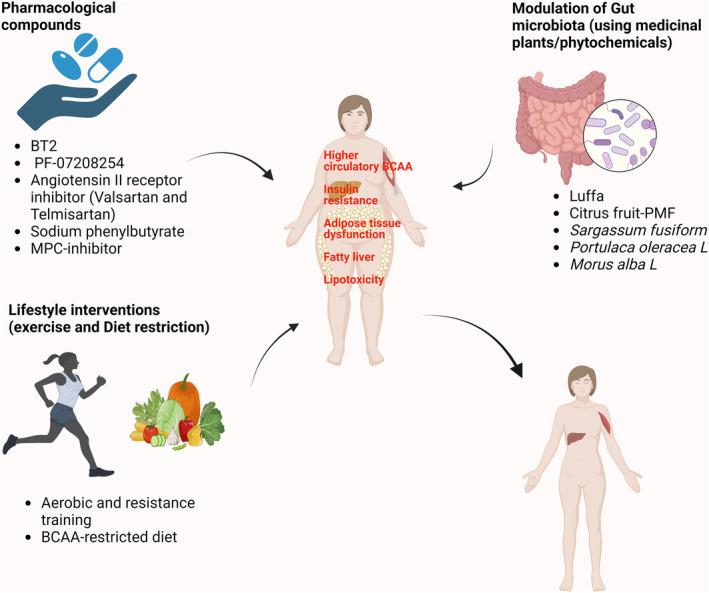
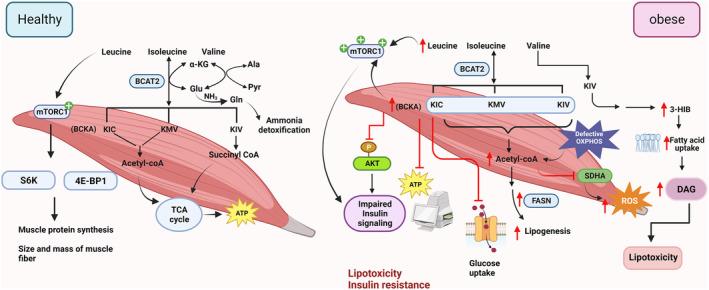
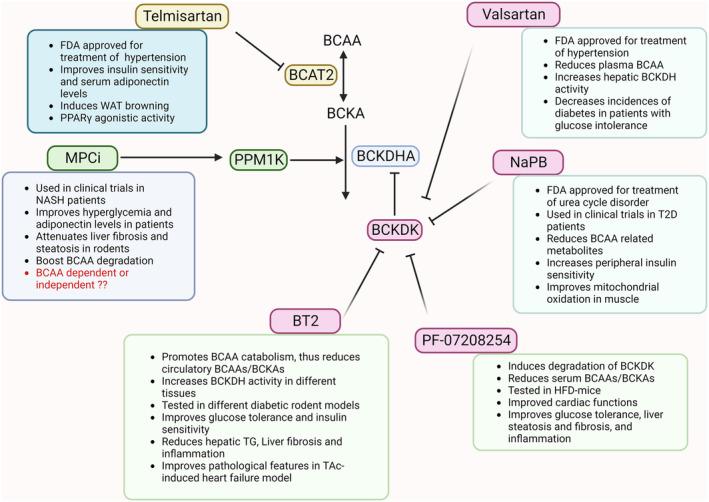
Branched-chain amino acids (BCAAs), including leucine, isoleucine, and valine, are essential for maintaining physiological functions and metabolic homeostasis. However, chronic elevation of BCAAs causes metabolic diseases such as obesity, type 2 diabetes (T2D), and metabolic-associated fatty liver disease (MAFLD). Adipose tissue, skeletal muscle, and the liver are the three major metabolic tissues not only responsible for controlling glucose, lipid, and energy balance but also for maintaining BCAA homeostasis. Under obese and diabetic conditions, different pathogenic factors like pro-inflammatory cytokines, lipotoxicity, and reduction of adiponectin and peroxisome proliferator-activated receptors γ (PPARγ) disrupt BCAA metabolism, leading to excessive accumulation of BCAAs and their downstream metabolites in metabolic tissues and circulation. Mechanistically, BCAAs and/or their downstream metabolites, such as branched-chain ketoacids (BCKAs) and 3-hydroxyisobutyrate (3-HIB), impair insulin signaling, inhibit adipogenesis, induce inflammatory responses, and cause lipotoxicity in the metabolic tissues, resulting in multiple metabolic disorders. In this review, we summarize the latest studies on the metabolic regulation of BCAA homeostasis by the three major metabolic tissues-adipose tissue, skeletal muscle, and liver-and how dysregulated BCAA metabolism affects glucose, lipid, and energy balance in these active metabolic tissues. We also summarize therapeutic approaches to restore normal BCAA metabolism as a treatment for metabolic diseases.
支链氨基酸(BCAAs),包括亮氨酸、异亮氨酸和缬氨酸,对于维持生理功能和代谢稳态至关重要。然而,BCAAs的长期升高会引发肥胖、2型糖尿病(T2D)和代谢相关脂肪性肝病(MAFLD)等代谢性疾病。脂肪组织、骨骼肌和肝脏是三大主要代谢组织,不仅负责控制葡萄糖、脂质和能量平衡,还负责维持BCAA稳态。在肥胖和糖尿病状态下,促炎细胞因子、脂毒性以及脂联素和过氧化物酶体增殖物激活受体γ(PPARγ)减少等不同致病因素会破坏BCAA代谢,导致BCAAs及其下游代谢产物在代谢组织和循环中过度积累。从机制上讲,BCAAs和/或其下游代谢产物,如支链酮酸(BCKAs)和3-羟基异丁酸(3-HIB),会损害胰岛素信号传导、抑制脂肪生成、诱导炎症反应,并在代谢组织中引起脂毒性,从而导致多种代谢紊乱。在本综述中,我们总结了脂肪组织、骨骼肌和肝脏这三大主要代谢组织对BCAA稳态进行代谢调节的最新研究,以及失调的BCAA代谢如何影响这些活跃代谢组织中的葡萄糖、脂质和能量平衡。我们还总结了恢复正常BCAA代谢作为代谢性疾病治疗方法的治疗手段。



 Zotero 插件