
反刍动物微生物组数据存在偏差且不公平,削弱了它们对可持续生产改进的实用性。
Ruminant microbiome data are skewed and unFAIR, undermining their usefulness for sustainable production improvement.
作者信息
Ortiz-Chura Abimael, Popova Milka, Morgavi Diego P
机构信息
Université Clermont Auvergne, INRAE, VetAgro Sup, UMR 1213 Herbivores Unit, Saint-Gènes-Champanelle, France.
出版信息
Anim Microbiome. 2024 Oct 25;6(1):61. doi: 10.1186/s42523-024-00348-x.
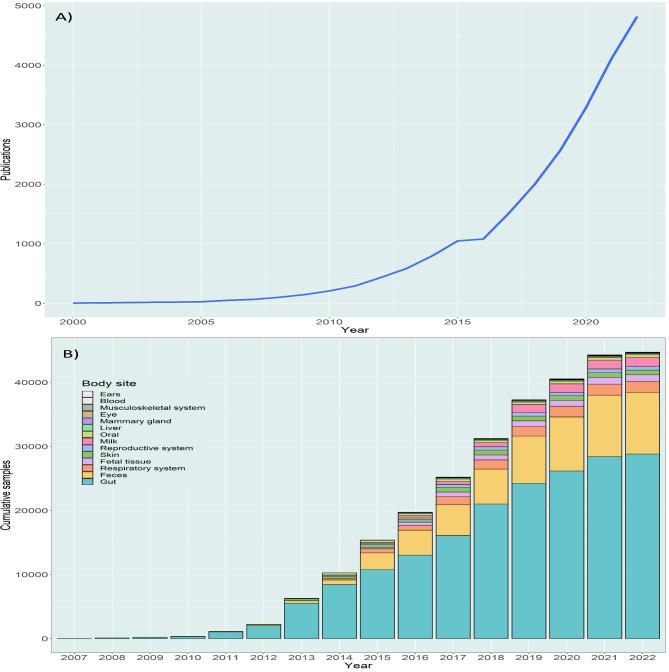
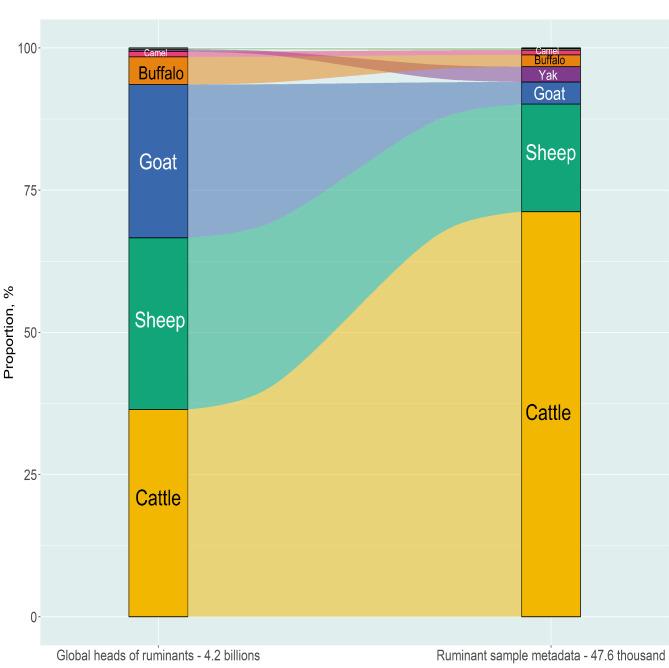
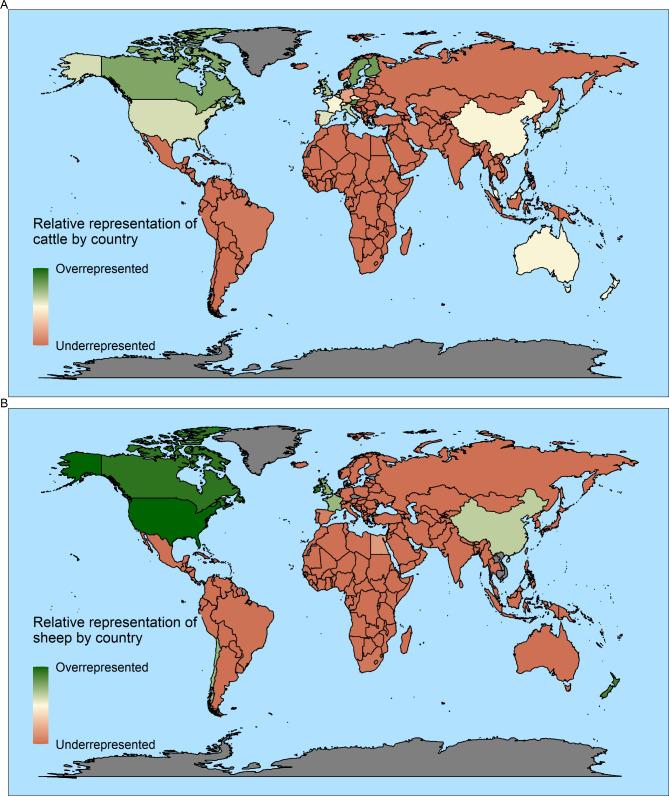
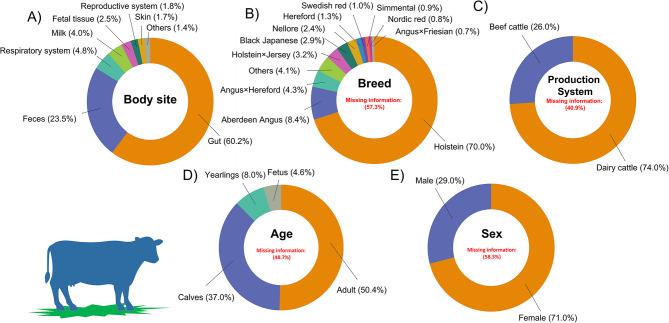
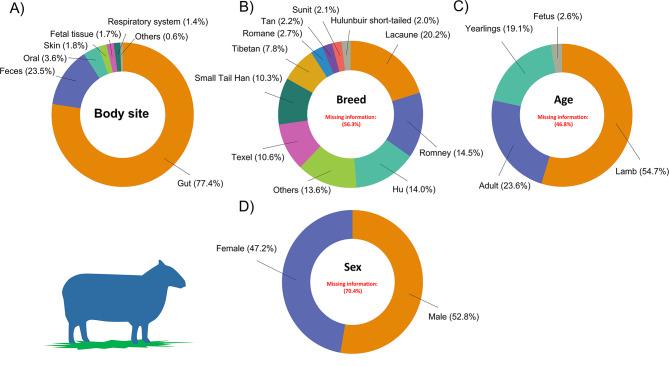
The ruminant microbiome plays a key role in the health, feed utilization and environmental impact of ruminant production systems. Microbiome research provides insights to reduce the environmental footprint and improve meat and milk production from ruminants. However, the microbiome composition depends on the ruminant species, habitat and diet, highlighting the importance of having a good representation of ruminant microbiomes in their local environment to translate research findings into beneficial approaches. This information is currently lacking. In this study, we examined the metadata of farmed ruminant microbiome studies to determine global representativeness and summarized information by ruminant species, geographic location, body site, and host information. We accessed data from the International Nucleotide Sequence Database Collaboration via the National Center for Biotechnology Information database. We retrieved 47,628 sample metadata, with cattle accounting for more than two-thirds of the samples. In contrast, goats, which have a similar global population to cattle, were underrepresented with less than 4% of the total samples. Most samples originated in Western Europe, North America, Australasia and China but countries with large ruminant populations in South America, Africa, Asia, and Eastern Europe were underrepresented. Microbiomes from the gastrointestinal tract were the most frequently studied, comprising about 87% of all samples. Additionally, the number of samples from other body sites such as the respiratory tract, milk, skin, reproductive tract, and fetal tissue, has markedly increased over the past decade. More than 40% of the samples lacked basic information and many were retrieved from generic taxonomic classifications where the ruminant species was manually recovered. The lack of basic information such as age, breed or sex can limit the reusability of the data for further analysis and follow-up studies. This requires correct taxonomic assignment of the ruminant host and basic metadata information using accepted ontologies adapted to host-associated microbiomes. Repositories should require this information as a condition of acceptance. The results of this survey highlight the need to encourage studies of the ruminant microbiome from underrepresented ruminant species and countries worldwide. This shortfall in information poses a challenge for the development of microbiome-based strategies to meet sustainability requirements, particularly in areas with expanding livestock production systems.
反刍动物微生物群落在反刍动物生产系统的健康、饲料利用和环境影响方面发挥着关键作用。微生物群研究为减少环境足迹和提高反刍动物的肉奶产量提供了见解。然而,微生物群组成取决于反刍动物的种类、栖息地和饮食,这凸显了在当地环境中充分代表反刍动物微生物群以将研究结果转化为有益方法的重要性。目前缺乏这方面的信息。在本研究中,我们检查了养殖反刍动物微生物群研究的元数据,以确定全球代表性,并按反刍动物种类、地理位置、身体部位和宿主信息进行了信息汇总。我们通过国家生物技术信息中心数据库从国际核苷酸序列数据库协作组织获取数据。我们检索到47,628个样本元数据,其中牛占样本的三分之二以上。相比之下,山羊的全球数量与牛相近,但在总样本中所占比例不到4%,代表性不足。大多数样本来自西欧、北美、澳大拉西亚和中国,但南美洲、非洲、亚洲和东欧反刍动物数量众多的国家代表性不足。胃肠道微生物群是研究最频繁的,约占所有样本的87%。此外,在过去十年中,来自呼吸道、乳汁、皮肤、生殖道和胎儿组织等其他身体部位的样本数量显著增加。超过40%的样本缺乏基本信息,许多样本是从通用分类学分类中检索到的,其中反刍动物种类是人工恢复的。年龄、品种或性别等基本信息的缺乏会限制数据用于进一步分析和后续研究的可重用性。这需要使用适用于宿主相关微生物群的公认本体对反刍动物宿主进行正确的分类学赋值和基本元数据信息。存储库应将此信息作为接受条件。这项调查结果凸显了鼓励对全球代表性不足的反刍动物种类和国家的反刍动物微生物群进行研究的必要性。这种信息短缺对制定基于微生物群的策略以满足可持续性要求构成了挑战,特别是在畜牧生产系统不断扩大的地区。
 Zotero 插件