
双能 CT(DECT)容积定量分析在非小细胞肺癌中对病理亚型和 Ki-67、TTF-1 表达的鉴别诊断
Differentiation of pathological subtypes and Ki-67 and TTF-1 expression by dual-energy CT (DECT) volumetric quantitative analysis in non-small cell lung cancer.
机构信息
Department of Medical Imaging Center, Nanfang Hospital, Southern Medical University, Guangzhou, 510515, China.
Department of Radiology, The First Affiliated Hospital of Guangzhou Medical University, Guangzhou, 510120, China.
出版信息
Cancer Imaging. 2024 Oct 25;24(1):146. doi: 10.1186/s40644-024-00793-6.
BACKGROUND
To explore the value of dual-energy computed tomography (DECT) in differentiating pathological subtypes and the expression of immunohistochemical markers Ki-67 and thyroid transcription factor 1 (TTF-1) in patients with non-small cell lung cancer (NSCLC).
METHODS
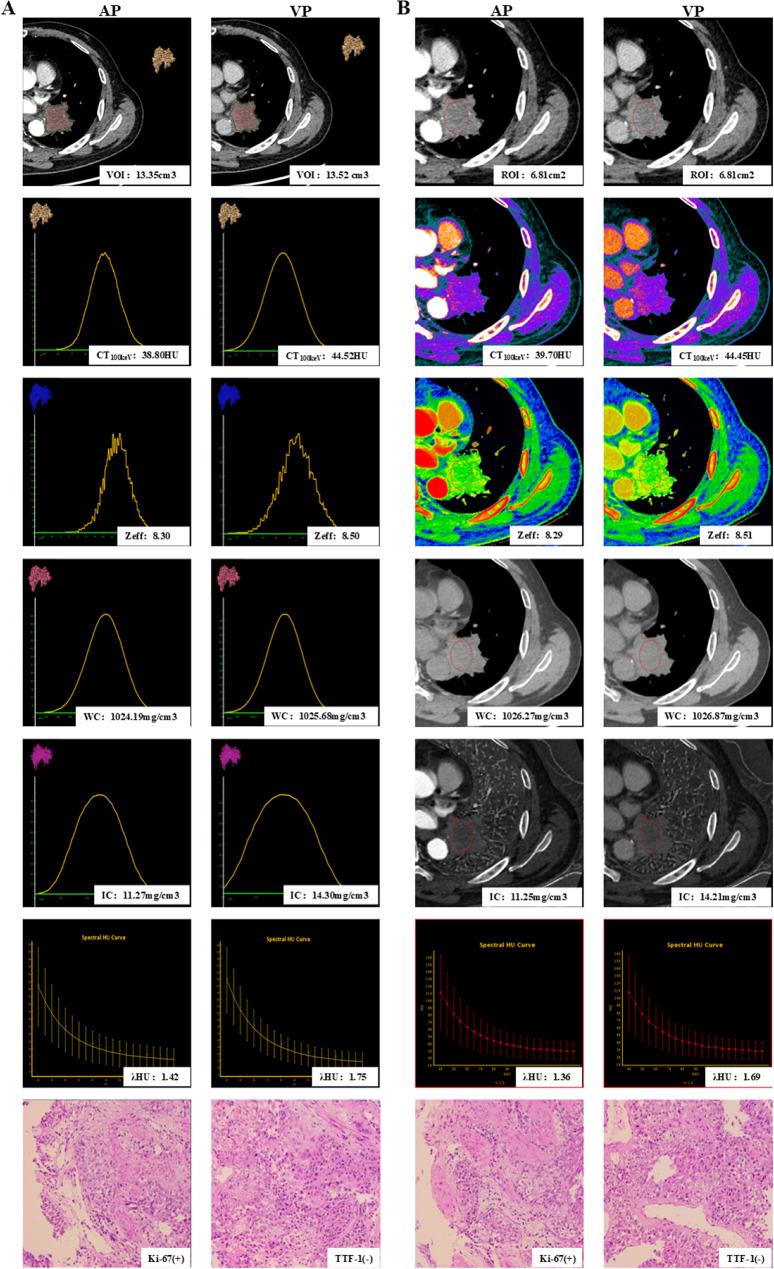
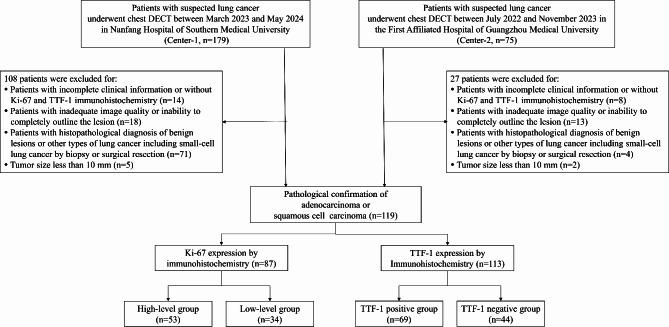
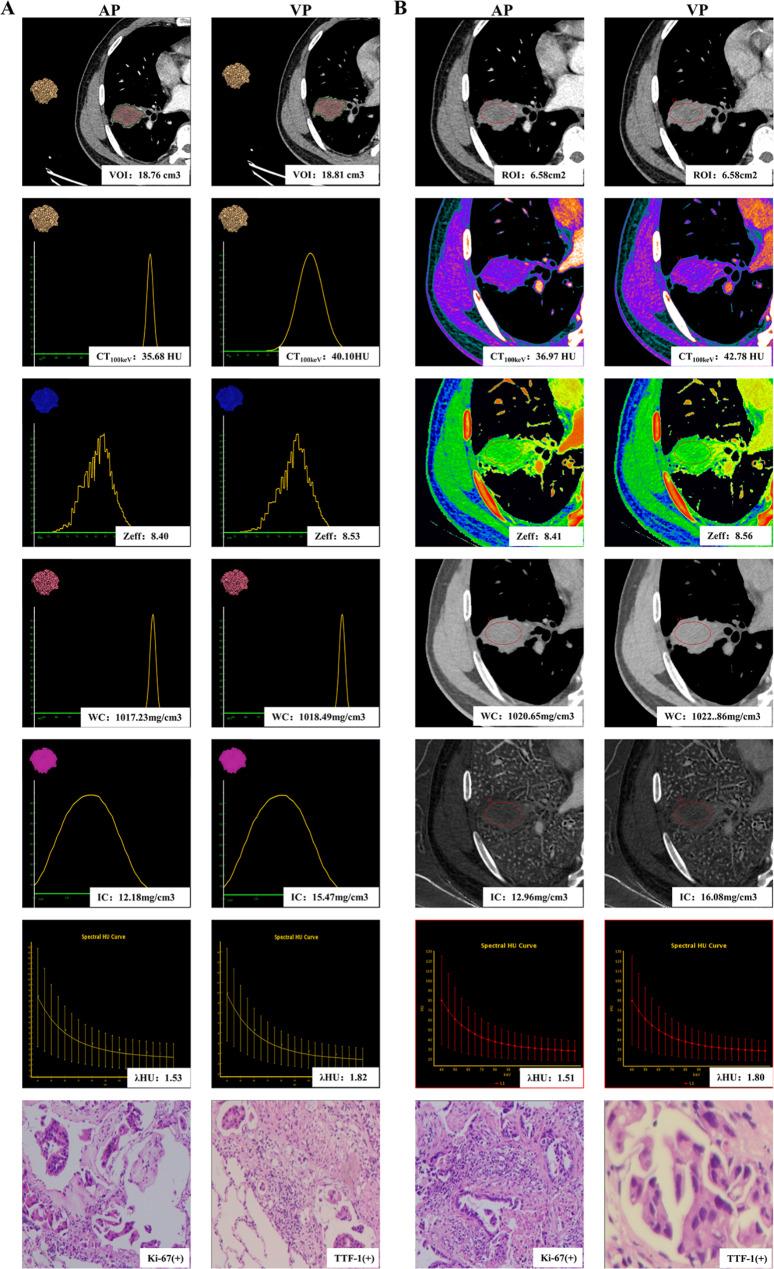
Between July 2022 and May 2024, patients suspected of lung cancer who underwent two-phase contrast-enhanced DECT were prospectively recruited. Whole-tumor volumetric and conventional spectral analysis were utilized to measure DECT parameters in the arterial and venous phase. The DECT parameters model, clinical-CT radiological features model, and combined prediction model were developed to discriminate pathological subtypes and predict Ki-67 or TTF-1 expression. Multivariate logistic regression analysis was used to identify independent predictors. The diagnostic efficacy was assessed by the area under the receiver operating characteristic curve (AUC) and compared using DeLong's test.
RESULTS
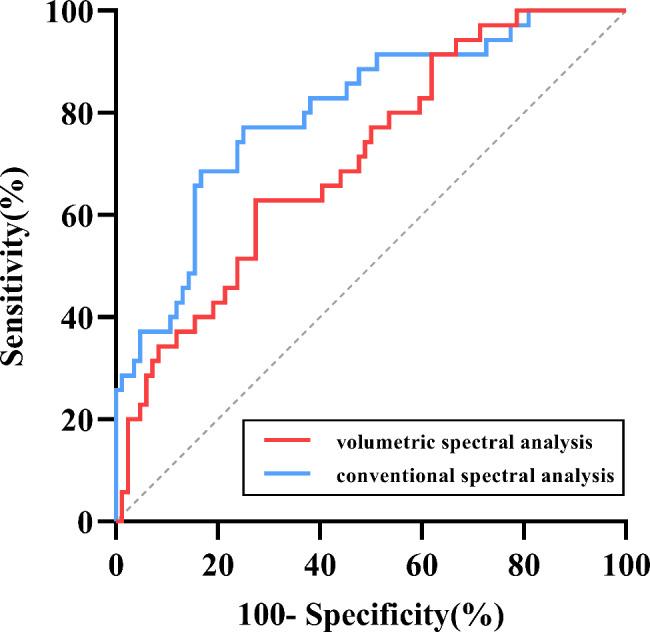
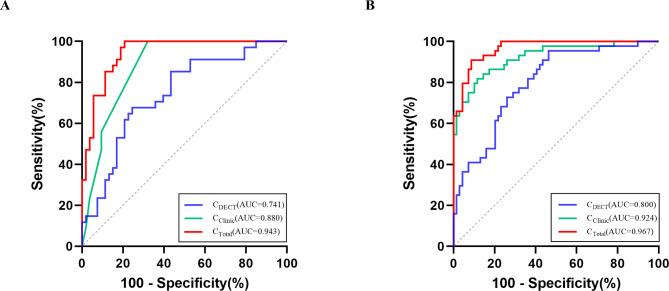
This study included 119 patients (92 males and 27 females; mean age, 63.0 ± 9.4 years) who was diagnosed with NSCLC. When applying the DECT parameters model to differentiate between adenocarcinoma and squamous cell carcinoma, ROC curve analysis indicated superior diagnostic performance for conventional spectral analysis over volumetric spectral analysis (AUC, 0.801 vs. 0.709). Volumetric spectral analysis exhibited higher diagnostic efficacy in predicting immunohistochemical markers compared to conventional spectral analysis (both P < 0.05). For Ki-67 and TTF-1 expression, the combined prediction model demonstrated optimal diagnostic performance with AUC of 0.943 and 0.967, respectively.
CONCLUSIONS
The combined predictive model based on volumetric quantitative analysis in DECT offers valuable information to discriminate immunohistochemical expression status, facilitating clinical decision-making for patients with NSCLC.
背景
探讨双能量 CT(DECT)在鉴别非小细胞肺癌(NSCLC)患者病理亚型及免疫组化标志物 Ki-67 和甲状腺转录因子 1(TTF-1)表达中的价值。
方法
2022 年 7 月至 2024 年 5 月,前瞻性招募怀疑肺癌且行双期增强 DECT 的患者。采用全瘤容积及常规能谱分析,测量动脉期和静脉期 DECT 参数。建立 DECT 参数模型、临床 CT 影像学特征模型及联合预测模型,用于鉴别病理亚型及预测 Ki-67 或 TTF-1 表达。采用多变量 logistic 回归分析确定独立预测因素。采用受试者工作特征曲线(ROC)下面积(AUC)评估诊断效能,并采用 DeLong 检验进行比较。
结果
本研究共纳入 119 例患者(男 92 例,女 27 例;平均年龄 63.0±9.4 岁),诊断为 NSCLC。在应用 DECT 参数模型鉴别腺癌和鳞癌时,常规能谱分析的 ROC 曲线分析显示出优于容积能谱分析的诊断效能(AUC:0.801 比 0.709)。与常规能谱分析相比,容积能谱分析在预测免疫组化标志物方面具有更高的诊断效能(均 P<0.05)。对于 Ki-67 和 TTF-1 表达,联合预测模型的 AUC 分别为 0.943 和 0.967,具有最佳的诊断性能。
结论
DECT 基于容积定量分析的联合预测模型可为鉴别免疫组化表达状态提供有价值的信息,有助于 NSCLC 患者的临床决策。
 Zotero 插件