
治疗糖尿病的药物及葡萄糖响应性给药系统的最新进展:一项系统综述
Recent Advances in the Drugs and Glucose-Responsive Drug Delivery Systems for the Treatment of Diabetes: A Systematic Review.
作者信息
Liu Junyu, Yi Xudong, Zhang Jinrui, Yao Yiman, Panichayupakaranant Pharkphoom, Chen Haixia
机构信息
Tianjin Key Laboratory for Modern Drug Delivery and High-Efficiency, School of Pharmaceutical Science and Technology, Faculty of Medicine, Tianjin University, Tianjin 300072, China.
Phytomedicine and Pharmaceutical Biotechnology Excellence Center, Faculty of Pharmaceutical Sciences, Prince of Songkla University, Hat-Yai, Songkhla 90112, Thailand.
出版信息
Pharmaceutics. 2024 Oct 20;16(10):1343. doi: 10.3390/pharmaceutics16101343.
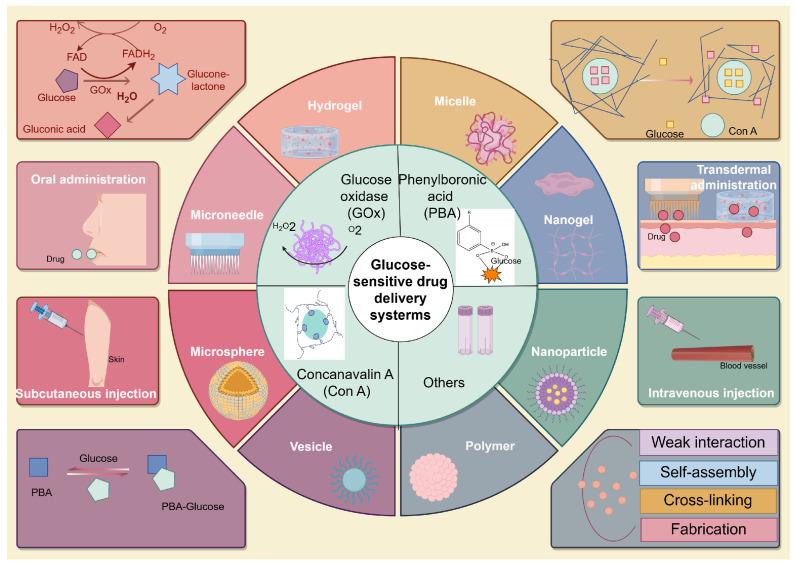
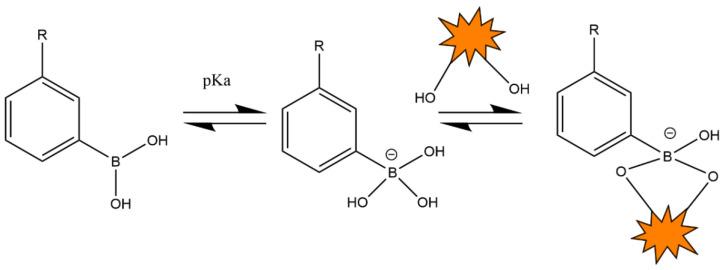
Diabetes is a common chronic metabolic disease. Different types of drugs play important roles in controlling diabetes and its complications, but there are some limitations. The glucose-responsive drug delivery system is a novel technology with potential in diabetes treatment. It could automatically release drugs in response to changes in glucose levels in the body to maintain blood glucose within a normal range. The emergence of a glucose-sensitive drug delivery system provides a more intelligent and precise way to treat diabetes. The review is carried out according to the Preferred Reporting Items for Systematic Reviews (PRISMA 2020) guidelines This review focuses on the recent advances in the drugs and different systems of glucose-sensitive drug delivery, including glucose oxidase, phenylboronic acid, Concanavalin A, and other glucose-reactive systems. Furthermore, the glucose-responsive drug delivery system combined with the application applied in hydrogels, microneedles, and nanoparticles is also explored and summarized. The new platforms to sustain the release of anti-diabetic drugs could be desirable for patients. It could lead to increased adherence and glycemic outcomes for the detection and treatment of diabetes. Furthermore, given the limitations of glucose-responsive drug delivery systems, solutions and perspectives are proposed to help the understanding and application of these systems. This review will be helpful for drug discovery and treatment of diabetes from a new perspective.
糖尿病是一种常见的慢性代谢性疾病。不同类型的药物在控制糖尿病及其并发症方面发挥着重要作用,但也存在一些局限性。葡萄糖响应性药物递送系统是一种在糖尿病治疗中具有潜力的新技术。它可以根据体内葡萄糖水平的变化自动释放药物,以将血糖维持在正常范围内。葡萄糖敏感型药物递送系统的出现为糖尿病治疗提供了一种更智能、更精确的方法。本综述按照系统评价的首选报告项目(PRISMA 2020)指南进行。本综述重点关注葡萄糖敏感型药物递送的药物和不同系统的最新进展,包括葡萄糖氧化酶、苯硼酸、伴刀豆球蛋白A和其他葡萄糖反应系统。此外,还对与水凝胶、微针和纳米颗粒结合应用的葡萄糖响应性药物递送系统进行了探索和总结。维持抗糖尿病药物释放的新平台可能对患者有益。它可能会提高糖尿病检测和治疗的依从性以及血糖控制效果。此外,鉴于葡萄糖响应性药物递送系统的局限性,提出了解决方案和展望,以帮助理解和应用这些系统。本综述将从新的角度有助于糖尿病的药物研发和治疗。



 Zotero 插件