
曼氏血吸虫种内变异及其对不一致毒力和不同临床结局的可能贡献。
Intra-specific variations in Schistosoma mansoni and their possible contribution to inconsistent virulence and diverse clinical outcomes.
机构信息
Division of Tropical Medicine and Infectious Diseases, Center of Internal Medicine II, Rostock University Medical Center, Germany.
Institute of Organic Chemistry and Biochemistry, Czech Academy of Sciences, Prague, Czechia.
出版信息
PLoS Negl Trop Dis. 2024 Oct 28;18(10):e0012615. doi: 10.1371/journal.pntd.0012615. eCollection 2024 Oct.
BACKGROUND
Schistosoma mansoni was introduced from Africa to the Americas during the transatlantic slave trade and remains a major public health problem in parts of South America and the Caribbean. This study presents a comprehensive comparative analysis of three S. mansoni strains with different geographical origins-from Liberia, Belo Horizonte and Puerto Rico. We demonstrated significant variation in virulence and host-parasite interactions.
METHODS
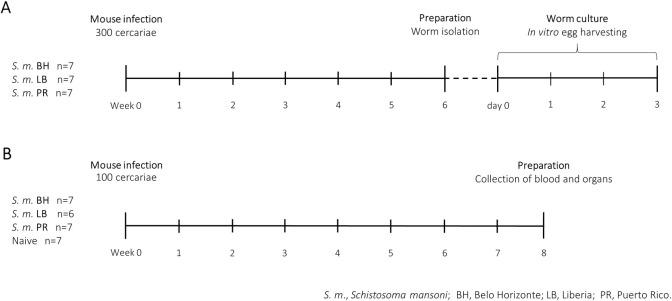
We investigated the phenotypic characteristics of the parasite and its eggs, as well as the immunopathologic effects on laboratory mouse organ systems.
RESULTS
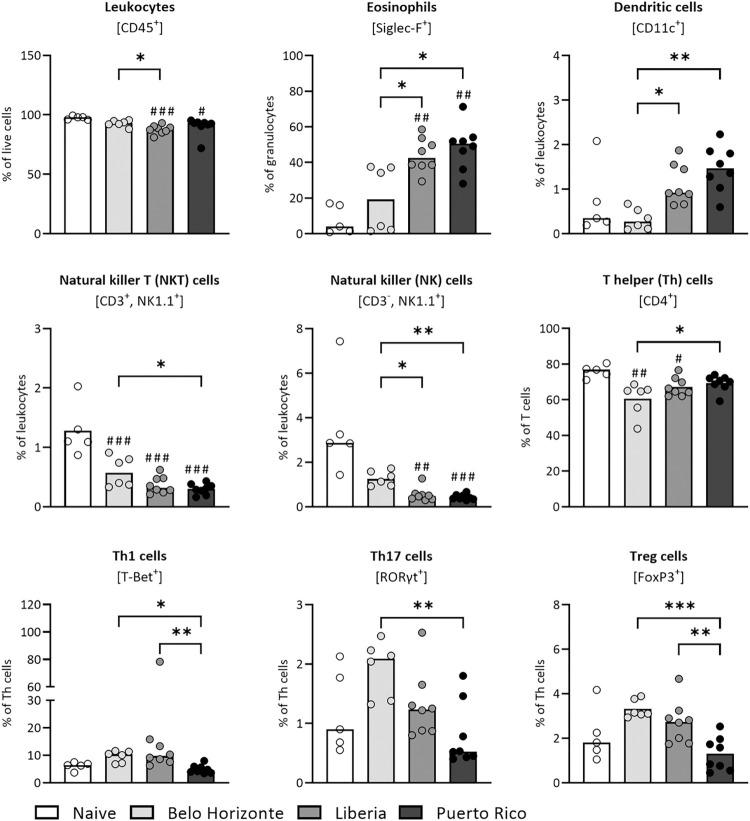
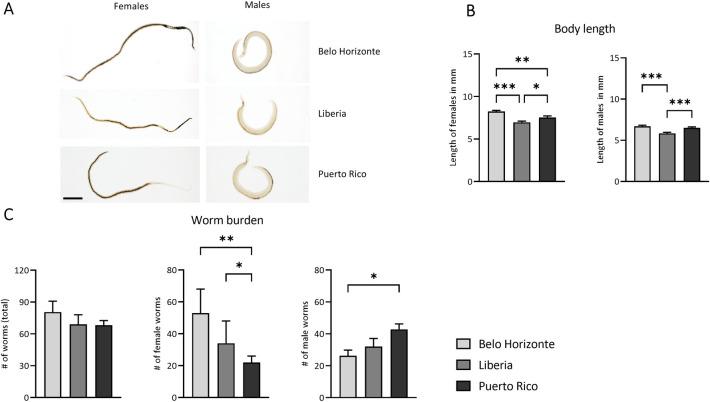
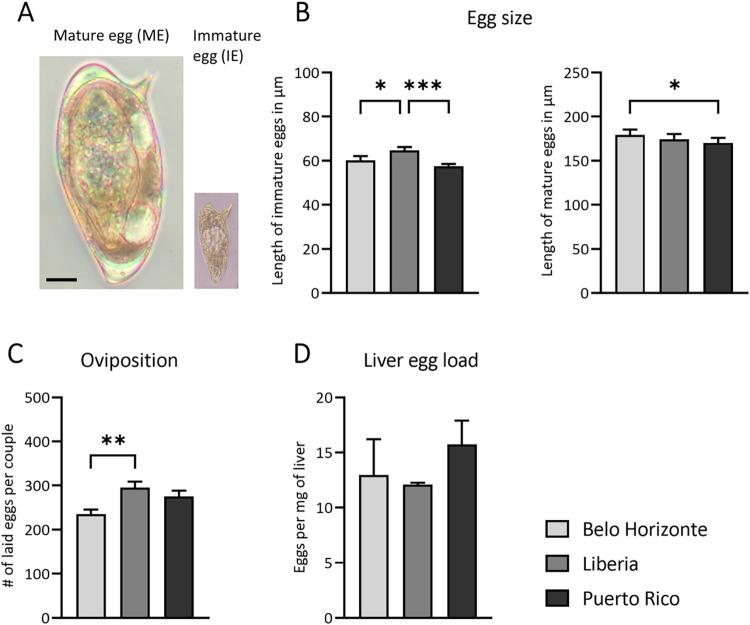
Our results show significant differences in worm morphology, worm burden, egg size, and pathologic organ changes between these strains. The Puerto Rican strain showed the highest virulence, as evidenced by marked liver and spleen changes and advanced liver fibrosis indicated by increased collagen content. In contrast, the strains from Liberia and Belo Horizonte had a less pathogenic profile with less liver fibrosis. We found further variations in granuloma formation, cytokine expression and T-cell dynamics, indicating different immune responses.
CONCLUSION
Our study emphasizes the importance of considering intra-specific variations of S. mansoni for the development of targeted therapies and public health strategies. The different virulence patterns, host immune responses and organ pathologies observed in these strains provide important insights for future research and could inform region-specific interventions for schistosomiasis control.
背景
曼氏血吸虫是在跨大西洋奴隶贸易期间从非洲传入美洲的,至今仍是南美洲和加勒比地区部分地区的主要公共卫生问题。本研究对来自利比里亚、贝洛奥里藏特和波多黎各的三种具有不同地理起源的曼氏血吸虫株进行了全面的比较分析。我们证明了其毒力和宿主-寄生虫相互作用存在显著差异。
方法
我们研究了寄生虫及其虫卵的表型特征,以及对实验室小鼠器官系统的免疫病理影响。
结果
我们的结果表明,这些菌株之间在虫体形态、虫体负荷、卵大小和病理器官变化方面存在显著差异。波多黎各株表现出最高的毒力,表现为肝脏和脾脏明显变化,以及胶原含量增加表明肝纤维化进展。相比之下,来自利比里亚和贝洛奥里藏特的菌株具有较低的致病性,肝纤维化程度较低。我们发现肉芽肿形成、细胞因子表达和 T 细胞动力学存在进一步的变化,表明存在不同的免疫反应。
结论
我们的研究强调了考虑曼氏血吸虫种内变异对于制定靶向治疗和公共卫生策略的重要性。这些菌株表现出的不同毒力模式、宿主免疫反应和器官病理学为未来的研究提供了重要的见解,并为控制血吸虫病的区域特异性干预提供了依据。


 Zotero 插件