
神经对中枢神经系统内肿瘤进展的影响。
Neural Influences on Tumor Progression Within the Central Nervous System.
机构信息
Affiliated Hospital of Hangzhou Normal University, Hangzhou Normal University, Hangzhou, Zhejiang, China.
School of Pharmacy, Hangzhou Normal University, Hangzhou, Zhejiang, China.
出版信息
CNS Neurosci Ther. 2024 Oct;30(10):e70097. doi: 10.1111/cns.70097.
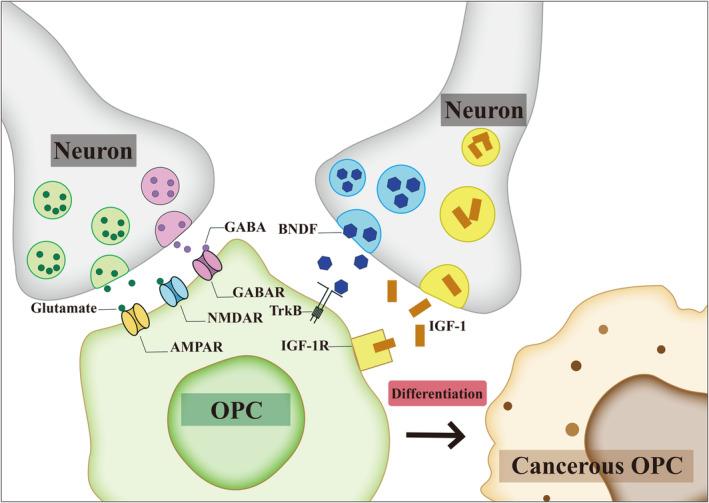
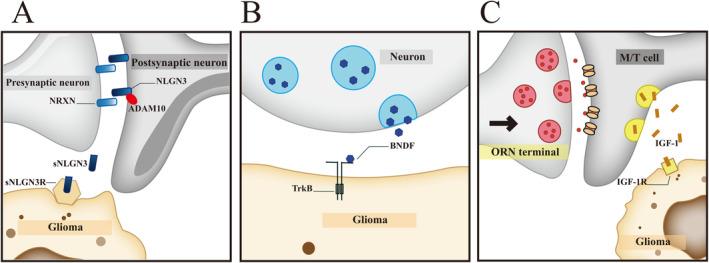
For decades, researchers have studied how brain tumors, the immune system, and drugs interact. With the advances in cancer neuroscience, which centers on defining and therapeutically targeting nervous system-cancer interactions, both within the local tumor microenvironment (TME) and on a systemic level, the subtle relationship between neurons and tumors in the central nervous system (CNS) has been deeply studied. Neurons, as the executors of brain functional activities, have been shown to significantly influence the emergence and development of brain tumors, including both primary and metastatic tumors. They engage with tumor cells via chemical or electrical synapses, directly regulating tumors or via intricate coupling networks, and also contribute to the TME through paracrine signaling, secreting proteins that exert regulatory effects. For instance, in a study involving a mouse model of glioblastoma, the authors observed a 42% increase in tumor volume when neuronal activity was stimulated, compared to controls (p < 0.01), indicating a direct correlation between neural activity and tumor growth. These thought-provoking results offer promising new strategies for brain tumor therapies, highlighting the potential of neuronal modulation to curb tumor progression. Future strategies may focus on developing drugs to inhibit or neutralize proteins and other bioactive substances secreted by neurons, break synaptic connections and interactions between infiltrating cells and tumor cells, as well as disrupt electrical coupling within glioma cell networks. By harnessing the insights gained from this research, we aspire to usher in a new era of brain tumor therapies that are both more potent and precise.
几十年来,研究人员一直在研究脑瘤、免疫系统和药物之间的相互作用。随着癌症神经科学的进步,其中心是定义和治疗性靶向神经系统-癌症相互作用,包括局部肿瘤微环境 (TME) 和系统水平,中枢神经系统 (CNS) 中神经元和肿瘤之间的微妙关系已经得到了深入研究。神经元作为大脑功能活动的执行者,已被证明会显著影响脑瘤的出现和发展,包括原发性和转移性肿瘤。它们通过化学或电突触与肿瘤细胞相互作用,直接调节肿瘤或通过复杂的耦合网络,还通过旁分泌信号传递,分泌发挥调节作用的蛋白质来影响 TME。例如,在一项涉及胶质母细胞瘤小鼠模型的研究中,当刺激神经元活动时,作者观察到肿瘤体积增加了 42%,与对照组相比 (p<0.01),这表明神经活动与肿瘤生长之间存在直接相关性。这些发人深省的结果为脑瘤治疗提供了有前途的新策略,突出了神经元调节抑制肿瘤进展的潜力。未来的策略可能集中在开发抑制或中和神经元分泌的蛋白质和其他生物活性物质的药物,打破浸润细胞与肿瘤细胞之间的突触连接和相互作用,以及破坏神经胶质瘤细胞网络内的电耦合。通过利用这项研究的成果,我们渴望迎来一个更强大、更精确的脑瘤治疗新时代。

 Zotero 插件