
SpliceMutr可实现对肿瘤中剪接衍生新抗原负荷的泛癌分析。
SpliceMutr Enables Pan-Cancer Analysis of Splicing-Derived Neoantigen Burden in Tumors.
作者信息
Palmer Theron, Kessler Michael D, Shao Xiaoshan M, Balan Archana, Yarchoan Mark, Zaidi Neeha, Lopez-Vidal Tamara Y, Saeed Ali M, Gore Jessica, Azad Nilofer S, Jaffee Elizabeth M, Favorov Alexander V, Anagnostou Valsamo, Karchin Rachel, Gaykalova Daria A, Fertig Elana J, Danilova Ludmila
机构信息
Department of Biomedical Engineering, Johns Hopkins University, Baltimore, Maryland.
Convergence Institute, Johns Hopkins University, Baltimore, Maryland.
出版信息
Cancer Res Commun. 2024 Dec 1;4(12):3137-3150. doi: 10.1158/2767-9764.CRC-23-0309.
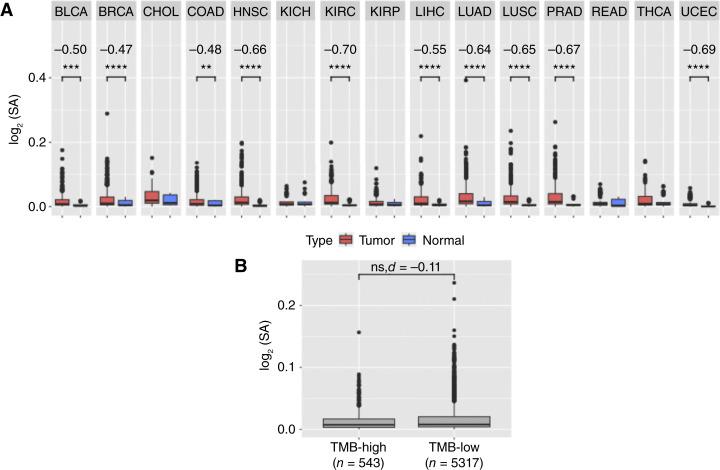
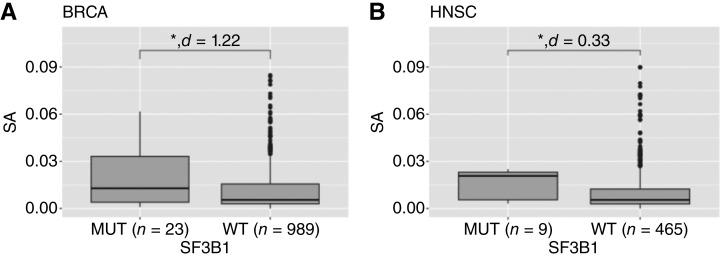
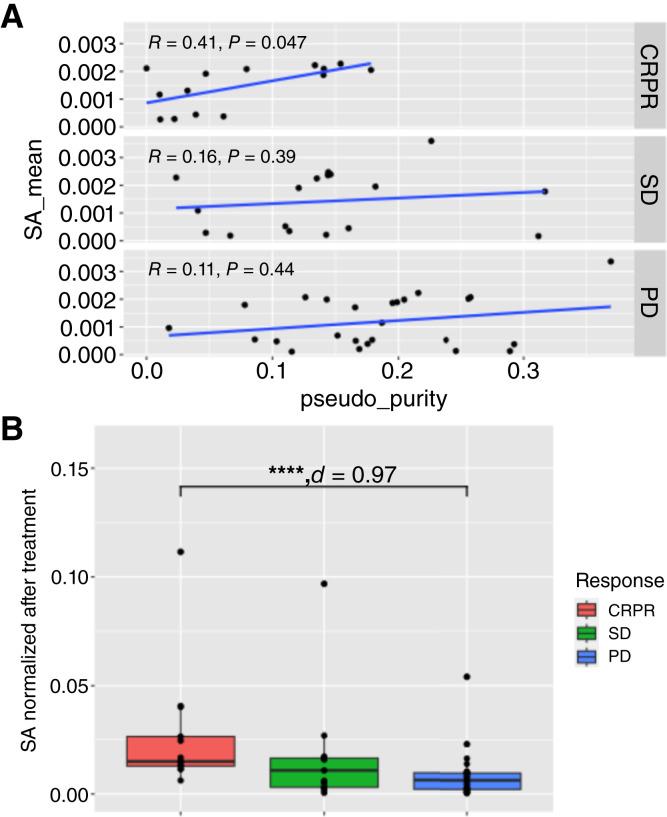
SpliceMutr shows that splicing antigenicity changes in response to ICI therapies and that native modulation of the splicing machinery through mutations increases the contribution of splicing to the neoantigen load of some The Cancer Genome Atlas cancer subtypes. Future studies of the relationship between splicing antigenicity and immune checkpoint inhibitor response pan-cancer are essential to establish the interplay between antigen heterogeneity and immunotherapy regimen on patient response.
SpliceMutr研究表明,剪接抗原性会因免疫检查点抑制剂(ICI)疗法而发生变化,并且通过突变对剪接机制进行天然调节会增加剪接对某些癌症基因组图谱(The Cancer Genome Atlas)癌症亚型新抗原负荷的贡献。未来针对泛癌中剪接抗原性与免疫检查点抑制剂反应之间关系的研究对于确定抗原异质性与免疫治疗方案对患者反应的相互作用至关重要。


 Zotero 插件