
基本 SMAS 除皱术与综合 SMAS 除皱术的应用。
The application of basic SMAS rhytidectomy and comprehensive SMAS rhytidectomy.
机构信息
The Affliated Eye Hospital, Jiangxi Medical College, Nanchang University, Jiangxi Province, PR China.
Zhengxing Stomatalogical Hospital, Yichun City, Jiangxi Province, PR China.
出版信息
Medicine (Baltimore). 2024 Oct 25;103(43):e40126. doi: 10.1097/MD.0000000000040126.
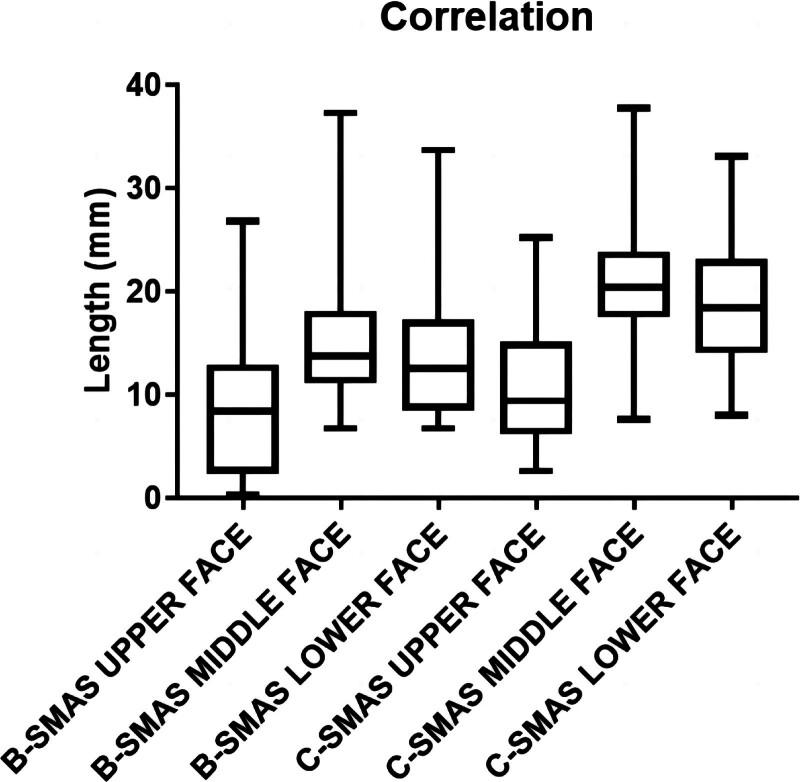
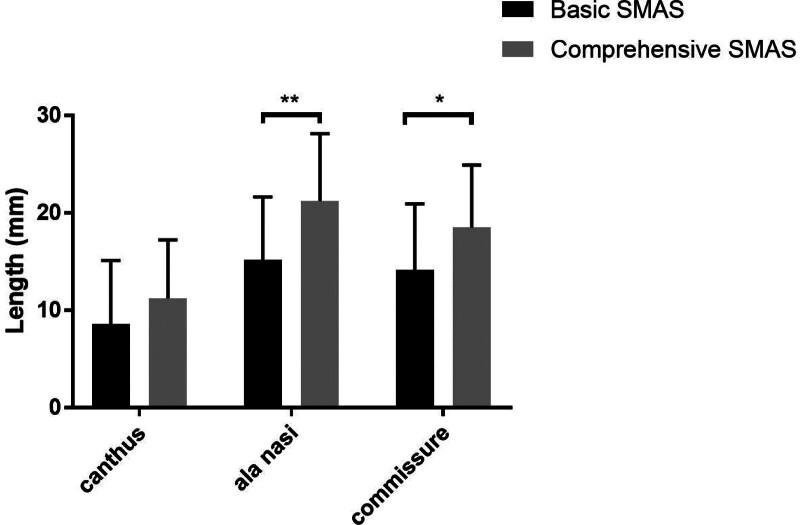
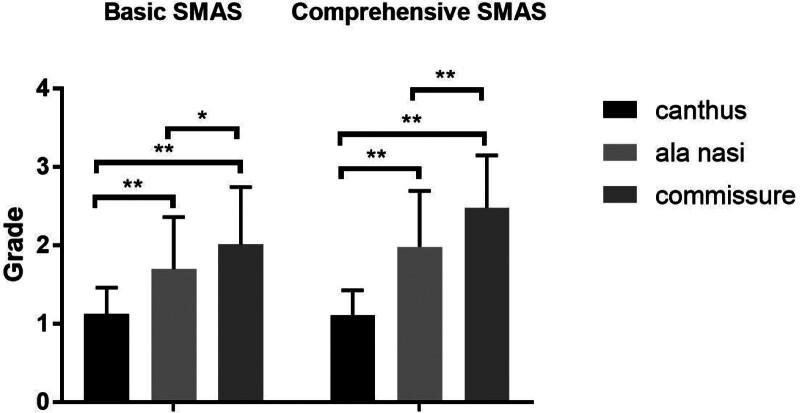
Rhytidectomy has made great progress in the past 50 years, especially after the proposition of the concept of superficial musculoaponeurotic system (SMAS). Our previous research had classified SMAS rhytidectomy into basic SMAS rhytidectomy (B-SMAS) and comprehensive SMAS rhytidectomy (C-SMAS) according to whether the treatment of SMAS aponeurosis is combined with retaining ligament, fat pad, mimetic muscles, etc. The purpose of this paper is to compare the outcomes of the 2 methods. Through multicenter collaborative research, 21 cases of B-SMAS and 18 cases of C-SMAS were collected. Photographs were taken pre- and post-operation for each patient, and the facial width of the lateral canthus level (upper face), the alar base level (middle face), and the oral commissure level (lower face) were measured. We compared the statistics of upper, middle, and lower face pre- and post-B-SMAS and C-SMAS to assess the ramifications of each operation. We used preoperative measurements minus corresponding postoperative measurements of specific operation to assess which position would acquire superior improvements. We also recruited 3 professional plastic clinicians to rate the ramifications of specific positions and approaches after pre- and post-photo comparing. Through comprehensive analyzing, we compared the improvements between B-SMAS and C-SMAS to assess which method is more beneficial concerning facial rejuvenation. Both B-SMAS and C-SMAS would acquire optimal changing concerning facial width in middle and lower face after operation (P < .05). Two methods all harvested better width changing effects in middle and lower face than upper face (P < .05). However, C-SMAS acquired better effects in middle and lower face than B-SMAS (P < .05). Both B-SMAS and C-SMAS are beneficial to facial rejuvenation. The effects in middle and lower face are better than upper face. In addition, C-SMAS may be more effective than B-SMAS.
除皱术在过去 50 年中取得了很大的进展,尤其是在提出浅表肌肉腱膜系统(SMAS)概念之后。我们之前的研究根据是否结合保留韧带、脂肪垫、表情肌等治疗 SMAS 筋膜,将 SMAS 除皱术分为基本 SMAS 除皱术(B-SMAS)和综合 SMAS 除皱术(C-SMAS)。本文旨在比较这两种方法的效果。通过多中心合作研究,共收集了 21 例 B-SMAS 和 18 例 C-SMAS 患者。对每位患者进行术前和术后拍照,并测量外眦水平(上面部)、鼻翼基底水平(中面部)和口角水平(下面部)的面部宽度。我们比较了 B-SMAS 和 C-SMAS 术前和术后的上、中、下面部的统计数据,以评估每种手术的效果。我们用特定手术的术前测量值减去相应的术后测量值,来评估哪个位置会获得更好的改善。我们还招募了 3 名专业的整形临床医生,在术前和术后照片比较后对特定位置和方法的效果进行评分。通过综合分析,我们比较了 B-SMAS 和 C-SMAS 之间的改善效果,以评估哪种方法更有利于面部年轻化。B-SMAS 和 C-SMAS 术后在中下面部均能获得最佳的面部宽度改善(P < .05)。两种方法在中下面部的宽度改善效果均优于上面部(P < .05)。然而,C-SMAS 在中下面部的效果优于 B-SMAS(P < .05)。B-SMAS 和 C-SMAS 均有利于面部年轻化。中下面部的效果优于上面部。此外,C-SMAS 可能比 B-SMAS 更有效。



 Zotero 插件