
长期记忆命运的星形胶质细胞决定因素。
Astrocytic determinant of the fate of long-term memory.
作者信息
Yamao Hiroki, Matsui Ko
机构信息
Super-network Brain Physiology, Graduate School of Life Sciences, Tohoku University, Sendai, Japan.
Super-network Brain Physiology, Graduate School of Medicine, Tohoku University, Sendai, Japan.
出版信息
Glia. 2025 Feb;73(2):309-329. doi: 10.1002/glia.24636. Epub 2024 Nov 4.
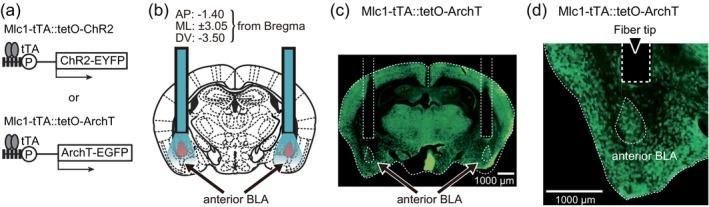
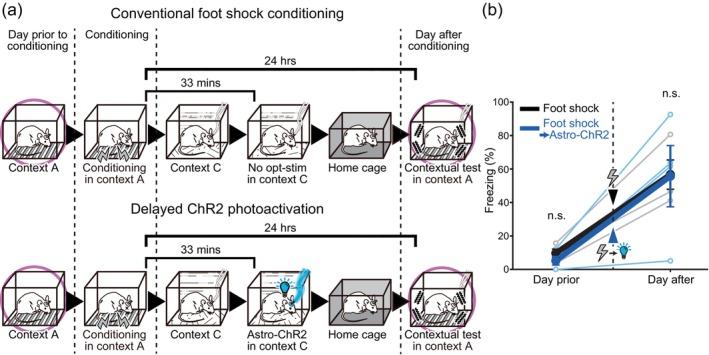
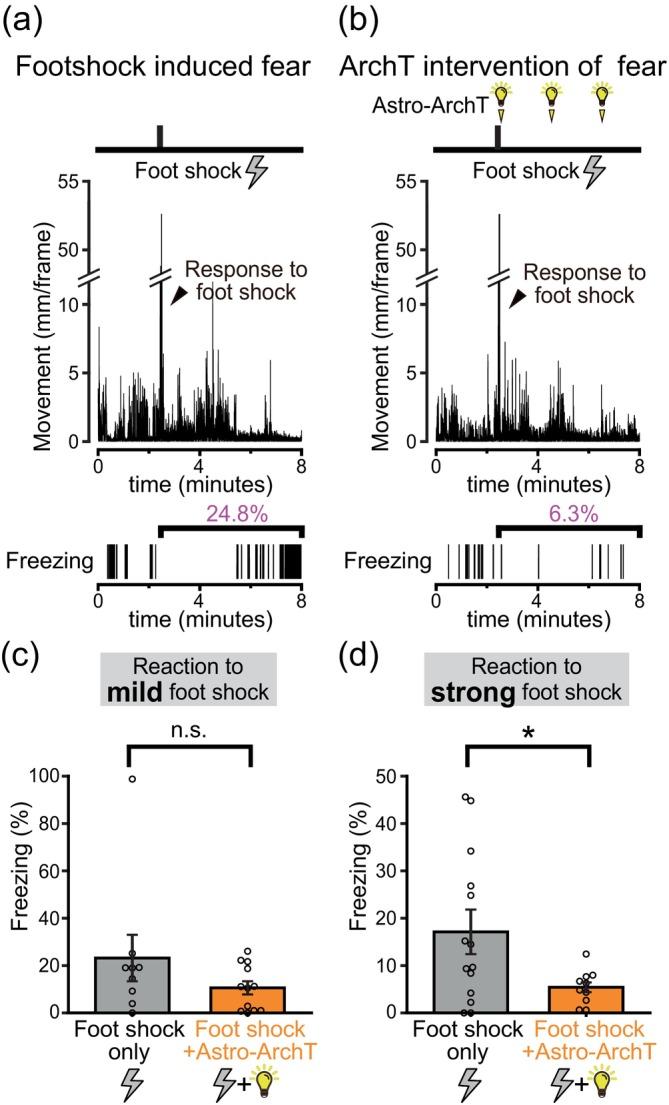
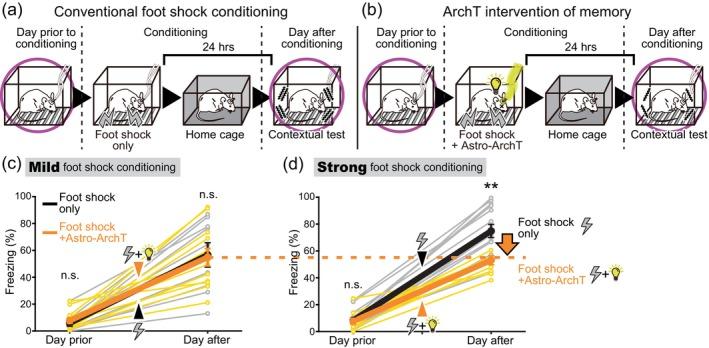
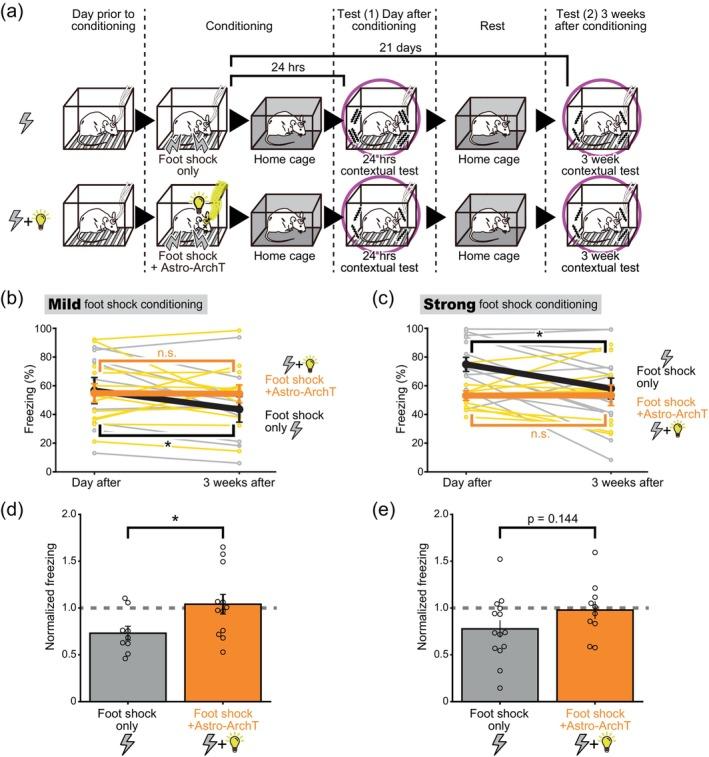
While some vivid memories are unyielding and unforgettable, others fade with time. Astrocytes are recognized for their role in modulating the brain's environment and have recently been considered integral to the brain's information processing and memory formation. This suggests their potential roles in emotional perception and memory formation. In this study, we delve into the impact of amygdala astrocytes on fear behaviors and memory, employing astrocyte-specific optogenetic manipulations in mice. Our findings reveal that astrocytic photoactivation with channelrhodopsin-2 (ChR2) provokes aversive behavioral responses, while archaerhodopsin-T (ArchT) photoactivation diminishes fear perception. ChR2 photoactivation amplifies fear perception and fear memory encoding but obstructs its consolidation. On the other hand, ArchT photoactivation inhibits memory formation during intense aversive stimuli, possibly due to weakened fear perception. However, it prevents the decay of remote fear memory over three weeks. Crucially, these memory effects were observed when optogenetic manipulations coincided with the aversive experience, indicating a deterministic role of astrocytic states at the exact moment of fear experiences in shaping long-term memory. This research underscores the significant and multifaceted role of astrocytes in emotional perception, fear memory formation, and modulation, suggesting a sophisticated astrocyte-neuron communication mechanism underlying basic emotional state transitions of information processing in the brain.
虽然有些生动的记忆顽固且令人难忘,但另一些则会随着时间而消退。星形胶质细胞因其在调节大脑环境中的作用而被认可,最近被认为是大脑信息处理和记忆形成所不可或缺的。这表明它们在情绪感知和记忆形成中具有潜在作用。在本研究中,我们利用对小鼠进行星形胶质细胞特异性光遗传学操作,深入探究杏仁核星形胶质细胞对恐惧行为和记忆的影响。我们的研究结果表明,用通道视紫红质-2(ChR2)进行星形胶质细胞光激活会引发厌恶行为反应,而古紫质-T(ArchT)光激活则会减弱恐惧感知。ChR2光激活会增强恐惧感知和恐惧记忆编码,但会阻碍其巩固。另一方面,ArchT光激活在强烈厌恶刺激期间会抑制记忆形成,这可能是由于恐惧感知减弱所致。然而,它能防止长达三周的远期恐惧记忆衰退。至关重要的是,当光遗传学操作与厌恶体验同时发生时观察到了这些记忆效应,这表明在恐惧体验的确切时刻,星形胶质细胞状态在塑造长期记忆方面具有决定性作用。这项研究强调了星形胶质细胞在情绪感知、恐惧记忆形成和调节中的重要且多方面的作用,表明在大脑中信息处理的基本情绪状态转变背后存在一种复杂的星形胶质细胞 - 神经元通信机制。





 Zotero 插件