
基于一氧化氮的多协同纳米医学:一种用于抗癌的新兴治疗方法。
Nitric oxide-based multi-synergistic nanomedicine: an emerging therapeutic for anticancer.
机构信息
Chongqing Key Laboratory of Medicinal Chemistry and Molecular Pharmacology, Chongqing University of Technology, Chongqing, 400054, People's Republic of China.
College of Pharmaceutical Sciences, Southwest University, Chongqing, 400715, China.
出版信息
J Nanobiotechnology. 2024 Nov 4;22(1):674. doi: 10.1186/s12951-024-02929-z.
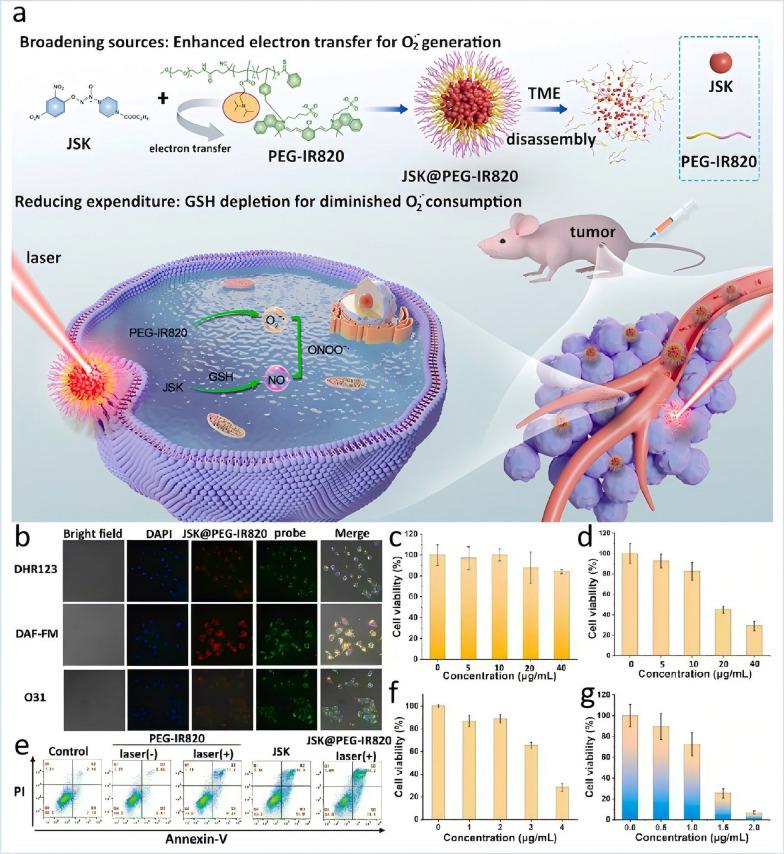
Gas therapy has emerged as a promising approach for treating cancer, with gases like NO, HS, and CO showing positive effects. Among these, NO is considered a key gas molecule with significant potential in stopping cancer progression. However, due to its high reactivity and short half-life, delivering NO directly to tumors is crucial for enhancing cancer treatment. NO-driven nanomedicines (NONs) have been developed to effectively deliver NO donors to tumors, showing great progress in recent years. This review provides an overview of the latest advancements in NO-based cancer nanotherapeutics. It discusses the types of NO donors used in current research, the mechanisms of action behind NO therapy for cancer, and the different delivery systems for NO donors in nanotherapeutics. It also explores the potential of combining NO donors with other treatments for enhanced cancer therapy. Finally, it examines the future prospects and challenges of using NONs in clinical settings for cancer treatment.
气体治疗法在癌症治疗方面已崭露头角,其中一氧化氮(NO)、硫化氢(HS)和一氧化碳(CO)等气体显示出积极的效果。在这些气体中,NO 被认为是一种关键的气体分子,具有阻止癌症进展的巨大潜力。然而,由于其高反应性和短半衰期,将 NO 直接输送到肿瘤部位对于增强癌症治疗至关重要。NO 驱动的纳米药物(NONs)已被开发出来,以有效地将 NO 供体递送到肿瘤部位,近年来取得了重大进展。本综述概述了基于 NO 的癌症纳米治疗学的最新进展。它讨论了当前研究中使用的 NO 供体类型、NO 治疗癌症的作用机制以及纳米治疗中 NO 供体的不同传递系统。它还探讨了将 NO 供体与其他治疗方法结合以增强癌症治疗的潜力。最后,它研究了在临床环境中使用 NONs 治疗癌症的未来前景和挑战。




 Zotero 插件