
新合成的磺酰胺衍生物的DNA结合、酶抑制和细胞毒性活性研究:计算与实验相结合的分析
Newly synthesized sulfonamide derivatives explored for DNA binding, enzyme inhibitory, and cytotoxicity activities: a mixed computational and experimental analyses.
作者信息
Arshad Nasima, Mehmood Yasir, Ismail Hammad, Perveen Fouzia, Javed Aneela, Channar Pervaiz Ali, Saeed Aamer, Naseem Sadia, Naseer Fatima
机构信息
Department of Chemistry, Allama Iqbal Open University 44000 Islamabad Pakistan
Department of Biochemistry & Biotechnology, University of Gujrat 50700 Gujrat Pakistan.
出版信息
RSC Adv. 2024 Nov 4;14(47):35047-35063. doi: 10.1039/d4ra06412g. eCollection 2024 Oct 29.
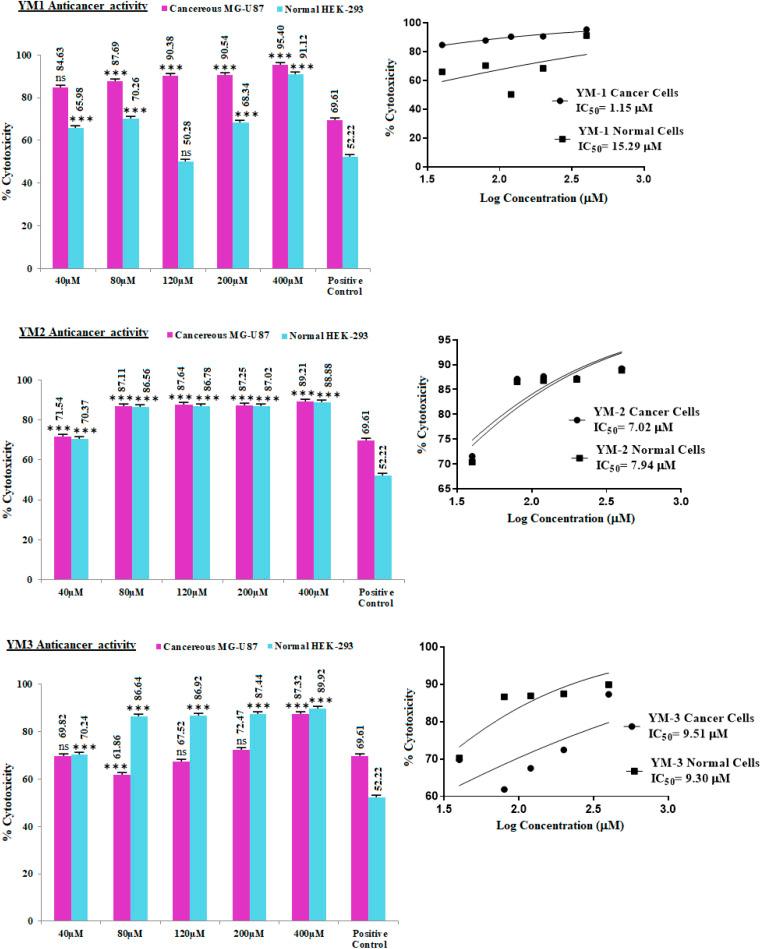
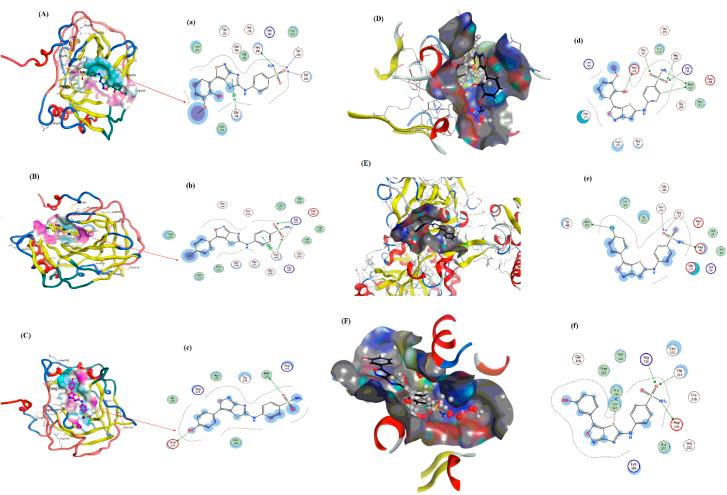
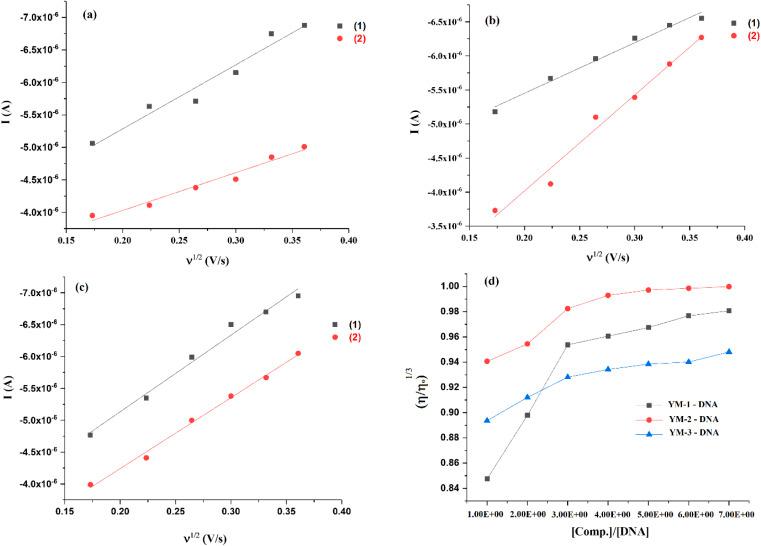
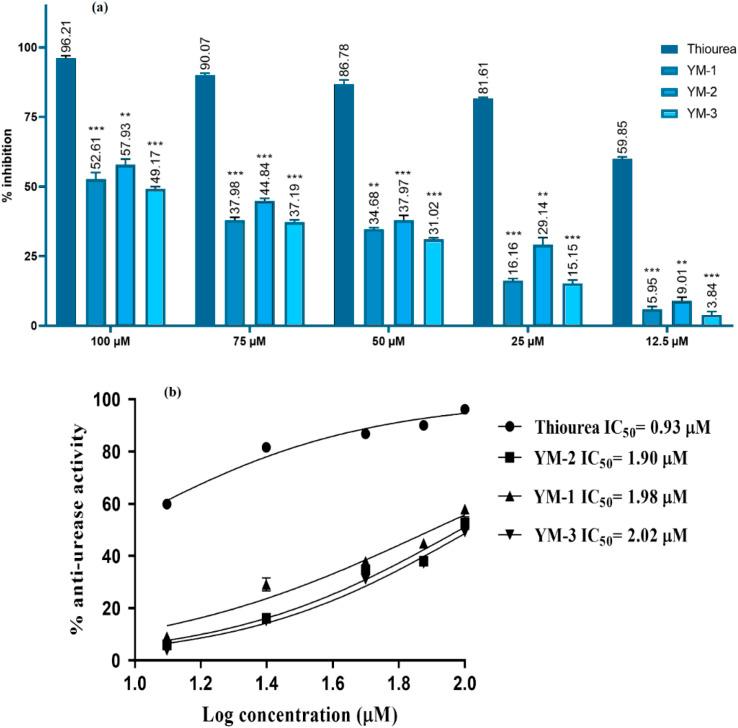
The current research work reports the synthesis of three 4-((3-arylthiazolo[3,4-]isoxazol-5-yl)amino)benzene sulfonamide derivatives with a thaizaole(3,4-)isoxazole-based fused ring heterocyclic system. The synthesized and characterized derivatives, namely, 4-(3-(2-hydroxy-3-methoxyphenyl)thiazolo[3,4-]soxazole-5-ylamino)benzenesulfonamide (YM-1), 4-(3-(4-chlorophenyl)isoxazolo[3,4-]thiazol-5-ylamino)benzenesulfonamide (YM-2), and 4-(3-(3-hydroxyphenyl)isoxazolo[3,4-]thiazol-5-ylamino)benzenesulfonamide (YM-3) were further explored for their binding interactions with DNA and enzymes (urease and carbonic anhydrase). Cytotoxicity of these derivatives for both healthy (HEK-293) and cancerous (MG-U87) cells was determined by MTT analysis. Both experimental (UV-visible, fluorescence, cyclic voltammetry, and viscometry) and theoretical (molecular docking) profiles suggested that these derivatives are good DNA binders. All the derivatives interacted with DNA mixed intercalative and groove binding interactions. However, the evaluated DNA binding parameters ( , Δ, and ) were comparatively greater for YM-1. Docking data ( and Δ) for binding of these derivatives with enzymes also supported that YM-1 was a comparatively better inhibitor for carbonic anhydrase. However, experimentally evaluated IC (1.90 ± 0.02 μM) and % inhibition (57.93%) were found to be greater for YM-2 against urease enzyme. All the derivatives show dose-dependent cytotoxicity (70-90%) against MG-U87 cancer cells. Conversely, only one concentration of YM-1 (120 μM) showed less toxicity (50.28% with IC of 1.154 ± 0.317 μM) than that of the positive control (52.22%) for healthy cells. Overall findings suggested sulfonamide derivative YM-1 is a better candidate for DNA binding, enzyme inhibition as well as anticancer activity.
当前的研究工作报道了三种具有噻唑并[3,4 -]异恶唑稠环杂环体系的4 - ((3 - 芳基噻唑并[3,4 -]异恶唑 - 5 - 基)氨基)苯磺酰胺衍生物的合成。所合成并表征的衍生物,即4 - (3 - (2 - 羟基 - 3 - 甲氧基苯基)噻唑并[3,4 -]异恶唑 - 5 - 基氨基)苯磺酰胺(YM - 1)、4 - (3 - (4 - 氯苯基)异恶唑并[3,4 -]噻唑 - 5 - 基氨基)苯磺酰胺(YM - 2)和4 - (3 - (3 - 羟基苯基)异恶唑并[3,4 -]噻唑 - 5 - 基氨基)苯磺酰胺(YM - 3),进一步探究了它们与DNA以及酶(脲酶和碳酸酐酶)的结合相互作用。通过MTT分析测定了这些衍生物对健康细胞(HEK - 293)和癌细胞(MG - U87)的细胞毒性。实验(紫外可见光谱、荧光光谱、循环伏安法和粘度测定)和理论(分子对接)分析均表明这些衍生物是良好的DNA结合剂。所有衍生物与DNA的相互作用均为混合嵌入和沟槽结合相互作用。然而,YM - 1的评估DNA结合参数(、Δ和)相对较大。这些衍生物与酶结合的对接数据(和Δ)也支持YM - 1是碳酸酐酶相对较好的抑制剂。然而,实验评估发现YM - 2对脲酶的IC(1.90±0.02μM)和抑制率(57.93%)更高。所有衍生物对MG - U87癌细胞均表现出剂量依赖性细胞毒性(70 - 90%)。相反,只有一种浓度的YM - 1(120μM)对健康细胞的毒性(IC为1.15±0.317μM时为50.28%)低于阳性对照(52.22%)。总体研究结果表明磺酰胺衍生物YM - 1在DNA结合、酶抑制以及抗癌活性方面是更好的候选物。




 Zotero 插件