
人体中的微塑料:暴露、检测与致癌风险:最新综述
Microplastics in the Human Body: Exposure, Detection, and Risk of Carcinogenesis: A State-of-the-Art Review.
作者信息
Dzierżyński Eliasz, Gawlik Piotr J, Puźniak Damian, Flieger Wojciech, Jóźwik Katarzyna, Teresiński Grzegorz, Forma Alicja, Wdowiak Paulina, Baj Jacek, Flieger Jolanta
机构信息
St. John's Cancer Center, Department of Plastic Surgery, ul. Jaczewskiego 7, 20-090 Lublin, Poland.
Institute of Health Sciences, John Paul II Catholic University of Lublin, Konstantynów 1 H, 20-708 Lublin, Poland.
出版信息
Cancers (Basel). 2024 Nov 1;16(21):3703. doi: 10.3390/cancers16213703.
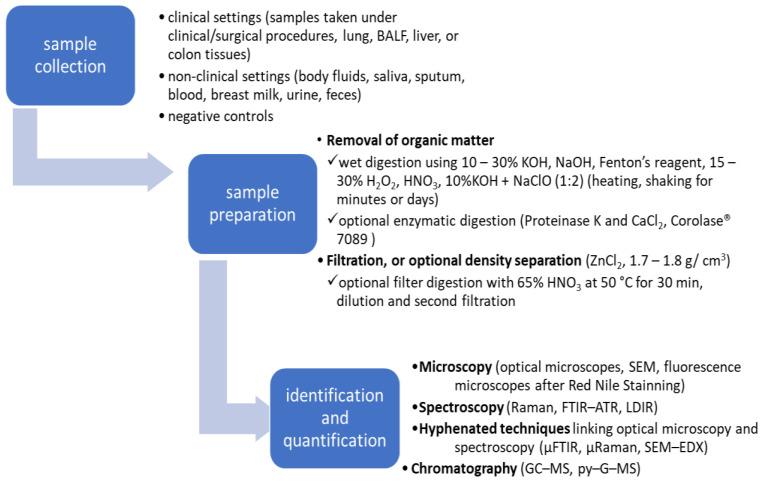
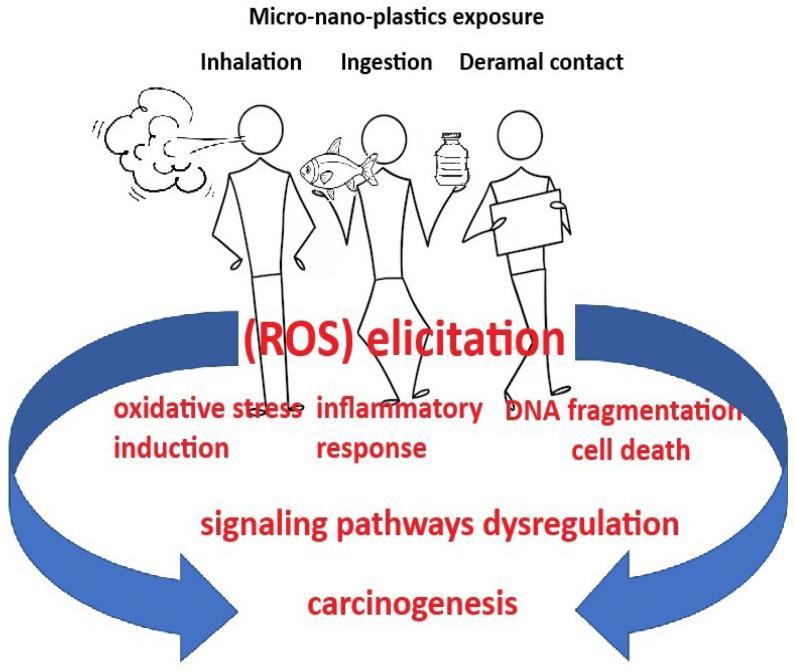
Humans cannot avoid plastic exposure due to its ubiquitous presence in the natural environment. The waste generated is poorly biodegradable and exists in the form of MPs, which can enter the human body primarily through the digestive tract, respiratory tract, or damaged skin and accumulate in various tissues by crossing biological membrane barriers. There is an increasing amount of research on the health effects of MPs. Most literature reports focus on the impact of plastics on the respiratory, digestive, reproductive, hormonal, nervous, and immune systems, as well as the metabolic effects of MPs accumulation leading to epidemics of obesity, diabetes, hypertension, and non-alcoholic fatty liver disease. MPs, as xenobiotics, undergo ADMET processes in the body, i.e., absorption, distribution, metabolism, and excretion, which are not fully understood. Of particular concern are the carcinogenic chemicals added to plastics during manufacturing or adsorbed from the environment, such as chlorinated paraffins, phthalates, phenols, and bisphenols, which can be released when absorbed by the body. The continuous increase in NMP exposure has accelerated during the SARS-CoV-2 pandemic when there was a need to use single-use plastic products in daily life. Therefore, there is an urgent need to diagnose problems related to the health effects of MP exposure and detection. We collected eligible publications mainly from PubMed published between 2017 and 2024. In this review, we summarize the current knowledge on potential sources and routes of exposure, translocation pathways, identification methods, and carcinogenic potential confirmed by in vitro and in vivo studies. Additionally, we discuss the limitations of studies such as contamination during sample preparation and instrumental limitations constraints affecting imaging quality and MPs detection sensitivity. The assessment of MP content in samples should be performed according to the appropriate procedure and analytical technique to ensure Quality and Control (QA/QC). It was confirmed that MPs can be absorbed and accumulated in distant tissues, leading to an inflammatory response and initiation of signaling pathways responsible for malignant transformation.
由于塑料在自然环境中无处不在,人类无法避免接触塑料。产生的废物很难生物降解,以微塑料的形式存在,微塑料主要通过消化道、呼吸道或受损皮肤进入人体,并通过跨越生物膜屏障在各种组织中积累。关于微塑料对健康影响的研究越来越多。大多数文献报道集中在塑料对呼吸、消化、生殖、激素、神经和免疫系统的影响,以及微塑料积累导致肥胖、糖尿病、高血压和非酒精性脂肪性肝病流行的代谢效应。微塑料作为外源性物质,在体内经历吸收、分布、代谢和排泄等药物代谢动力学过程,而这些过程尚未完全被了解。特别令人担忧的是在制造过程中添加到塑料中或从环境中吸附的致癌化学物质,如氯化石蜡、邻苯二甲酸盐、酚类和双酚类,当它们被人体吸收时可能会释放出来。在2019冠状病毒病大流行期间,由于日常生活中需要使用一次性塑料制品,微塑料暴露的持续增加加速了。因此,迫切需要诊断与微塑料暴露对健康影响相关的问题并进行检测。我们主要从2017年至2024年发表在PubMed上的文献中收集符合条件的出版物。在本综述中,我们总结了关于潜在暴露源和途径、转运途径、识别方法以及体外和体内研究证实的致癌潜力的现有知识。此外,我们还讨论了研究的局限性,如样品制备过程中的污染以及影响成像质量和微塑料检测灵敏度的仪器限制。应根据适当的程序和分析技术对样品中的微塑料含量进行评估,以确保质量控制(QA/QC)。已证实微塑料可被吸收并在远处组织中积累,导致炎症反应并启动负责恶性转化的信号通路。

 Zotero 插件