
超加工食品摄入与失眠风险:系统评价和荟萃分析。
Ultra-Processed Food Intake and Risk of Insomnia: A Systematic Review and Meta-Analysis.
机构信息
Department of Physiology, School of Medicine, Kermanshah University of Medical Sciences, Kermanshah 6714869914, Iran.
Department of Food Science and Quality Control, Halabja Technical College, Sulaimani Polytechnic University, Sulaymaniyah 46001, Iraq.
出版信息
Nutrients. 2024 Nov 1;16(21):3767. doi: 10.3390/nu16213767.
OBJECTIVES
The objective of this investigation was to compile existing observational research and quantify the potential association between ultra-processed foods (UPFs) and the risk of insomnia using meta-analysis.
SETTING
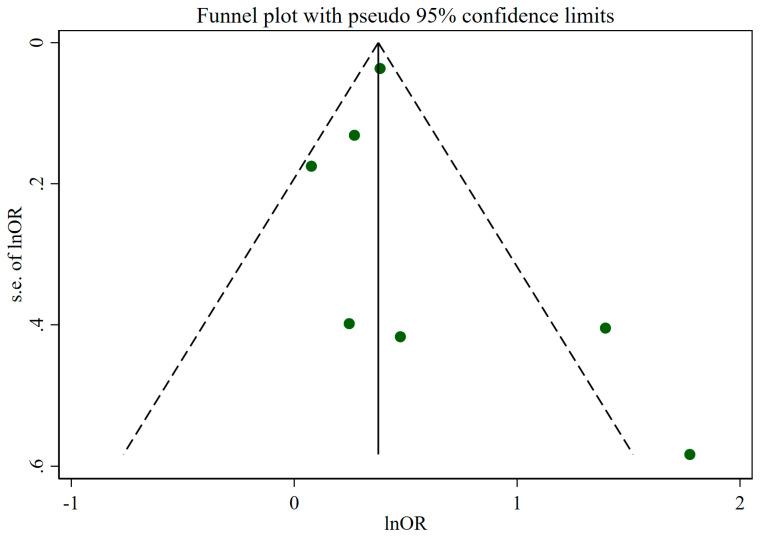
We conducted a systematic search of the PubMed/MEDLINE, Scopus, and ISI Web of Science databases with no restrictions until 29 June 2024. Odds ratios (OR) and 95% confidence intervals (CI) were aggregated using a random-effects model, while the Newcastle-Ottawa Scale and Egger's regression asymmetry test assessed study quality and publication bias, respectively.
RESULTS
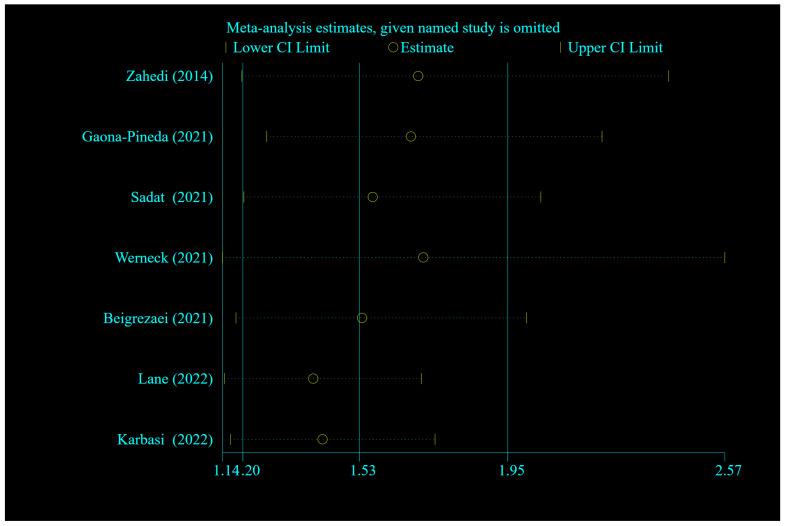
Analysis of data from seven studies showed a significant positive association between higher intake of UPFs and an increased risk of insomnia (OR = 1.53; 95% CI: 1.20, 1.95; I = 62.3%; = 0.014). Subgroup analysis indicated this positive relationship was particularly strong under the NOVA food classification (OR = 1.57; 95% CI: 1.03, 2.40; I = 78.5%; = 0.009; n = 3) and with snack intake (OR = 1.33; 95% CI: 1.04, 1.71; I = 0.0%; < 0.001; n = 2), compared to adherence to Western dietary patterns. Moreover, subgroup analysis based on age group showed that higher UPF intake was significantly associated with increased risk of insomnia among adolescents (OR = 1.55; 95% CI: 1.21, 1.99; I = 57.4%; < 0.001) but not in adults.
CONCLUSIONS
Our findings underscore a significant association between higher consumption of UPFs and increased risk of insomnia, particularly among adolescents. Further research is necessary to explore the intricacies of this association and to ensure the generalizability of these results.
目的
本研究旨在综合现有观察性研究,采用荟萃分析量化超加工食品(UPFs)与失眠风险之间的潜在关联。
设置
我们对 PubMed/MEDLINE、Scopus 和 ISI Web of Science 数据库进行了系统检索,检索时间截至 2024 年 6 月 29 日,未设任何限制。采用随机效应模型汇总比值比(OR)和 95%置信区间(CI),同时使用 Newcastle-Ottawa 量表和 Egger 回归不对称检验评估研究质量和发表偏倚。
结果
对 7 项研究的数据进行分析,结果显示 UPFs 摄入量较高与失眠风险增加呈显著正相关(OR = 1.53;95%CI:1.20,1.95;I² = 62.3%; = 0.014)。亚组分析表明,在 NOVA 食品分类下(OR = 1.57;95%CI:1.03,2.40;I² = 78.5%; = 0.009;n = 3)和零食摄入时(OR = 1.33;95%CI:1.04,1.71;I = 0.0%;<0.001;n = 2),这种正相关关系尤为强烈,而与遵循西方饮食模式相比则较弱。此外,基于年龄组的亚组分析表明,UPF 摄入量较高与青少年失眠风险增加显著相关(OR = 1.55;95%CI:1.21,1.99;I² = 57.4%;<0.001),但与成年人无关。
结论
我们的研究结果表明,UPF 摄入量较高与失眠风险增加之间存在显著关联,尤其是在青少年中。需要进一步研究来探索这种关联的复杂性,并确保这些结果的可推广性。


 Zotero 插件