
公众与参与者参与:通往包容性痴呆症研究的途径
Public and participant involvement as a pathway to inclusive dementia research.
作者信息
Walter Sarah, McArdle RÍona, Largent Emily A, Edelmayer Rebecca, Sexton Claire, Sandoval Sandra Loyola, Medsger Helen, Meserve Nancy, Samaroo Roland, Sierra Cynthia, Smeitink Marlon M P, Gibson Allison, Gregory Sarah, Karamacoska Diana, Leroi Iracema, Molina-Henry Doris, Suarez-Gonzalez Aida, Glover Crystal M
机构信息
Alzheimer's Therapeutic Research Institute, University of Southern California, San Diego, California, USA.
Newcastle University, Newcastle upon Tyne, UK.
出版信息
Alzheimers Dement. 2025 Jan;21(1):e14350. doi: 10.1002/alz.14350. Epub 2024 Nov 14.
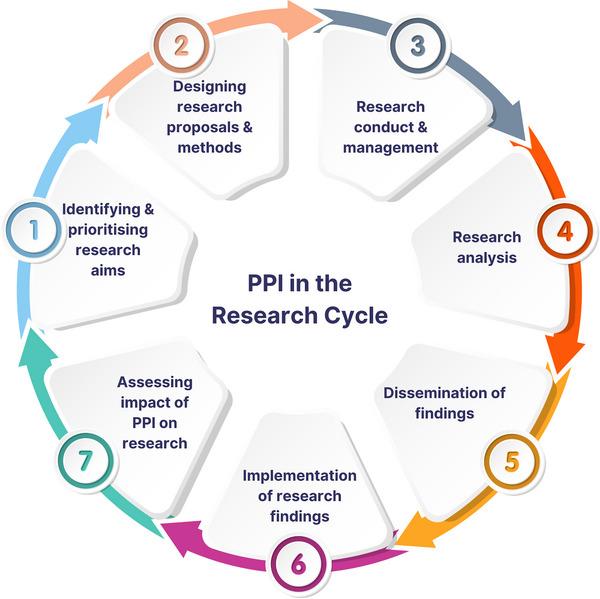
The field of Alzheimer's disease and related dementias (ADRD) urgently requires inclusive research to ensure the priorities and outcomes of research apply to those most impacted. We postulate public and participant involvement (PPI) as a pathway to achieving the best science, both in research that informs health and social policy as well as in therapeutic studies to treat and prevent ADRD. This position paper aims to provide dementia researchers with evidence to understand how to apply PPI. We begin by highlighting the disparities experienced by people with dementia, including ageism, stigma of cognitive impairment, and health disparities for minoritized communities. We then provide examples of PPI in ADRD across the research lifecycle, from defining research topics of priority to those impacted by ADRD, through the design, analysis, dissemination, and translation to policy and practice. We also provide recommendations to create and maintain collaboration between researchers and communities through PPI. HIGHLIGHTS: A central premise of public and participant involvement (PPI) is collaborative relationships between researchers and community members. To build equitable partnerships, researchers must acknowledge and understand the context of research. This includes ageism, the stigma of dementia, and ongoing discrimination for many minoritized communities. Meaningful partnerships include choice, respect, shared decision making, access, inclusion, and representation. Notably, we recommend that researchers begin partnerships early in the research process and share the impact of PPI on research.
阿尔茨海默病及相关痴呆症(ADRD)领域迫切需要包容性研究,以确保研究的重点和成果适用于受影响最大的人群。我们假定公众和参与者参与(PPI)是实现最佳科学的途径,无论是在为健康和社会政策提供信息的研究中,还是在治疗和预防ADRD的治疗性研究中。本立场文件旨在为痴呆症研究人员提供证据,以了解如何应用PPI。我们首先强调痴呆症患者所经历的差异,包括年龄歧视、认知障碍的污名化以及少数族裔社区的健康差异。然后,我们提供了ADRD研究全生命周期中PPI的示例,从确定优先研究主题到受ADRD影响的人群,涵盖设计、分析、传播以及转化为政策和实践。我们还提供了通过PPI在研究人员和社区之间建立并维持合作的建议。要点:公众和参与者参与(PPI)的一个核心前提是研究人员与社区成员之间的合作关系。为了建立公平的伙伴关系,研究人员必须承认并理解研究的背景。这包括年龄歧视、痴呆症的污名化以及许多少数族裔社区持续遭受的歧视。有意义的伙伴关系包括选择、尊重、共同决策、参与、包容和代表性。值得注意的是,我们建议研究人员在研究过程早期就建立伙伴关系,并分享PPI对研究的影响。
 Zotero 插件