
高迁移率族蛋白 A1(HMGA1)通过增加脂质合成促进结直肠癌的肿瘤发生。
High mobility group A1 (HMGA1) promotes the tumorigenesis of colorectal cancer by increasing lipid synthesis.
机构信息
School of Life Sciences, Henan University, Kaifeng, Henan Province, China.
出版信息
Nat Commun. 2024 Nov 15;15(1):9909. doi: 10.1038/s41467-024-54400-0.
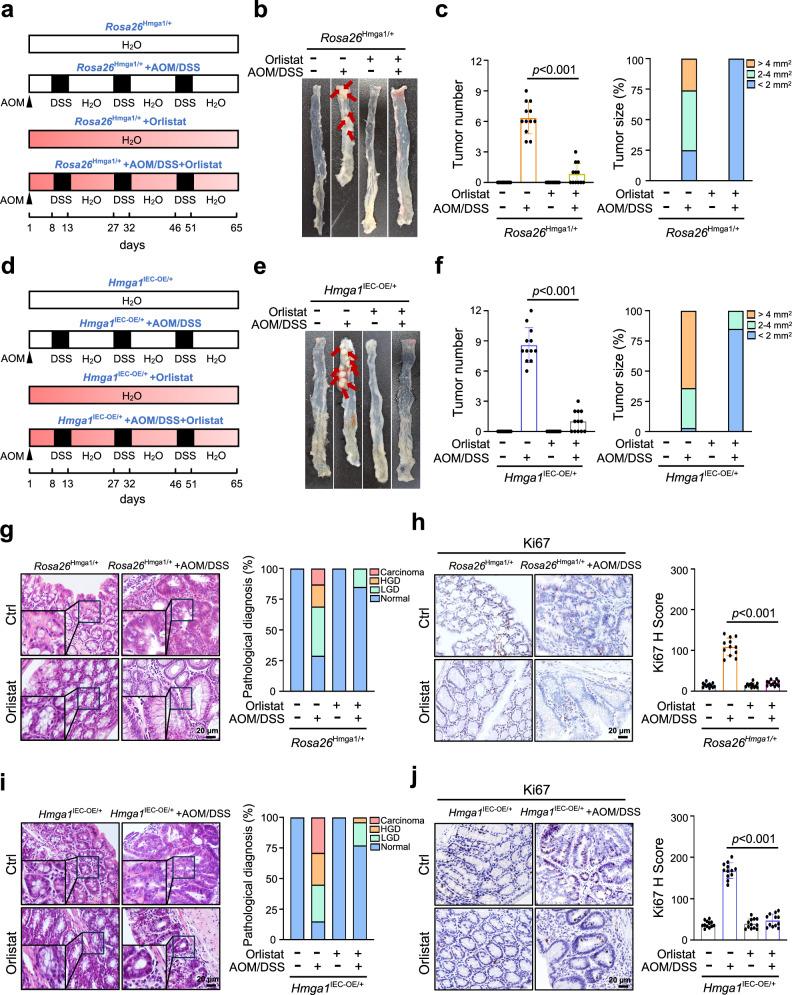
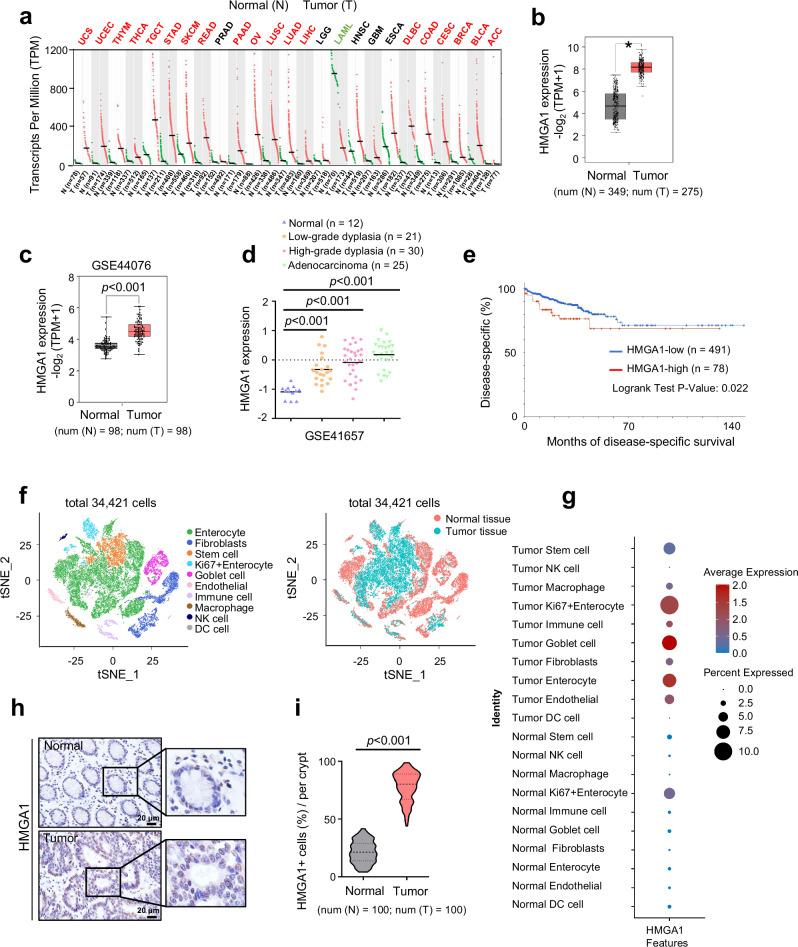
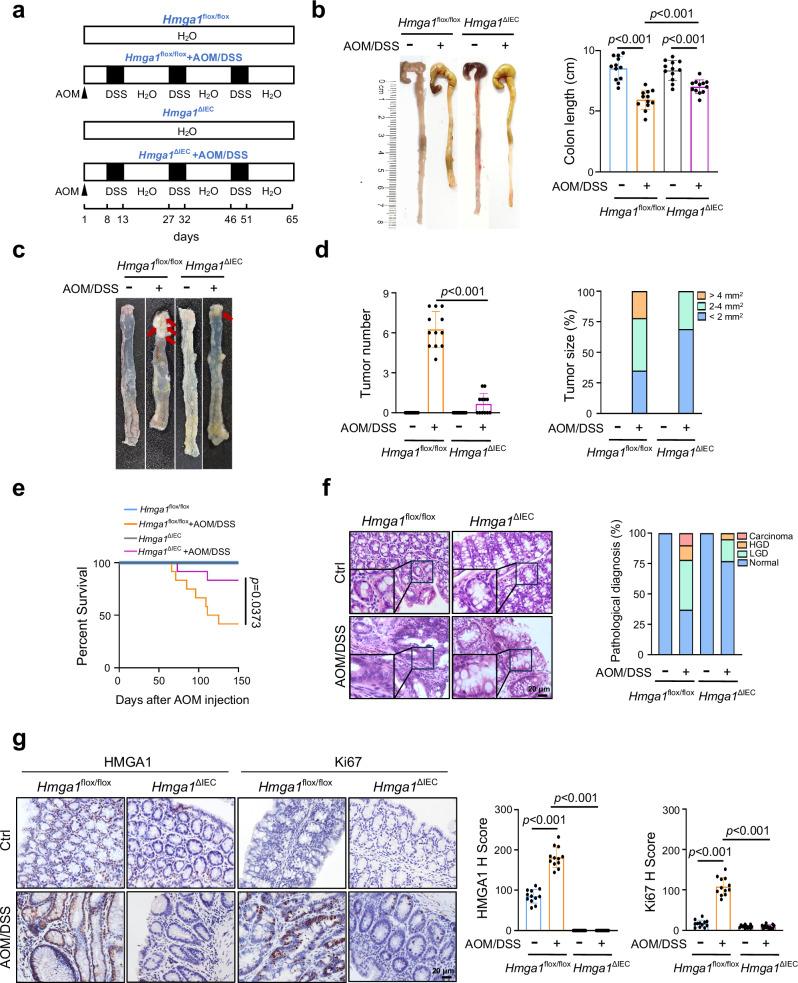
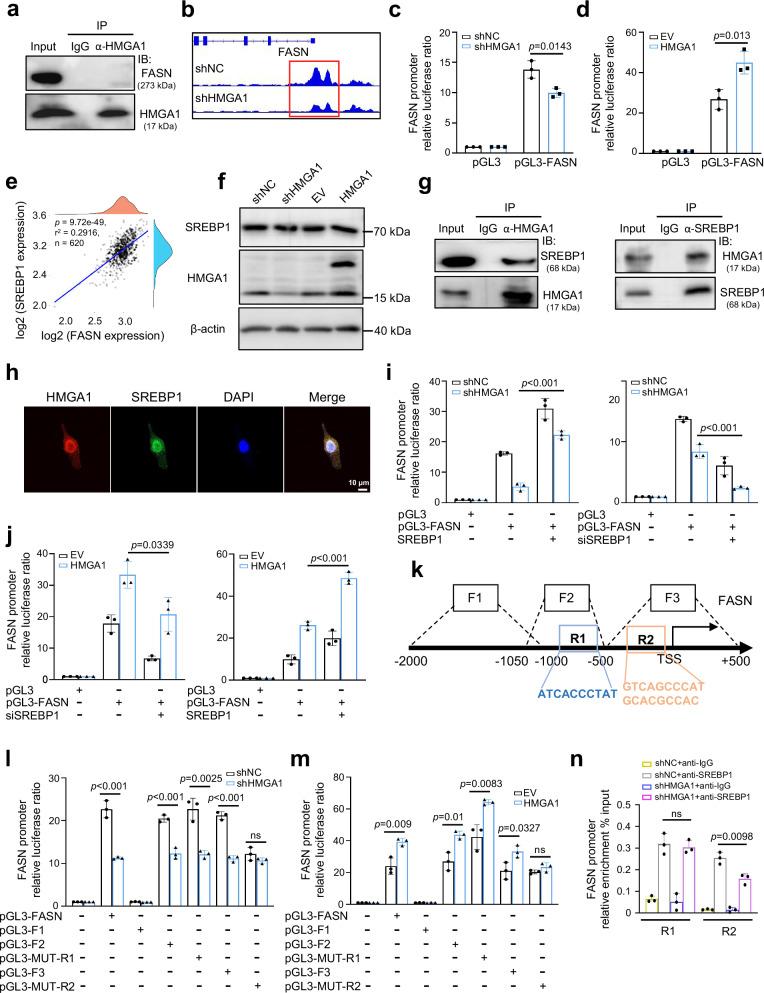
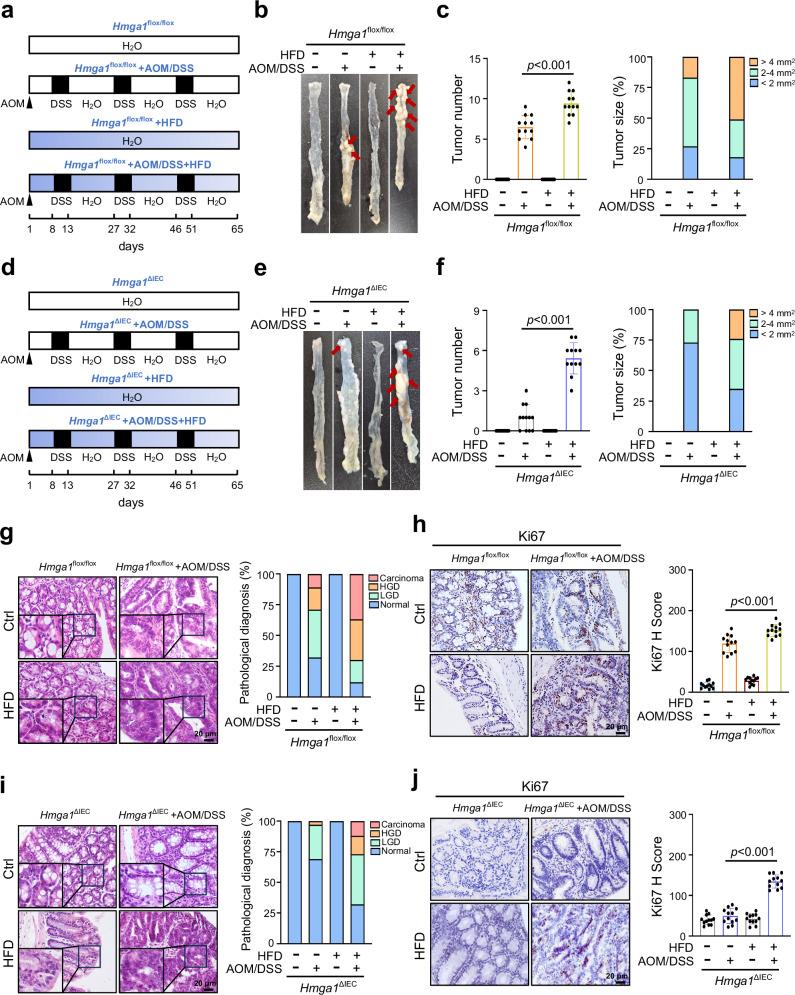
Metabolic reprogramming is a hallmark of cancer, enabling tumor cells to meet the high energy and biosynthetic demands required for their proliferation. High mobility group A1 (HMGA1) is a structural transcription factor and frequently overexpressed in human colorectal cancer (CRC). Here, we show that HMGA1 promotes CRC progression by driving lipid synthesis in a AOM/DSS-induced CRC mouse model. Using conditional knockout (Hmga1) and knock-in (Hmga1) mouse models, we demonstrate that HMGA1 enhances CRC cell proliferation and accelerates tumor development by upregulating fatty acid synthase (FASN). Mechanistically, HMGA1 increases the transcriptional activity of sterol regulatory element-binding protein 1 (SREBP1) on the FASN promoter, leading to increased lipid accumulation in intestinal epithelial cells. Moreover, a high-fat diet exacerbates CRC progression in Hmga1 mice, while pharmacological inhibition of FASN by orlistat reduces tumor growth in Hmga1 mice. Our findings suggest that targeting lipid metabolism could offer a promising therapeutic strategy for CRC.
代谢重编程是癌症的一个标志,使肿瘤细胞能够满足增殖所需的高能量和生物合成需求。高迁移率族蛋白 A1(HMGA1)是一种结构转录因子,在人类结直肠癌(CRC)中经常过表达。在这里,我们表明 HMGA1 通过在 AOM/DSS 诱导的 CRC 小鼠模型中驱动脂质合成来促进 CRC 进展。使用条件性敲除(Hmga1)和敲入(Hmga1)小鼠模型,我们证明 HMGA1 通过上调脂肪酸合酶(FASN)来增强 CRC 细胞增殖并加速肿瘤发展。在机制上,HMGA1 增加了固醇调节元件结合蛋白 1(SREBP1)在 FASN 启动子上的转录活性,导致肠上皮细胞中脂质积累增加。此外,高脂肪饮食会加剧 Hmga1 小鼠的 CRC 进展,而通过奥利司他抑制 FASN 的药理抑制会减少 Hmga1 小鼠的肿瘤生长。我们的研究结果表明,靶向脂质代谢可能为 CRC 提供一种有前途的治疗策略。



 Zotero 插件