
利用结香根提取物合成环境友好型氧化铁纳米粒子的潜在生物学应用。
Potential biological applications of environment friendly synthesized iron oxide nanoparticles using Sageretia thea root extract.
机构信息
Department of Botany, Bacha Khan University, Charsadda, 24420, Khyber Pakhtunkhwa, Pakistan.
Department of Botany, Rawalpindi Women University, 6th Road, Satellite Town, Rawalpindi, 46300, Pakistan.
出版信息
Sci Rep. 2024 Nov 16;14(1):28310. doi: 10.1038/s41598-024-79953-4.
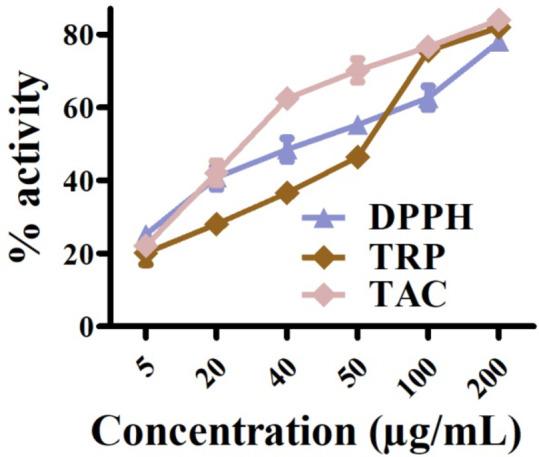
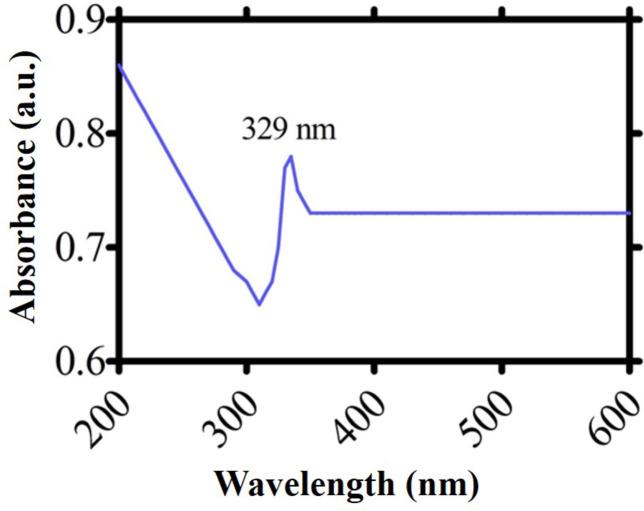
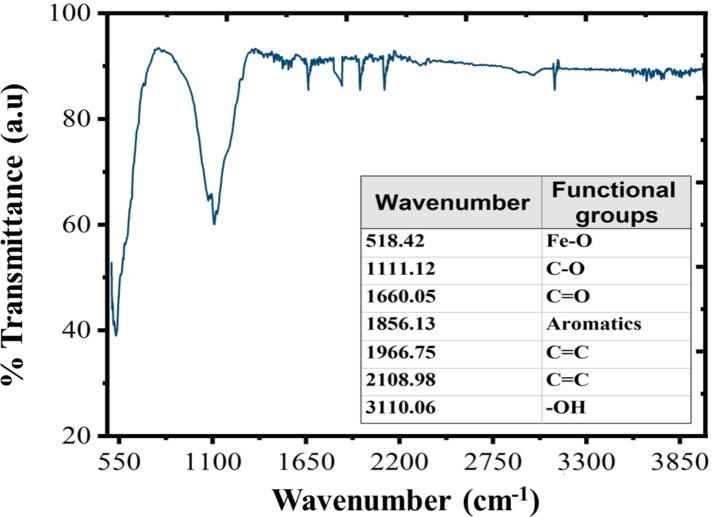
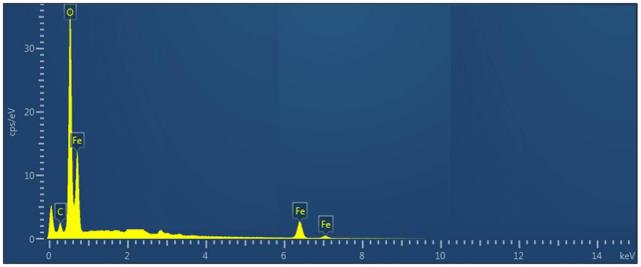
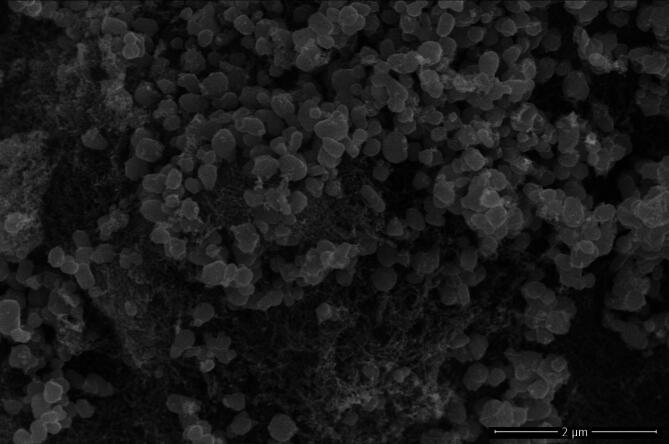
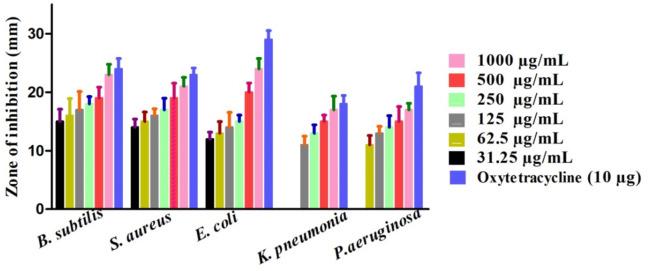
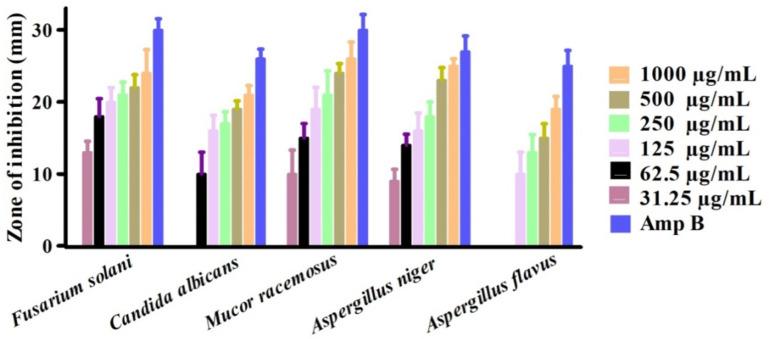
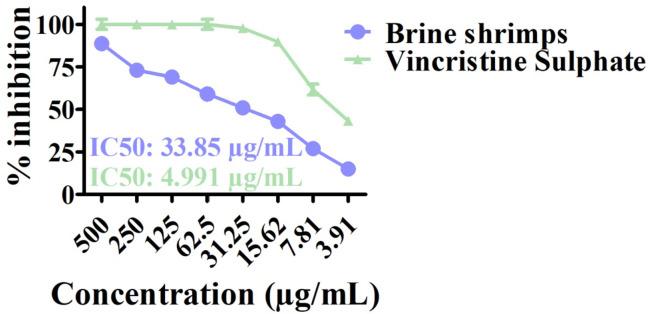
The green synthesis of Iron oxide nanoparticles (IONPs) has shown numerous advantages over conventional physical and chemical synthesis methods as these methods non-ecofriendly and uses toxic chemicals and complicated equipments. In present study, Iron oxide nanoparticles (IONPs) were created using simple, sustainable, eco-friendly and green chemistry protocol. The roots of novel medicinal plant Sageretia thea was used as a bio-template for the preparation of IONPs. Further, the synthesis of IONPs was confirmed using different analytical tools like UV-Vis, FT-IR, XRD, EDX, and SEM. The average sizes of (NPs) were found to be 16.04 nm. Further, asynthesized IONPs were evaluated for several biological potentials including antibacterial, antifungal Anti-radical potentials (DPPH) and cytotoxicity assays. Antibacterial potencies were investigated using bacterial strains (in the concentration range of 1000-31.25 µg/mL) revealing significant antibacterial potentials. ABA and SAU was reported to be least susceptible while KPN was observed to be most susceptible strain in bactericidal studies. Further, different fungal strains were used to investigate the antifungal potentials of IONPs (in the concentration range of 1000-31.25 µg/mL) and revealed strong antifungal potencies against different pathogenic strains. Furthermore, MRA, FA and ANI were most susceptible and ABA was least susceptible in fungicidal examination. Significant cytotoxicity potential was examined using brine shrimps cytotoxicity assay, thus revealing the cytotoxic potential of asynthesized IONPs. The IC for S. thea based IONPs was recorded as 33.85 µg/mL. Strong anti-radical potentials (DPPH) assay was performed to evaluate the ROS scavenging potential of S.T@IONPs. The highest scavenging potential was noted as 78.06%, TRP as 81.92% and TAC as 84% on maximum concentration of 200 µg/mL. In summary, our experimental results concluded, that asynthesized IONPs have strong antibacterial, antifungal, DPPH scavenging and cytotoxic potentials and can be used in different biological applications. In nutshell, our as-prepared nanoparticles have shown potential bioactivities and we recommend, different other in vitro and in vivo biological and bioactivities to further analyze the biological potentials.
采用简单、可持续、环保和绿色化学方法合成了氧化铁纳米粒子(IONPs),与传统的物理和化学合成方法相比具有许多优势。这些方法不环保,使用有毒化学物质和复杂的设备。在本研究中,使用新型药用植物扁担藤的根作为生物模板来制备 IONPs。此外,使用不同的分析工具,如 UV-Vis、FT-IR、XRD、EDX 和 SEM,确认了 IONPs 的合成。(NPs)的平均尺寸为 16.04nm。进一步,评估了合成的 IONPs 的几种生物学潜力,包括抗菌、抗真菌、抗自由基潜力(DPPH)和细胞毒性测定。使用细菌菌株(浓度范围为 1000-31.25μg/mL)研究了抗菌潜力,结果表明具有显著的抗菌潜力。ABA 和 SAU 被报道为最不易受影响的菌株,而 KPN 则被观察为杀菌研究中最敏感的菌株。此外,使用不同的真菌菌株研究了 IONPs 的抗真菌潜力(浓度范围为 1000-31.25μg/mL),结果表明对不同的致病菌具有很强的抗真菌潜力。此外,MRA、FA 和 ANI 是最敏感的,而 ABA 是杀菌试验中最不敏感的。使用卤虫细胞毒性试验研究了显著的细胞毒性潜力,从而揭示了合成 IONPs 的细胞毒性潜力。S. thea 基 IONPs 的 IC 记录为 33.85μg/mL。进行了强自由基潜力(DPPH)测定,以评估 S.T@IONPs 的 ROS 清除潜力。在最大浓度为 200μg/mL 时,记录到的最高清除率分别为 78.06%、TRP 为 81.92%和 TAC 为 84%。总之,我们的实验结果表明,合成的 IONPs 具有很强的抗菌、抗真菌、DPPH 清除和细胞毒性潜力,可用于不同的生物学应用。简而言之,我们制备的纳米粒子表现出潜在的生物活性,我们建议进行其他不同的体外和体内生物学和生物活性研究,以进一步分析其生物学潜力。


 Zotero 插件