
重症监护病房脓毒症患者延迟有创血压监测与全因死亡率的关联:一项回顾性队列研究
Association between delayed invasive blood pressure monitoring and all-cause mortality in intensive care unit patients with sepsis: a retrospective cohort study.
作者信息
Xiao Li, Shen Pu, Han Xue, Yu Yi
机构信息
Department of Anesthesiology, The First Affiliated Hospital of Sun Yat-Sen University, Guangzhou, China.
Department of Pain Medicine, The Second Affiliated Hospital of Guangzhou Medical University, Guangzhou Medical University, Guangzhou, China.
出版信息
Front Med (Lausanne). 2024 Nov 6;11:1446890. doi: 10.3389/fmed.2024.1446890. eCollection 2024.
PURPOSE
Haemodynamic management is essential in sepsis management. Invasive blood pressure (IBP) monitoring is the gold standard for blood pressure (BP) assessment. Here, we identified the most advantageous time frame for IBP monitoring to mitigate adverse outcomes in patients with sepsis.
METHODS
We included data on patients with sepsis from the Medical Information Mart for Intensive Care IV database. The primary endpoints comprised 28-and 90-day mortality rates, whereas secondary endpoints were acute kidney injury (AKI) rates and continuous renal replacement therapy (CRRT) requirement. To confirm our findings' robustness, we performed multivariable Cox regression and logistic regression models, augmented by propensity score matching (PSM).
RESULTS
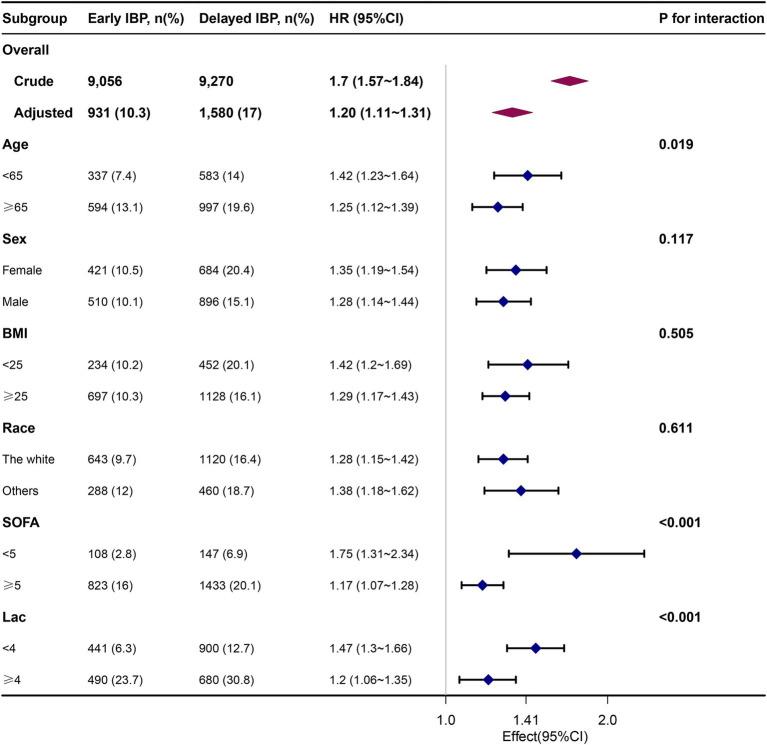
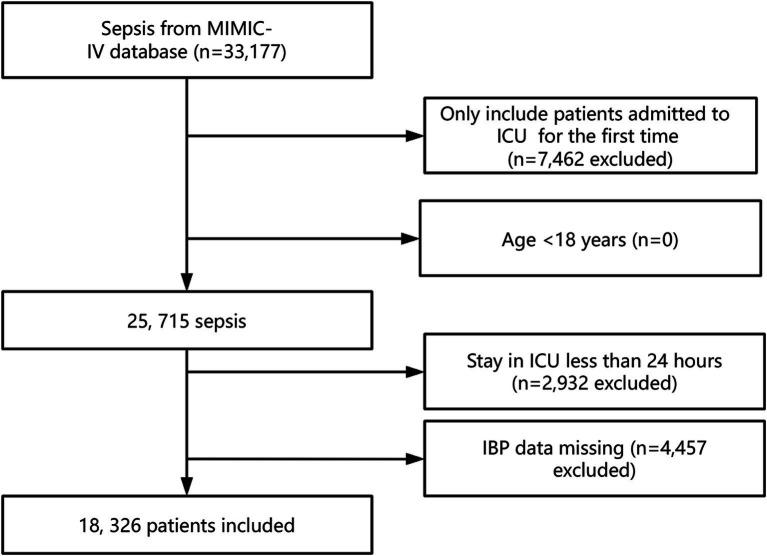
Of 18,326 patients hospitalised for sepsis, 9,056 (49.42%) and 9,270 (50.58%) were included in the early and delayed IBP-monitoring groups, respectively. Our multivariable Cox regression models revealed 20 and 21% significant increases in 28-and 90-day mortality in the delayed IBP monitoring group, respectively [hazard ratios (95% confidence intervals) = 1.20 (1.11-1.31) and 1.21 (1.12-1.31), respectively; both < 0.001]. Moreover, significant increases were noted in AKI, CRRT and mechanical ventilation requirement risks in the delayed IBP monitoring group [odds ratios (95% confidence intervals) = 1.44 (1.34-1.56), 1.50 (1.26-1.78) and 1.79 (1.67-1.92), respectively; both < 0.001]. PSM further confirmed the validity of our findings. Delayed IBP monitoring prolonged intensive care unit (ICU) stay without extending vasopressor use duration.
CONCLUSION
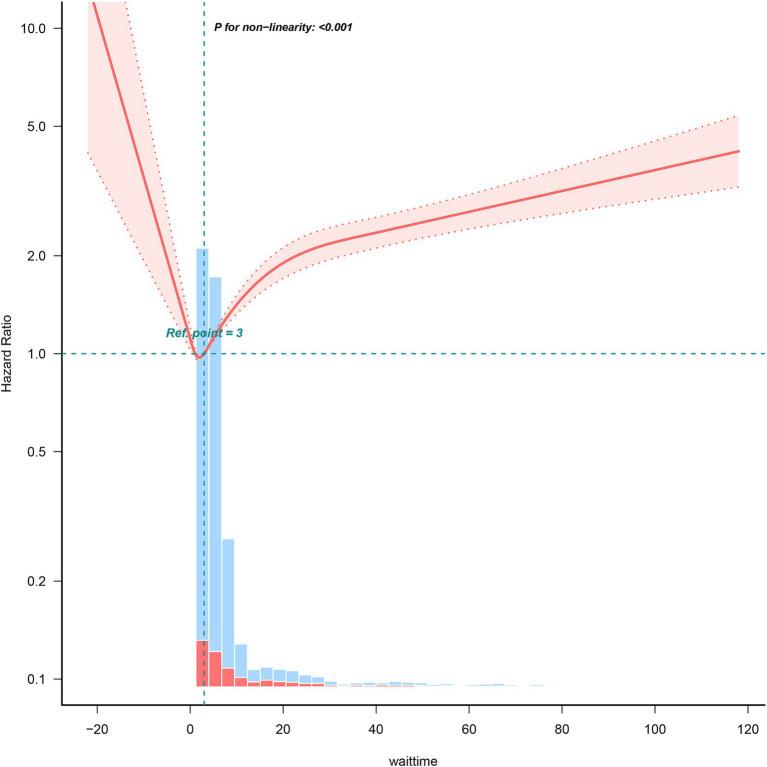
Prolonged delay in IBP monitoring (≥3 h) may increase mortality risks in ICU patients with sepsis. Nevertheless, early IBP monitoring may reduce AKI, CRRT and mechanical ventilation requirement risks and shorten ICU stay. However, these results warrant further validation through randomised controlled trials.
目的
血流动力学管理在脓毒症管理中至关重要。有创血压(IBP)监测是血压(BP)评估的金标准。在此,我们确定了进行IBP监测以减轻脓毒症患者不良结局的最有利时间范围。
方法
我们纳入了重症监护医学信息数据库IV中脓毒症患者的数据。主要终点包括28天和90天死亡率,次要终点为急性肾损伤(AKI)发生率和持续肾脏替代治疗(CRRT)需求。为证实我们研究结果的稳健性,我们进行了多变量Cox回归和逻辑回归模型,并通过倾向评分匹配(PSM)进行强化。
结果
在18326例因脓毒症住院的患者中,早期和延迟IBP监测组分别纳入9056例(49.42%)和9270例(50.58%)。我们的多变量Cox回归模型显示,延迟IBP监测组28天和90天死亡率分别显著增加20%和21%[风险比(95%置信区间)分别为1.20(1.11 - 1.31)和1.21(1.12 - 1.31);均<0.001]。此外,延迟IBP监测组的AKI、CRRT和机械通气需求风险显著增加[优势比(95%置信区间)分别为1.44(1.34 - 1.56)、1.50(1.26 - 1.78)和1.79(1.67 - 1.92);均<0.001]。PSM进一步证实了我们研究结果的有效性。延迟IBP监测延长了重症监护病房(ICU)住院时间,但未延长血管活性药物使用时长。
结论
IBP监测的长时间延迟(≥3小时)可能增加ICU脓毒症患者的死亡风险。然而,早期IBP监测可能降低AKI、CRRT和机械通气需求风险,并缩短ICU住院时间。不过,这些结果需要通过随机对照试验进一步验证。

 Zotero 插件