
开发突变β-连环蛋白基因特征以从肝癌患者的全转录组和空间转录组数据中识别突变。
Development of mutated β-catenin gene signature to identify mutations from whole and spatial transcriptomic data in patients with HCC.
作者信息
Lehrich Brandon M, Tao Junyan, Liu Silvia, Hirsch Theo Z, Yasaka Tyler M, Cao Catherine, Delgado Evan R, Guan Xiangnan, Lu Shan, Pan Long, Liu Yuqing, Singh Sucha, Poddar Minakshi, Bell Aaron, Singhi Aatur D, Zucman-Rossi Jessica, Wang Yulei, Monga Satdarshan P
机构信息
Department of Pharmacology and Chemical Biology, University of Pittsburgh School of Medicine, Pittsburgh, PA, USA.
Pittsburgh Liver Research Center, University of Pittsburgh and University of Pittsburgh Medical Center, Pittsburgh, PA, USA.
出版信息
JHEP Rep. 2024 Aug 20;6(12):101186. doi: 10.1016/j.jhepr.2024.101186. eCollection 2024 Dec.
BACKGROUND & AIMS: Patients with β-catenin (encoded by )-mutated hepatocellular carcinoma (HCC) demonstrate heterogenous responses to first-line immune checkpoint inhibitors (ICIs). Precision-medicine based treatments for this subclass are currently in clinical development. Here, we report derivation of the Mutated β-catenin Gene Signature (MBGS) to predict -mutational status in patients with HCC for future application in personalized medicine treatment regimens.
METHODS
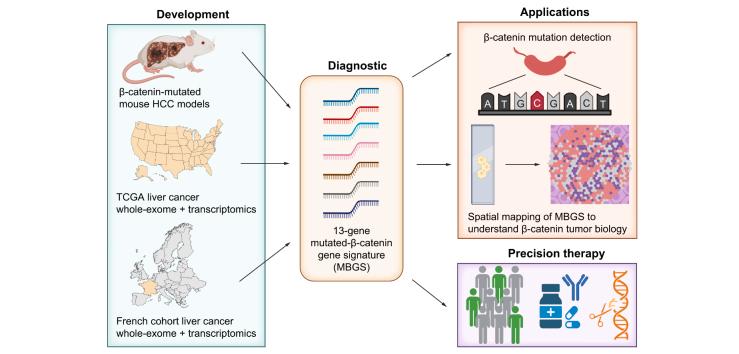
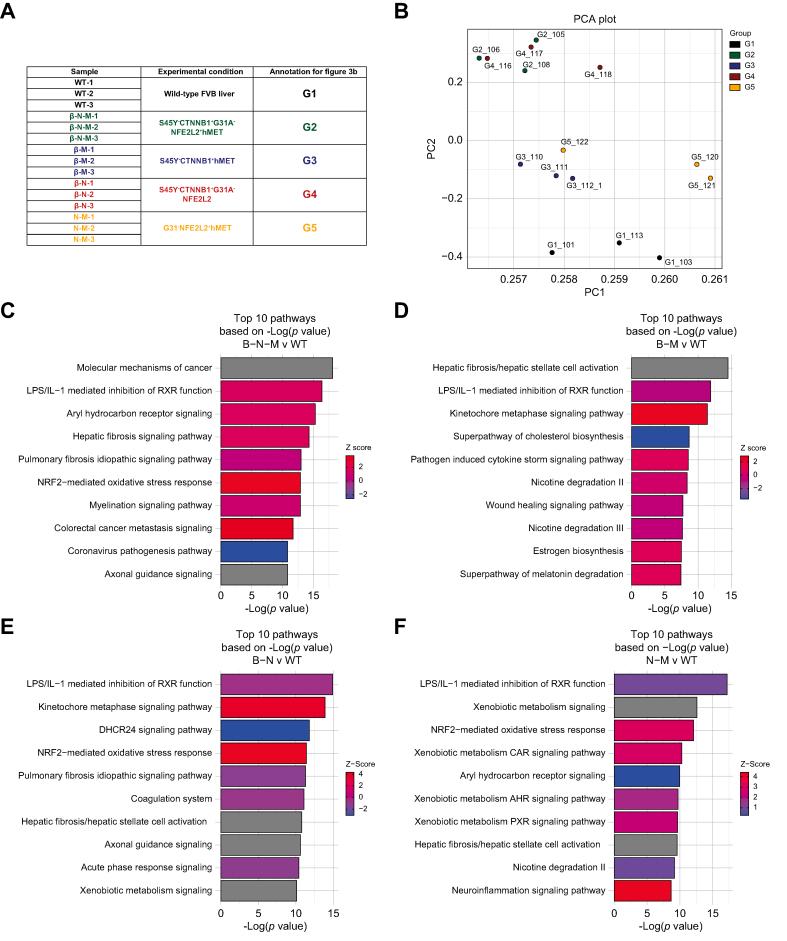
Co-expression of mutant-Nrf2 and hMet ± mutant-β-catenin in murine livers in mice led to HCC development. The MBGS was derived using bulk RNA-seq and intersectional transcriptomic analysis of β-catenin-mutated and non-mutated HCC models. Integrated RNA/whole-exome-sequencing and spatial transcriptomic data from multiple cohorts of patients with HCC was assessed to address the ability of MBGS to detect mutation, the tumor immune microenvironment, and/or predict therapeutic responses.
RESULTS
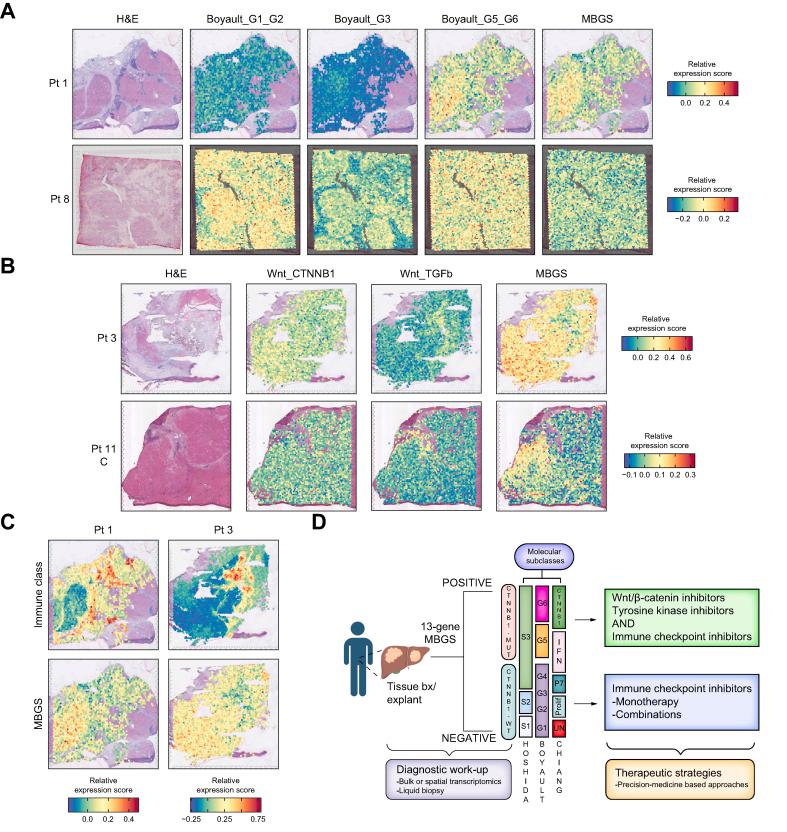
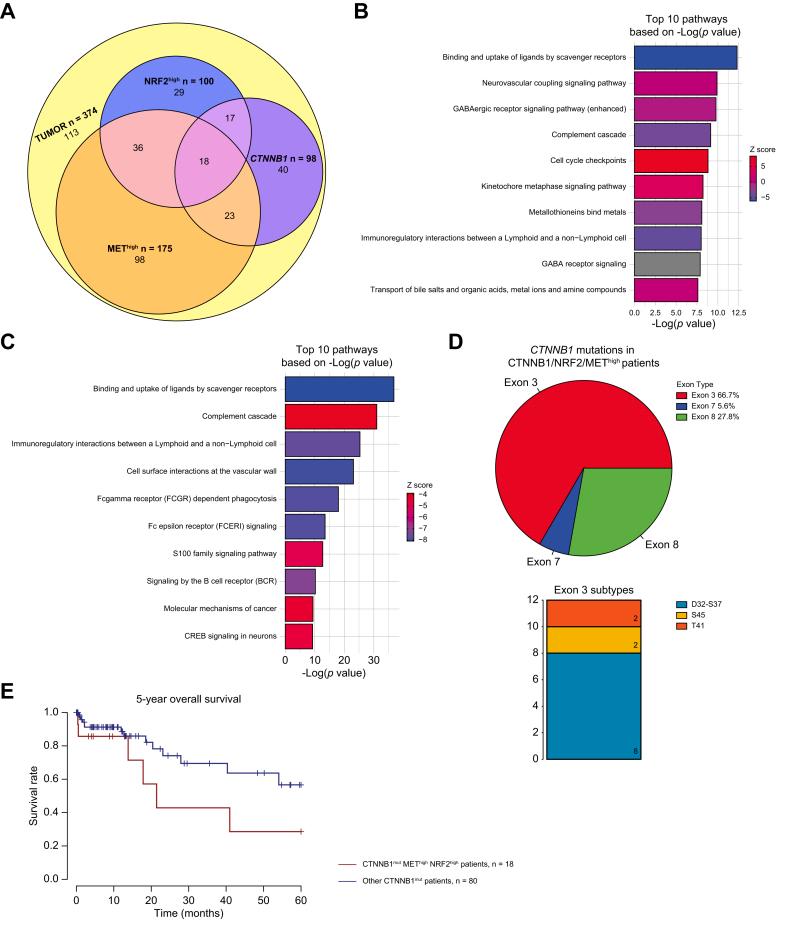
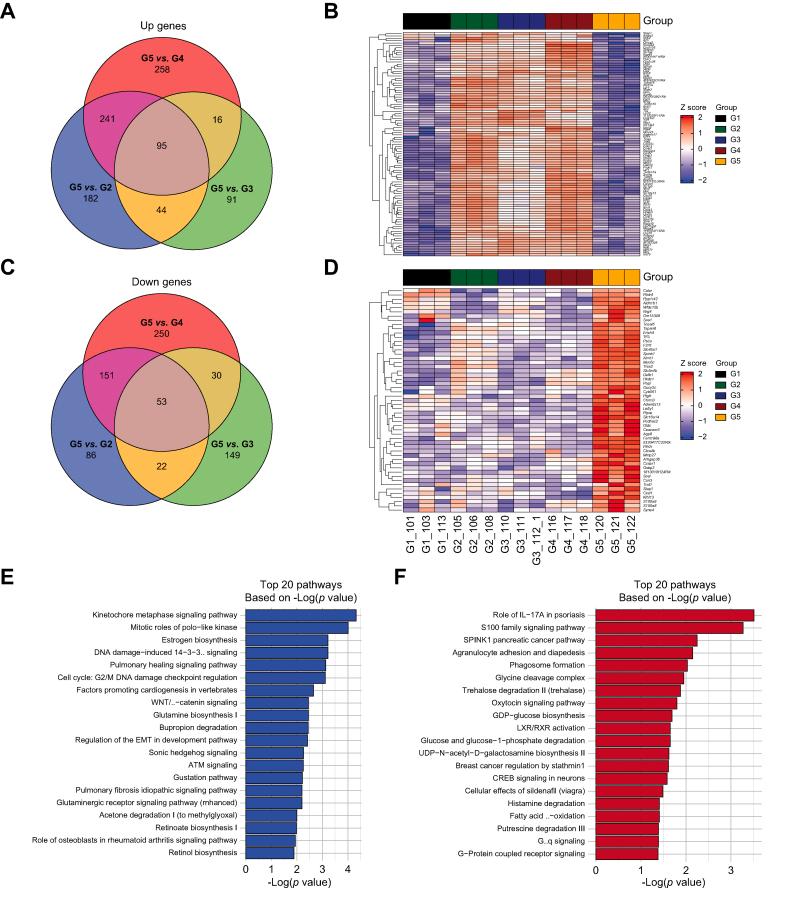
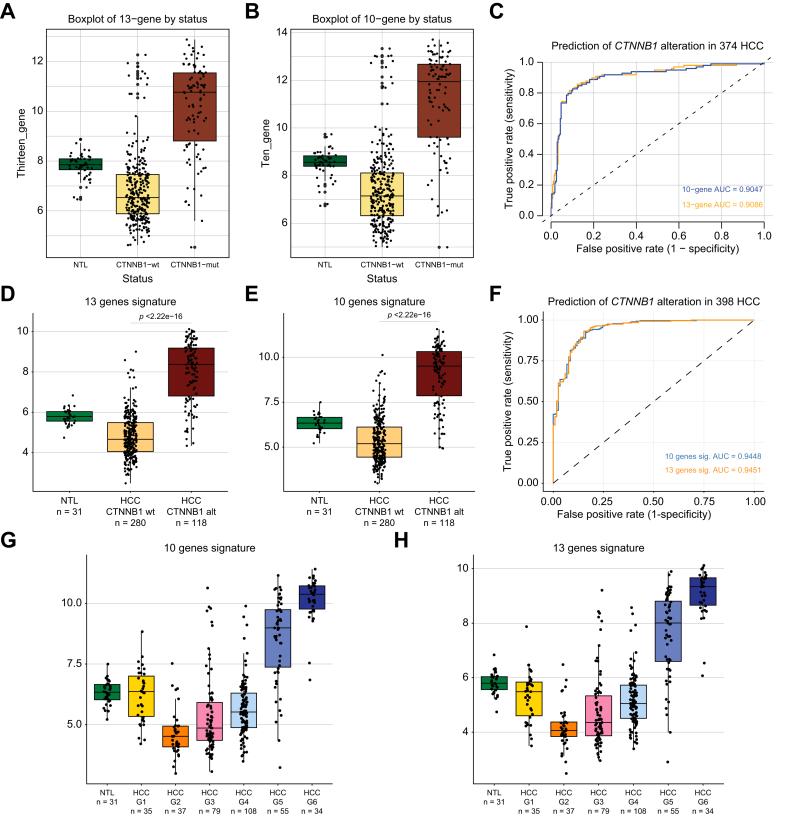
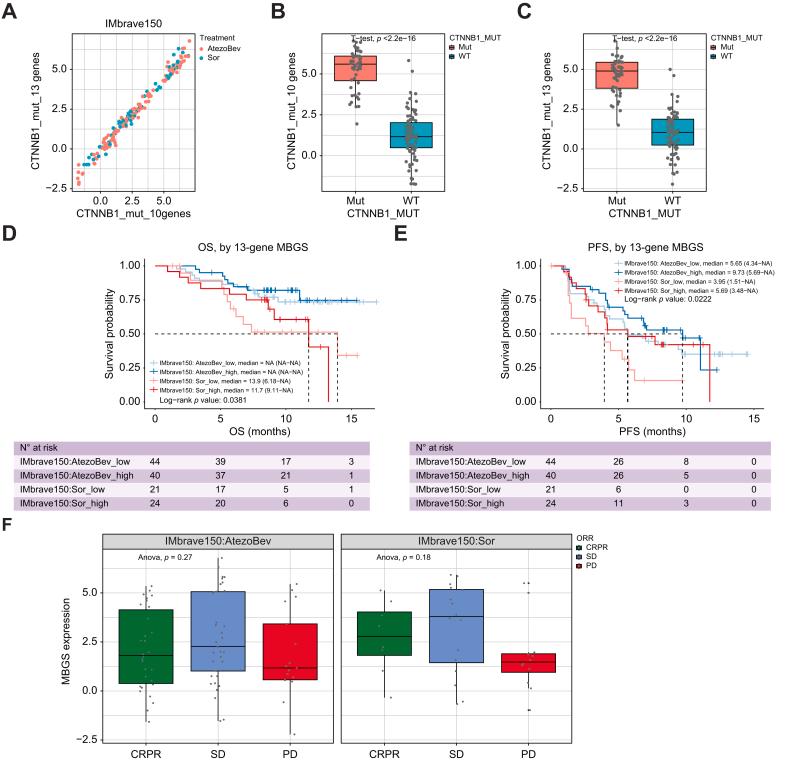
Bulk RNA-seq comparing HCC specimens in mutant β-catenin-Nrf2, β-catenin-Met and β-catenin-Nrf2-Met to Nrf2-Met HCC model yielded 95 common upregulated genes. In The Cancer Genome Atlas (TCGA)-LIHC dataset, differential gene expression analysis with false discovery rate (FDR) = 0.05 and log(fold change) >1.5 on the 95 common genes comparing -mutated wild-type patients narrowed the gene panel to a 13-gene MBGS. MBGS predicted -mutations in TCGA (n = 374) and French (n = 398) patient cohorts with AUCs of 0.90 and 0.94, respectively. Additionally, a higher MBGS expression score was associated with lack of significant improvement in overall survival or progression-free survival in the atezolizumab-bevacizumab arm the sorafenib arm in the IMbrave150 cohort. MBGS performed comparable or superior to other -mutant classifiers. MBGS overlapped with Hoshida S3, Boyault G5/G6, and Chiang CTNNB1 subclass tumors in TCGA and in HCC spatial transcriptomic datasets visually depicting these tumors to be situated in an immune excluded tumor microenvironment.
CONCLUSIONS
MBGS will aid in patient stratification to guide precision medicine therapeutics for -mutated HCC subclass as a companion diagnostic, as anti-β-catenin therapies become available.
IMPACT AND IMPLICATIONS
As precision medicine for liver cancer treatment becomes a reality, diagnostic tools are needed to help classify patients into groups for the best treatment choices. We have developed a molecular signature that could serve as a companion diagnostic and uses bulk or spatial transcriptomic data to identify a unique subclass of liver tumors. This subgroup of liver cancer patients derive limited benefit from the current standard of care and are expected to benefit from specialized directed therapies that are on the horizon.
背景与目的
β-连环蛋白(由 编码)突变的肝细胞癌(HCC)患者对一线免疫检查点抑制剂(ICI)表现出异质性反应。针对这一亚类的精准医学治疗目前正处于临床开发阶段。在此,我们报告了突变β-连环蛋白基因特征(MBGS)的推导,以预测HCC患者的 突变状态,供未来在个性化药物治疗方案中应用。
方法
小鼠肝脏中突变型Nrf2和hMet ± 突变型β-连环蛋白的共表达导致HCC发生。MBGS是通过对β-连环蛋白突变和未突变的HCC模型进行批量RNA测序和交叉转录组分析推导得出的。评估了来自多个HCC患者队列的综合RNA/全外显子组测序和空间转录组数据,以探讨MBGS检测 突变、肿瘤免疫微环境和/或预测治疗反应的能力。
结果
将突变型β-连环蛋白-Nrf2、β-连环蛋白-Met和β-连环蛋白-Nrf2-Met的HCC标本与Nrf2-Met HCC模型进行批量RNA测序比较,得到95个共同上调基因。在癌症基因组图谱(TCGA)-LIHC数据集中,对这95个共同基因进行错误发现率(FDR)= 0.05且log(倍数变化)>1.5的差异基因表达分析,将基因面板缩小至一个由13个基因组成的MBGS。MBGS在TCGA(n = 374)和法国(n = 398)患者队列中预测 突变的曲线下面积(AUC)分别为0.90和0.94。此外,在IMbrave150队列中,较高的MBGS表达评分与阿替利珠单抗-贝伐单抗组与索拉非尼组相比总生存期或无进展生存期无显著改善相关。MBGS的表现与其他 突变分类器相当或更优。在TCGA和HCC空间转录组数据集中,MBGS与Hoshida S3、Boyault G5/G6和Chiang CTNNB1亚类肿瘤重叠,直观显示这些肿瘤位于免疫排除的肿瘤微环境中。
结论
随着抗β-连环蛋白疗法的出现,MBGS将有助于患者分层,作为伴随诊断指导针对 突变HCC亚类的精准医学治疗。
影响与意义
随着肝癌治疗的精准医学成为现实,需要诊断工具来帮助将患者分类,以做出最佳治疗选择。我们开发了一种分子特征,可作为伴随诊断,利用批量或空间转录组数据识别肝肿瘤的一个独特亚类。这一亚类肝癌患者从当前的标准治疗中获益有限,有望从即将出现的专门定向治疗中获益。


 Zotero 插件