
人类细胞蛋白和结构在 HIV 生命周期实现中的作用:全面综述,2024 年。
Involvement of Human Cellular Proteins and Structures in Realization of the HIV Life Cycle: A Comprehensive Review, 2024.
机构信息
St. Petersburg Pasteur Institute, St. Petersburg 197101, Russia.
出版信息
Viruses. 2024 Oct 29;16(11):1682. doi: 10.3390/v16111682.
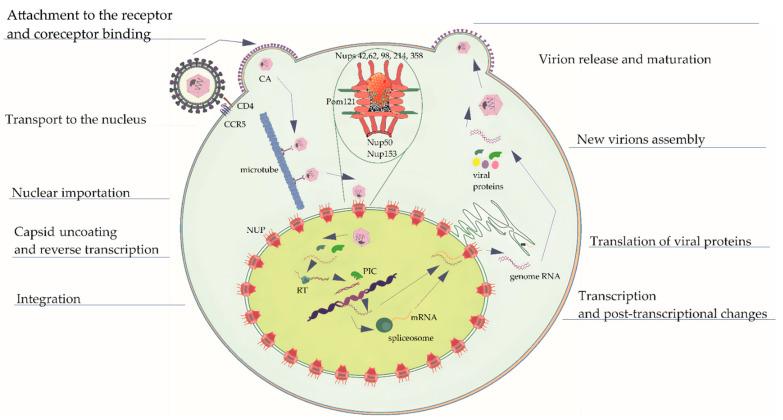
Human immunodeficiency virus (HIV) continues to be a global health challenge, with over 38 million people infected by the end of 2022. HIV-1, the predominant strain, primarily targets and depletes CD4+ T cells, leading to immunodeficiency and subsequent vulnerability to opportunistic infections. Despite the progress made in antiretroviral therapy (ART), drug resistance and treatment-related toxicity necessitate novel therapeutic strategies. This review delves into the intricate interplay between HIV-1 and host cellular proteins throughout the viral life cycle, highlighting key host factors that facilitate viral entry, replication, integration, and immune evasion. A focus is placed on actual findings regarding the preintegration complex, nuclear import, and the role of cellular cofactors such as FEZ1, BICD2, and NPC components in viral transport and genome integration. Additionally, the mechanisms of immune evasion via HIV-1 proteins Nef and Vpu, and their interaction with host MHC molecules and interferon signaling pathways, are explored. By examining these host-virus interactions, this review underscores the importance of host-targeted therapies in complementing ART, with a particular emphasis on the potential of genetic research and host protein stability in developing innovative treatments for HIV/AIDS.
人类免疫缺陷病毒(HIV)仍然是一个全球性的健康挑战,截至 2022 年底,全球已有超过 3800 万人感染。HIV-1 是主要的病毒株,主要攻击并耗尽 CD4+T 细胞,导致免疫缺陷,随后易感染机会性感染。尽管在抗逆转录病毒治疗(ART)方面取得了进展,但耐药性和治疗相关的毒性需要新的治疗策略。本综述深入探讨了 HIV-1 与宿主细胞蛋白在整个病毒生命周期中的复杂相互作用,强调了促进病毒进入、复制、整合和免疫逃逸的关键宿主因素。重点介绍了关于整合前复合物、核输入以及 FEZ1、BICD2 和 NPC 成分等细胞辅助因子在病毒运输和基因组整合中的作用的实际发现。此外,还探讨了 HIV-1 蛋白 Nef 和 Vpu 通过免疫逃避的机制,以及它们与宿主 MHC 分子和干扰素信号通路的相互作用。通过研究这些宿主-病毒相互作用,本综述强调了宿主靶向治疗在补充 ART 方面的重要性,特别强调了遗传研究和宿主蛋白稳定性在开发 HIV/AIDS 创新治疗方法方面的潜力。


 Zotero 插件